How a Sundarban Tour Becomes a Journey of Experience, Privacy, Solitude, and Inner Renewal
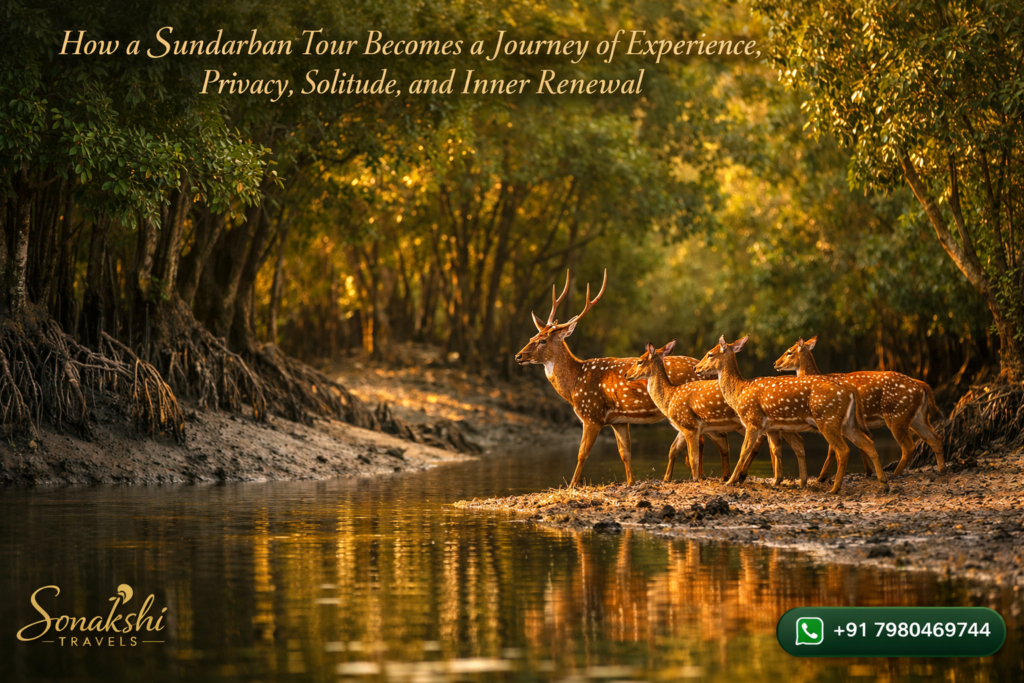
The Sundarbans is often introduced through familiar travel language. People hear about mangrove forests, winding rivers, tiger territory, village life, and long boat safaris through tidal creeks. Yet the deeper meaning of a Sundarban tour cannot be understood through attractions alone. This delta is not simply a destination where travelers arrive, observe, take photographs, and return. It is a living landscape that alters the pace of thought, changes the meaning of silence, and transforms travel into something more reflective, more intimate, and more human.
That is why the most meaningful journey through this region is not defined only by wildlife sightings or by a checklist of activities. It is shaped by atmosphere, rhythm, privacy, sensory detail, and emotional experience. A traveler may begin the trip expecting adventure, but often returns with something quieter and more lasting: a renewed sense of attention. The rivers do not rush. The forest does not perform. The tides do not accommodate impatience. In this world, one learns that the real value of the journey lies in participation rather than consumption.
A well-designed Sundarban private tour becomes especially powerful because it creates space for this kind of engagement. Privacy allows the traveler to experience the region without noise, crowd pressure, or hurried movement. Solitude becomes meaningful rather than empty. Comfort becomes functional rather than excessive. Nature becomes present not as a backdrop, but as a living force. The result is a journey that combines ecological awareness, emotional calm, and experiential depth in a way that few conventional holidays can offer.
The Sundarbans Is Not Just a Place to Visit but a Landscape to Enter Slowly
Many travel experiences are built around instant gratification. A monument can be seen quickly, a viewpoint can be photographed in minutes, and a city attraction can be consumed through fast movement. The Sundarbans resists that pattern. This is a region where the atmosphere reveals itself gradually. The muddy edges of the river, the tangle of roots, the subtle changes in water color, the shifting sounds of birds, and the vast silence between settlements all demand patience. A traveler is not merely looking at the environment. One is being absorbed into its timing.
This is why understanding the things to do on a Sundarban tour requires more than listing activities. The real experience lies not only in boat safaris, watchtower visits, village walks, local cultural encounters, and moments of wildlife observation, but in how these elements form one connected rhythm. Each part of the journey gains value from the landscape around it. A boat ride is not only transportation. It is a moving observatory. A village stop is not merely an excursion. It is a way of seeing how human life adapts to a fragile tidal ecology. A quiet deck in the early morning is not empty time. It is often the moment when the delta becomes most legible.
For that reason, the Sundarbans should be approached with the right expectation. It is not a place of constant spectacle. It is a place of layered experience. The traveler who arrives with openness rather than urgency usually receives far more from the journey. The forest teaches observation. The waterways teach patience. The silence teaches mental clarity. All of this gives a Sundarban luxury tour or private journey its distinctive identity. The richness of the trip does not come from excess. It comes from depth.
Privacy Changes the Character of the Journey from Tourism to Immersion
One of the most important distinctions in the Sundarbans lies between shared tourism and private experience. In a crowded setting, the traveler often follows the speed, noise, and preferences of the group. The river becomes a route. The forest becomes a schedule. The silence is interrupted. In contrast, a private setting allows the journey to breathe. It introduces flexibility, emotional comfort, and interpretive space. This is particularly important in a region where mood and timing are central to the travel experience.
A thoughtful understanding of what is included in a standard Sundarban private tour package goes beyond accommodation, meals, transfers, and sightseeing logistics. Those practical inclusions matter, but the deeper inclusion is intangible: freedom from crowd-driven compromise. Privacy allows couples, families, photographers, senior travelers, or reflective solo visitors to engage with the delta on their own terms. Meals can be enjoyed without haste. Boat time can feel personal rather than communal. Wildlife observation can happen in silence instead of conversation. Even simple comforts gain greater importance when they help the traveler remain calm, rested, and attentive within an ecologically sensitive environment.
This is where the value of a Sundarban private tour package becomes clear. Privacy is not only a luxury feature. It is a design principle that protects the emotional quality of the journey. In a place defined by subtlety, the traveler needs room to listen, watch, and feel. A private arrangement can support that by reducing noise, increasing flexibility, and allowing the journey to follow the natural tempo of the landscape rather than the collective impatience of a group. When travel becomes more intimate, the delta becomes more intelligible.
That intimacy also supports safety and comfort in a practical sense. A curated route, a well-managed schedule, and a balanced pace matter in the Sundarbans because the region is shaped by tide, distance, and terrain. Comfort here is not about overindulgence. It is about creating the physical and emotional conditions in which deeper appreciation becomes possible. A good private experience does not isolate the traveler from nature. It helps the traveler remain present within it.
Solitude in the Delta Is Not Emptiness but a Form of Emotional Presence
Modern life often leaves little room for uninterrupted thought. Noise has become ordinary. Notifications, routines, deadlines, and urban pressure shape the mind so continuously that stillness can feel unfamiliar. The Sundarbans offers a rare contrast. Here, solitude does not feel artificial or forced. It arrives naturally through open river space, slow-moving boats, long views of sky and water, and the mysterious reserve of the mangrove world. This solitude is one of the region’s most underestimated gifts.
The phrase suggested by when solitude feels like a song and a Sundarban tour becomes your stage reflects a profound truth about the experience of this landscape. In the delta, solitude is not loneliness. It is participation in a wider silence. The traveler begins to hear smaller things: the push of water against the boat, the distant movement of birds, the wind touching leaves, the faint sound of village life far from the main river. Even one’s own thoughts begin to slow down. The absence of urban interruption allows perception to sharpen.
This emotional shift is especially meaningful for travelers who are exhausted by overstimulation. A carefully planned Sundarban tour package can therefore serve not only as a holiday but as a restorative journey. The value lies in what the landscape removes as much as in what it offers. It removes hurry. It removes social performance. It removes the expectation that every moment must be loud, dramatic, or publicly shared. In that emptier space, the mind begins to reset.
Such solitude also enhances the aesthetic experience of the region. The Sundarbans is not visually overwhelming in the conventional sense. It does not rely on sharp mountain profiles or monumental architecture. Its beauty is more diffused and more atmospheric. It exists in repetition, texture, reflection, and uncertainty. The same creek can look different within an hour because light, tide, and sky are always in motion. To perceive this properly, the traveler must slow down enough to notice what changes gently. Solitude makes that possible.
The Wild Here Is Felt as Relationship, Not as Performance
Many people are drawn to the Sundarbans because of its wildlife identity. The region carries an undeniable aura of mystery because it is associated with elusive creatures, protected forest zones, tidal ecology, and one of the most remarkable human-nature frontiers in South Asia. Yet the emotional strength of the journey lies not only in the possibility of seeing wildlife. It lies in learning how wildness shapes the entire environment, including the traveler’s own state of mind.
This is beautifully echoed in the spirit of embracing the wild through a traveler’s heartfelt journey in the Sundarbans. The word “wild” in this context should not be reduced to danger or thrill. It means unpredictability, independence, and ecological integrity. The forest does not bend itself to tourist expectation. The waterways are not ornamental. The mudbanks, creeks, roots, birds, and distant animal signs all remind the traveler that this is a living habitat first and a travel destination second. That realization often creates humility.
A serious Sundarban luxury private tour should preserve this relationship with wildness rather than dilute it. True quality travel in such a region does not mean domesticating the landscape into comfort alone. Instead, it means balancing comfort with respect. Good hosting, clean facilities, quiet transport, and thoughtful guidance should support the encounter with the environment, not overpower it. The traveler should feel cared for, but never insulated from the ecological truth of the place.
This is why meaningful travel writing about the Sundarbans often moves beyond sightseeing language. It begins to address vulnerability, resilience, adaptation, and coexistence. Human communities in and around the delta live with environmental uncertainty. Travelers passing through even briefly can sense this delicate balance. The result is often emotional rather than merely visual. One returns not just with photographs, but with a deeper recognition that wild landscapes are not entertainment zones. They are living systems that deserve careful attention and ethical travel behavior.
The Healing Power of the Sundarbans Comes Through Air, Scent, Silence, and Release
There are journeys that excite, and there are journeys that cleanse. The Sundarbans often belongs to the second category, especially for travelers who arrive mentally tired. The calming effect does not come from one dramatic moment. It emerges through repeated contact with the environment: humid wind over open water, green riverbanks layered with mangrove texture, the scent of wet earth, filtered sunlight, rural stillness, and the strange clarity that appears when the mind is no longer under constant pressure.
The poetic sensibility suggested by breathe in wild orchids and exhale your chaos captures something essential about the region. Whether or not the traveler literally encounters orchids, the phrase expresses the emotional truth of the delta. The Sundarbans offers a space where inner noise begins to dissolve. It invites a different form of breathing, a different pace of seeing, and a different kind of emotional weather. One does not simply move through nature here. One is gradually softened by it.
This gives the Sundarban luxury tour package a very particular appeal for people seeking more than recreation. For urban professionals, couples in need of meaningful quiet, families wanting nature without aggressive tourism, or individuals looking for reflective travel, the Sundarbans can become a restorative environment. But this restorative effect depends greatly on how the trip is designed. Noise, crowding, and rushed schedules weaken the experience. Thoughtful pacing, privacy, scenic continuity, and ecological sensitivity strengthen it.
In this sense, wellness in the Sundarbans is not imported through spa language or artificial retreat culture. It arises from contact with a living delta. The healing is modest, quiet, and indirect. It comes from being temporarily released from urban fragmentation and returned to a more elemental setting of water, sky, vegetation, and silence. That simplicity is precisely what makes the experience feel rare.
A Meaningful Sundarban Journey Combines Experience, Interpretation, and Responsible Travel
The most successful journeys through the Sundarbans are those that bring together practical planning and emotional intelligence. A traveler needs good logistics, comfortable arrangements, safe transfers, and a clear route. But beyond those essentials, a memorable journey also requires the right interpretive frame. One must understand what kind of place this is, what kind of attention it asks for, and what kind of conduct it deserves.
A high-quality Sundarban private tour therefore should not be marketed only through luxury language or wildlife promise. It should be presented as a balanced experience of observation, privacy, reflection, and ecological respect. Travelers benefit most when they arrive prepared to appreciate subtlety. The delta may not reveal everything quickly, but it offers immense richness to those willing to travel with patience. Even ordinary moments become significant in this setting: tea on a quiet deck, a change in river light, a distant bird call, a conversation with a local resident, the stillness before sunset on open water.
For travel planners and for travelers alike, the lesson is clear. The Sundarbans should not be approached as a place to conquer, consume, or hurry through. It should be approached as a region to enter carefully. Activities matter, but so does atmosphere. Comfort matters, but so does humility. Privacy matters, but so does connection to the land and water. Wildness matters, but so does responsibility. When these elements come together, the result is not merely a holiday. It is a layered and enduring experience.
In the end, the true beauty of a Sundarban tour lies in its ability to hold several meanings at once. It can be adventurous without becoming loud. It can be luxurious without losing authenticity. It can be private without becoming detached. It can be restorative without becoming artificial. Above all, it reminds the traveler that some journeys are valuable not because they offer constant excitement, but because they return us to slower ways of seeing, feeling, and understanding the world. In the Sundarbans, that return feels both rare and necessary.