Updated Date: 19 February 2026
🐟 What to Expect at the Sundarban Ilish Utsav
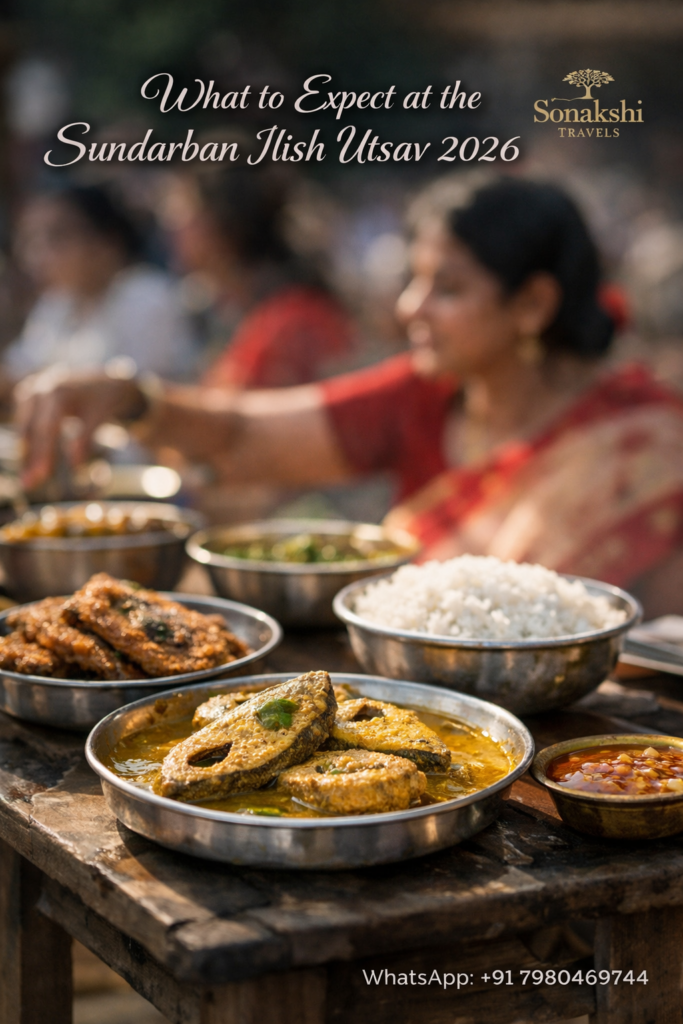
The Sundarban Ilish Utsav is not merely a seasonal food event; it is a carefully curated cultural immersion that places Bengal’s most revered fish—Hilsa—at the center of a multi-sensory celebration. Rooted in monsoon rhythms and riverine livelihoods, the festival weaves together gastronomy, performance traditions, ecological awareness, and community participation into a cohesive experiential narrative. To attend the festival is to witness how cuisine becomes a medium of identity, how landscape shapes taste, and how local economies reorganize themselves around a shared seasonal abundance.
This celebration unfolds through structured culinary showcases, curated river experiences, live cultural performances, and collaborative village participation. Every segment of the event is intentionally designed to deepen engagement with Hilsa—not simply as a dish, but as heritage, memory, and livelihood.
The Cultural Significance of Hilsa in the Festival Context
Hilsa occupies an almost mythic position in Bengali consciousness. Its arrival during the monsoon has historically signaled renewal, celebration, and reunion. In agrarian households, the first Hilsa of the season often carried ritual importance, symbolizing prosperity and familial bonding. The Sundarban Ilish Utsav draws upon this deeply embedded cultural memory and translates it into a structured public celebration.
Unlike generic seafood festivals, this event foregrounds Hilsa’s symbolic and socio-economic value. The fish represents seasonal migration, tidal cycles, and the interdependence between river ecology and fishing communities. By framing Hilsa as both delicacy and ecological indicator, the festival elevates the culinary experience into a cultural discourse.
Hilsa as Culinary Identity
Within Bengali gastronomy, Hilsa is not prepared casually. Its fine bones, delicate fat distribution, and distinctive aroma require skilled handling. Recipes are rarely improvised; they are inherited. At the festival, chefs and home cooks alike showcase preparations that respect texture, oil balance, and spice proportion. The emphasis remains on preserving the fish’s intrinsic flavor rather than overwhelming it with embellishments.
This reverence is evident in how dishes are presented—served in traditional thalis, paired thoughtfully with seasonal accompaniments, and introduced with contextual explanation. Guests do not simply eat; they are guided through taste profiles and preparation philosophies.
The Culinary Architecture of the Festival
The central expectation at the Sundarban Ilish Utsav is an extensive and structured culinary journey. Rather than offering isolated tastings, the event constructs a layered gastronomic progression, typically moving from fried preparations to steamed, curried, and rice-integrated dishes.
Signature Preparations
- Shorshe Ilish – A mustard-based preparation where pungency and oil content are precisely calibrated to complement the fish’s natural richness.
- Bhapa Ilish – Steamed Hilsa, often wrapped and slow-cooked to retain aroma and moisture.
- Doi Ilish – A yogurt-infused curry balancing acidity and fat.
- Ilish Pulao – Aromatic rice integrating Hilsa essence without diluting grain texture.
- Ilish Bhaja – Crisp-fried slices emphasizing the fish’s buttery interior.
Each preparation reveals a different structural characteristic of Hilsa: its oil distribution, bone architecture, and flavor density. The festival format allows participants to compare techniques side by side, creating an educational dimension within indulgence.
Floating Culinary Experiences
One of the defining expectations is the floating feast. Meals served aboard gently moving boats transform dining into a kinetic sensory event. The slow rhythm of water movement enhances perception of aroma and texture. Guests often report heightened attentiveness to taste during these sessions, possibly influenced by the immersive environmental context.
This format underscores the inseparable relationship between Hilsa and river ecology. Dining while surrounded by tidal currents reinforces the origin story of the fish on the plate.
Performative Evenings and Cultural Immersion
The Sundarban Hilsa Festival extends beyond gastronomy into structured cultural programming. Evenings are typically dedicated to music, performance, and interactive showcases that contextualize the culinary celebration within regional artistry.
Baul and Folk Traditions
Baul performances introduce a spiritual dimension to the festival. These itinerant musicians, known for philosophical lyrics and minimalist instrumentation, create an atmosphere of contemplative festivity. The juxtaposition of folk music with culinary indulgence reinforces the festival’s dual identity as both celebratory and reflective.
Culinary Competitions and Community Participation
Hilsa-themed cooking competitions invite local participation, allowing home chefs to demonstrate inherited recipes. This segment transforms the festival into a collaborative platform rather than a passive spectacle. Observers gain insight into domestic culinary techniques often absent from commercial kitchens.
Community fairs and handicraft stalls further embed the event within village economies, ensuring that cultural exchange accompanies gastronomic enjoyment.
Ecological Awareness and Responsible Celebration
A distinguishing expectation at the Sundarban Ilish Utsav 2026 is its emphasis on sustainability. Hilsa populations are sensitive to overfishing and environmental shifts. The festival integrates responsible sourcing principles, highlighting collaboration with licensed local fishermen and promoting awareness of seasonal fishing regulations.
Eco-friendly serving materials and reduced plastic usage are increasingly visible components of the operational design. By aligning culinary celebration with ecological responsibility, the event reframes indulgence as mindful participation.
Guests are often informed about breeding cycles, migration patterns, and the importance of river conservation. This educational layer enhances the depth of engagement and situates the festival within broader environmental discourse.
Visual and Sensory Documentation
The festival presents abundant opportunities for documentation. Mist-laden river mornings, vibrant thalis arranged in traditional symmetry, and performers in motion collectively create a dynamic visual narrative.
Photographers frequently focus on the interplay between texture and environment—the sheen of mustard oil against monsoon light, steam rising from freshly cooked fish, and rhythmic boat processions. Such imagery contributes to the broader cultural archive of the festival.
Beyond photography, the sensory richness—aroma, sound, tactile engagement—creates enduring memory imprints. Participants often describe the experience as immersive rather than observational.
Social Composition of the Audience
The Sundarban Ilish Utsav attracts a diverse demographic profile. Culinary enthusiasts attend for the depth of gastronomic exploration. Families appreciate the structured yet celebratory atmosphere. Cultural scholars and performers engage with the event’s artistic segments. Photographers and documentarians seek authentic monsoon imagery.
What unifies these varied participants is a shared reverence for Hilsa as cultural anchor. The festival’s programming accommodates multiple motivations without diluting thematic coherence.
Operational Structure and Experience Design
Behind the apparent spontaneity of celebration lies meticulous coordination. Food preparation requires synchronized sourcing, skilled culinary teams, and controlled serving schedules to maintain freshness. Cultural segments are curated to ensure narrative continuity rather than fragmented entertainment.
Forest permits, regulated river movements, and safety compliance are integrated discreetly into the operational framework. This invisible infrastructure enables guests to experience seamless immersion without encountering logistical friction.
The expectation, therefore, is not chaos but calibrated festivity—structured yet vibrant.
Emotional Resonance and Collective Memory
Perhaps the most profound expectation at the Sundarban Ilish Utsav is emotional continuity. For many attendees, Hilsa evokes childhood monsoons, family gatherings, and ancestral kitchens. The festival externalizes these private memories into a shared public ritual.
The rhythmic combination of rainfall, river movement, music, and aroma creates a multisensory tapestry that transcends ordinary dining experiences. Participants frequently describe the event as restorative—a reconnection with regional identity and seasonal rhythm.
This emotional layering distinguishes the festival from conventional food fairs. It operates as a living archive of taste and tradition.
A Celebration Beyond Cuisine
To understand what to expect at the Sundarban Ilish Utsav is to recognize its multidimensional structure. It is a culinary showcase, a cultural forum, an ecological reminder, and a communal gathering. Hilsa remains the central protagonist, yet the narrative expands to include music, memory, craftsmanship, and responsible celebration.
From meticulously prepared thalis to floating feasts, from Baul melodies to collaborative competitions, every component contributes to a cohesive experiential design. The festival does not simply serve fish; it curates identity.
In the convergence of river, rain, aroma, and art, the Sundarban Ilish Utsav emerges as a living testament to Bengal’s monsoon soul—an event where taste becomes tradition and celebration becomes cultural continuity.