Designing a Meaningful Sundarban Private Tour with Comfort and Ecological Awareness
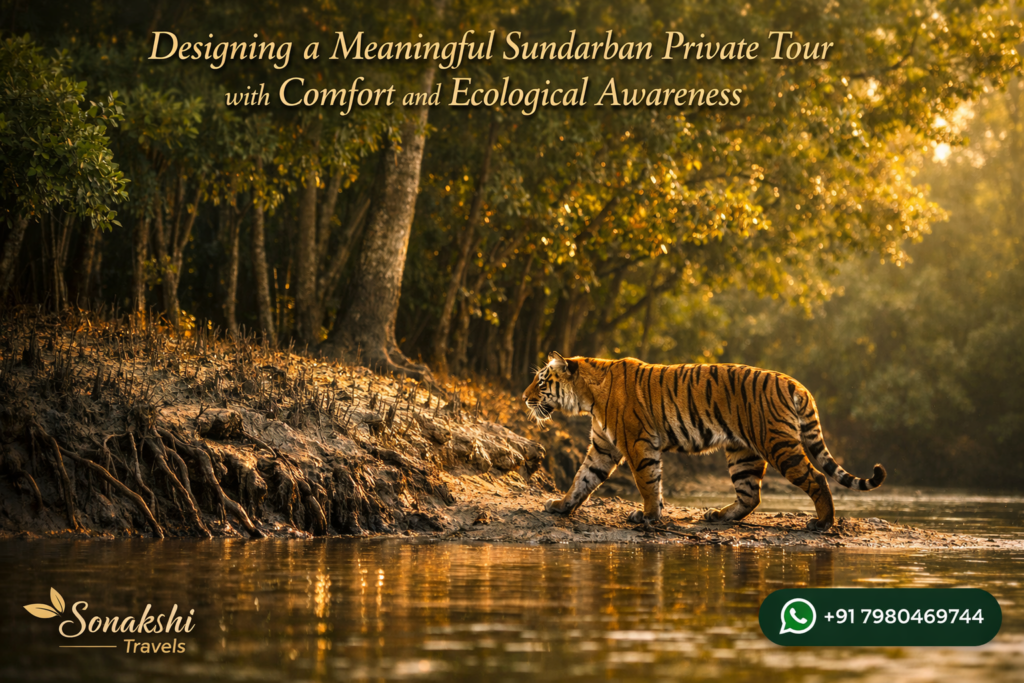
A thoughtful journey through the delta is not created by luxury alone, and it is not defined by movement alone. A meaningful Sundarban private tour is shaped by the relationship between comfort, privacy, observation, and responsibility. In a landscape where rivers change direction with the tide, where mangroves protect fragile mudbanks, and where wildlife often reveals itself only to patient eyes, travel design matters deeply. The quality of the experience depends not only on where a visitor stays or what route a boat follows, but on whether the journey is arranged with sensitivity to the ecosystem and with respect for the mood of the place.
That is why the idea behind designing a meaningful Sundarban journey through privacy, comfort, wildlife awareness, and quiet luxury deserves careful attention. The phrase suggests something more refined than ordinary tourism. It points toward a form of travel where comfort supports deeper perception, where privacy creates silence, and where ecological awareness helps the visitor understand that the forest is not a backdrop for entertainment but a living, tidal system that must be approached with restraint.
Why Meaning Matters in a Private Journey
The Sundarban is not a destination that rewards haste. It is not a place where the best experience comes from trying to see everything in the shortest possible time. A private tour becomes meaningful when it allows the traveler to move at a pace that matches the landscape. In public or highly crowded travel formats, the journey can become dominated by noise, fixed schedules, and the pressure of group movement. Privacy changes that condition. It creates space for stillness, for slower observation, and for decisions that respond to weather, tide, light, and mood.
This matters because the delta is experienced through atmosphere as much as through sight. The sound of water against a wooden hull, the long pause near a creek mouth, the distant movement of a bird over mudflats, and the changing light on mangrove roots all contribute to the depth of memory. A private tour in Sundarban becomes meaningful when it protects these moments rather than interrupting them. Privacy is not only a matter of exclusivity. It is a practical condition that allows the landscape to be felt properly.
Meaning also grows when the journey reflects intention. Some travelers are looking for quiet family time. Some want to study birds and estuarine life. Some seek a restful break from urban pressure while remaining connected to nature in a responsible way. A well-designed private experience can respond to these aims without forcing everyone into one standard pattern. That flexibility is one of the strongest reasons why a carefully planned journey can become more memorable than a louder, more crowded alternative.
The Role of Comfort in a Sensitive Landscape
Comfort is often misunderstood in nature-based travel. In the Sundarban, comfort should not mean separation from the landscape. It should mean support that makes attentive travel easier. A clean room, proper rest, well-timed meals, safe transfers, shaded seating, hygienic facilities, and a calm boat environment do not weaken the authenticity of the experience. On the contrary, they allow the traveler to engage with the environment more patiently and with less physical strain.
A poorly arranged journey produces fatigue. Fatigue reduces attention. When people are uncomfortable, they become restless, impatient, and less willing to observe quietly. By contrast, a well-designed Sundarban luxury private tour uses comfort to preserve energy and emotional ease. When guests are rested, they are more capable of appreciating subtle wildlife behavior, seasonal light, local ecological rhythms, and the fragile beauty of the riverine setting.
Comfort also helps different kinds of travelers participate more fully. Older guests, families with children, couples seeking quiet, and visitors who are new to wetland travel often benefit from private arrangements that reduce unnecessary hardship. Good comfort design includes sensible pacing, proper meal planning, dependable washroom access, safe embarkation points, and rest periods that match the duration of river movement. These features are not ornamental additions. They are part of responsible tour design.
Quiet Luxury Versus Display Luxury
The Sundarban does not respond well to display-oriented luxury. Loud music, crowd-heavy movement, wasteful service patterns, and a constant search for spectacle are out of place in a region defined by tide, silence, and ecological vulnerability. The more suitable model is quiet luxury. This means privacy without noise, comfort without excess, and refinement without ecological disregard.
Quiet luxury may appear in the form of a peaceful boat deck with good visibility, attentive local hospitality, well-prepared regional food, careful timing of excursions, clean accommodation, and the freedom to experience the forest without disturbance. It is a style of travel that values calm quality over performance. In this sense, the idea of privacy, comfort, wildlife awareness, and quiet luxury is not decorative language. It describes a practical framework for designing a journey that suits the character of the delta.
Ecological Awareness as the Core of Good Tour Design
No private journey through the mangrove delta can be considered meaningful if ecological awareness is absent. The Sundarban is one of the world’s most delicate estuarine forest systems. Its land and water remain in constant interaction. Salinity, sediment movement, tidal flow, breeding cycles, bird migration, and seasonal variation influence what can be seen and how the environment should be approached. Travel in such a region must be shaped by knowledge and restraint.
Ecological awareness begins with understanding that the forest is not a theatrical stage for guaranteed sightings. Wildlife cannot be summoned on demand, and a responsible operator should never encourage behavior that disturbs animal movement. Boats should maintain proper distance where needed, noise should be minimized, and viewing patterns should respect the rules of protected areas. A meaningful experience teaches guests how to observe rather than how to intrude.
This awareness also extends to waste, fuel, sound, and local resource use. A good private tour avoids careless disposal, discourages plastic misuse, and supports habits that reduce unnecessary environmental pressure. The design of meals, water service, packaging, and on-board conduct all influence the ecological footprint of the trip. Even small decisions matter in a habitat where land, water, and life are tightly connected.
When travelers are guided through the delta with ecological sensitivity, they usually leave with a deeper understanding of the place. They begin to notice why mudbanks matter, why exposed roots are crucial, why silence improves wildlife observation, and why waterways must be navigated with care. In that sense, awareness does not reduce enjoyment. It enriches it.
Wildlife Awareness Is More Than the Search for a Tiger
Many first-time visitors arrive with a narrow expectation of wildlife. They focus almost entirely on the possibility of seeing a tiger. While that desire is understandable, the ecological richness of the Sundarban is much broader. A meaningful private journey introduces guests to the full living system: kingfishers, herons, egrets, brahminy kites, mudskippers, monitor lizards, spotted deer, crabs, crocodilian presence in suitable zones, and the many signs of animal life that appear in quieter forms.
Wildlife awareness means learning how to look at tracks, tide lines, nest zones, feeding patterns, and bird behavior. It means understanding that absence can also be informative. The silence before movement, the shape of mangrove cover, and the changing behavior of smaller species often reveal more about the forest than a hurried search for one famous animal. A private tour has the advantage of allowing time for this kind of interpretation.
When the journey is handled well, travelers do not feel deprived by uncertainty. Instead, they feel engaged by the living complexity of the habitat. That shift in understanding is one of the clearest signs that the tour has been designed with meaning rather than superficial expectation.
How Privacy Improves Ecological Sensitivity
Privacy is often described only in terms of personal comfort, but it also has ecological value. Smaller, calmer travel groups usually create less noise, less confusion, and less pressure on shared space. They are easier to guide, easier to brief, and more capable of following observation discipline. In a fragile wetland, these differences matter. A controlled private format can support better conduct on boats, more orderly movement during transfers, and a more thoughtful relationship with the protected environment.
This is one reason why a well-planned Sundarban private tour package can offer more than exclusivity. It can create conditions for better ecological behavior. Guests can be briefed properly, routes can be managed with greater sensitivity, and the journey can be adapted when river conditions or conservation considerations require flexibility. Instead of forcing the environment to match the tour, the tour can be shaped to match the environment.
Privacy also improves interpretation. In a noisy group, explanations are often general and rushed. In a private setting, the guide can respond to the real interests of the guests. A family may want simple but meaningful explanations about mangroves and birds. A couple may prefer longer quiet stretches and fewer interruptions. Nature-focused travelers may want greater detail about habitat patterns and species behavior. This tailored conversation is part of what transforms a trip from ordinary sightseeing into a more intelligent ecological experience.
Designing the Rhythm of the Journey
The success of a private tour in the Sundarban depends greatly on rhythm. Rhythm includes wake-up time, transfer timing, the length of river sessions, meal breaks, observation pauses, and rest periods. In a meaningful journey, the schedule should not feel mechanical. It should feel balanced. The day must have movement, but also space. It must include access, but also recovery. It must create anticipation without causing exhaustion.
Good rhythm respects the body as well as the landscape. Early departures may be useful for light and calm water, but they should be supported by sensible planning. Midday heat should be handled intelligently. Longer observation stretches should be followed by time to eat, rest, and reflect. Even the tone of service matters. Calm hospitality preserves the mood of the journey. Rushed service breaks it.
This is where the meaning of the provided blog topic becomes especially useful. The idea of a meaningful Sundarban journey through privacy, comfort, wildlife awareness, and quiet luxury points toward design harmony. Each element supports the other. Privacy creates silence. Comfort preserves energy. Wildlife awareness deepens perception. Quiet luxury keeps the whole experience refined without becoming disruptive. The result is not merely a premium package. It is a more coherent way of traveling through the delta.
Why Overplanning Can Damage the Experience
There is a common mistake in travel design: trying to fill every hour. In the Sundarban, that approach often weakens the journey. An overloaded itinerary leaves no space for weather, mood, or observation. It reduces the trip to a checklist. A meaningful private tour should remain structured, but not crowded. The best experiences often come from unforced intervals when guests are simply present on the water, watching the forest edge, listening to bird calls, or noticing changes in current and light.
This does not mean poor organization. It means intelligent restraint. The itinerary should guide the day, not suffocate it. In a living delta, flexibility is part of quality.
The Ethical Dimension of Comfort
Comfort in the Sundarban also has an ethical dimension. When comfort is designed responsibly, it reduces stress without increasing ecological burden. This means choosing service patterns that are clean and efficient, not wasteful. It means respecting local conditions rather than importing inappropriate expectations. It means supporting local livelihoods through responsible hospitality while keeping the scale of consumption appropriate to the setting.
A refined Sundarban luxury tour should therefore avoid the mindset that nature must be reshaped to resemble an urban resort. The stronger model is one in which comfort works in partnership with place. Local food can be presented with care. Accommodation can be clean, restful, and well managed. Boat travel can be safe and pleasant. But the larger spirit of the journey should remain anchored in the ecology and cultural reality of the delta.
Travelers increasingly value this kind of alignment. Many no longer want comfort at the cost of environmental indifference. They want a journey that feels well arranged but also morally sensible. In that context, ecological awareness is not a separate educational layer added after planning. It is part of the design logic itself.
What Travelers Remember After the Journey Ends
When people return from the Sundarban, the strongest memories are rarely the loudest ones. They remember the feeling of moving through wide tidal water under soft light. They remember a stretch of silence before a bird crossed the channel. They remember the stillness of mangrove walls, the dignity of simple but thoughtful hospitality, the sense of being protected from crowd pressure, and the discovery that comfort can exist without breaking the atmosphere of wilderness.
That is why meaningful design matters so much. A private tour should not only deliver transport, meals, and accommodation. It should shape the emotional and ecological quality of the journey. It should help travelers experience the forest with patience and humility. It should replace noise with attention. It should transform comfort into clarity rather than distraction.
Seen in this way, designing a meaningful Sundarban journey is not merely a content phrase or a travel concept. It is a practical principle for better tourism in the delta. It reminds us that privacy has value beyond status, that comfort should support awareness, and that ecological responsibility is not an obstacle to enjoyment but one of its deepest foundations.
Conclusion: A Better Way to Experience the Delta
To design a meaningful Sundarban private tour with comfort and ecological awareness is to recognize the true character of the region. This is not a destination for careless speed, forced spectacle, or heavy-handed luxury. It is a living mangrove world that responds best to patience, intelligence, calm movement, and responsible hospitality. Private travel becomes valuable when it creates the right conditions for those qualities to emerge.
The most rewarding journey is therefore one in which every element has a purpose. Comfort reduces strain and helps attention. Privacy preserves silence and flexibility. Ecological awareness shapes conduct and deepens understanding. Quiet luxury protects refinement without disturbing the forest’s mood. When these elements come together, the result is not only a better itinerary. It is a more truthful way of meeting the Sundarban itself.
That is the real promise of a well-crafted journey through this extraordinary delta: not just a trip that feels exclusive, but one that feels considered, grounded, and worthy of the landscape through which it moves.