Designing a Meaningful Sundarban Journey Through Privacy, Comfort, Wildlife Awareness, and Quiet Luxury
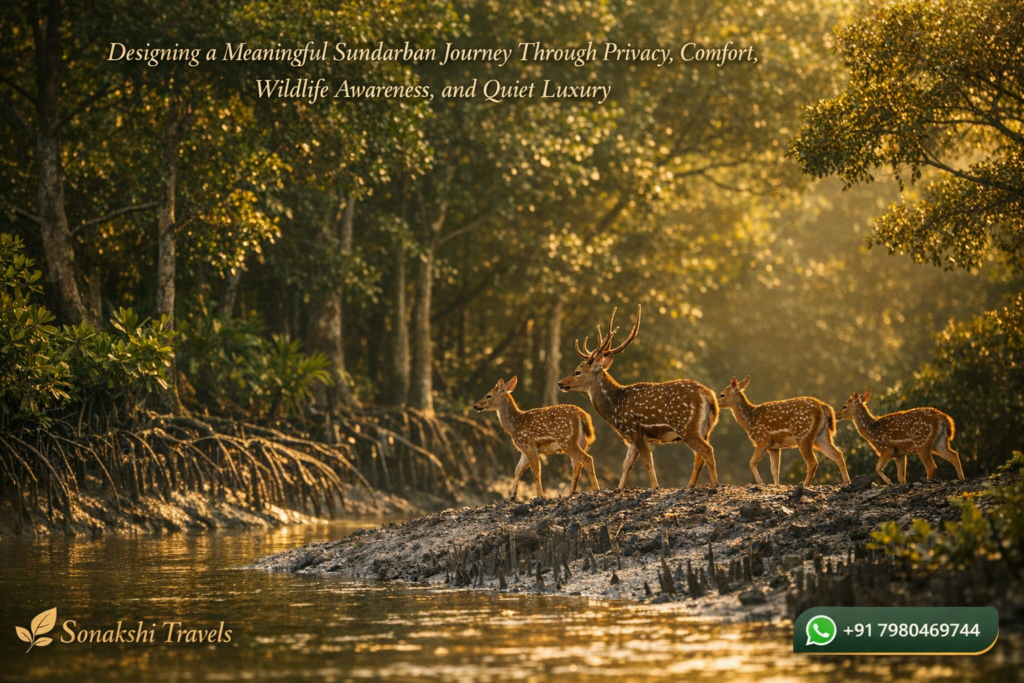
To understand the true value of a journey into the delta, one must first set aside the ordinary language of tourism. The Sundarban is not a destination that rewards haste, noise, or superficial sightseeing. It is a tidal landscape shaped by silence, changing light, river knowledge, mangrove depth, and the slow unfolding of ecological life. For that reason, the quality of the experience depends not only on where one stays or how one travels, but on how the entire journey is designed. A meaningful visit emerges when privacy, comfort, interpretation, seasonality, cuisine, and family needs are arranged with sensitivity rather than excess.
Modern travelers are increasingly seeking more than transportation and accommodation bundled into a simple itinerary. They are looking for depth, atmosphere, and a sense of intelligent curation. In the Sundarban, this desire becomes even more important because the landscape itself requires a different kind of planning. A well-composed Sundarban tour is not merely a list of inclusions. It is an exercise in shaping rhythm. It is about deciding how the day begins, how movement through the waterways is paced, how wildlife observation is approached, how meals contribute to the emotional texture of the trip, and how privacy creates space for genuine attention.
When these elements come together, the result is not simply a holiday. It becomes an immersive ecological and cultural experience. Whether one is traveling as a couple, with parents, with children, or in a small private group, the central question remains the same: how can the journey be made more attentive, more comfortable, and more meaningful without losing the raw, living character of the mangrove world? The answer lies in thoughtful design rather than extravagance, and in a deeper understanding of what premium travel means in a landscape where silence is often more powerful than spectacle.
The Sundarban Demands a Different Philosophy of Travel
Many destinations can be approached through a standard tourism model. Travelers arrive, move quickly between landmarks, collect photographs, and depart with the feeling of having completed a checklist. The Sundarban does not respond well to that pattern. Its beauty is not fixed in monuments or urban attractions. It lives in tidal movement, muddy banks, filtered light, bird calls, distant creeks, shifting weather, and the possibility of encountering life without forcing it into performance.
This is why the most satisfying journeys into the region are built around attentiveness. The landscape asks travelers to slow down enough to notice texture: the changing color of the water, the exposed roots of mangrove trees, the stillness before a bird lifts from a branch, the patience required to move through forest channels without disturbing the mood of the place. In that sense, a successful memorable Sundarban tour is shaped less by quantity and more by quality.
That quality depends on several connected factors. Timing matters because the atmosphere of the delta changes across seasons. Space matters because crowded arrangements weaken the sense of immersion. Interpretation matters because the forest is not always self-explanatory; without context, travelers may see scenery but miss significance. Comfort matters because physical ease allows attention to remain on the environment rather than on inconvenience. When these elements are neglected, even a destination as powerful as the Sundarban can feel flat. When they are harmonized, the entire journey becomes more coherent and more emotionally resonant.
The deeper philosophy, therefore, is simple but profound: the Sundarban should not be consumed. It should be entered with care. A well-designed journey recognizes that the traveler is not the center of the ecosystem. The traveler is a guest within it. This perspective transforms the meaning of planning and explains why privacy, pace, and ecological sensitivity are not optional luxuries but essential components of a high-quality experience.
Why Privacy and Space Transform the Experience
Among the many factors that elevate a journey through the delta, privacy is one of the most important. Privacy in the Sundarban does not mean detachment from the environment. It means having the physical and emotional space to engage with it more deeply. A crowded boat, a noisy group, or a rushed schedule can reduce the forest to background scenery. A more intimate arrangement allows travelers to listen, observe, and absorb.
This is one reason why many discerning travelers are drawn toward a Sundarban private tour. In a private format, the rhythm of the journey can be aligned with the temperament of the guests. A family with children may require more flexibility and comfort breaks. A couple may prefer long quiet stretches on deck, slower meals, and an atmosphere of calm observation. A small group of nature-oriented travelers may want deeper interpretive conversations and more patience during wildlife passages. Privacy makes all of this possible.
There is also a psychological dimension to space. In the delta, silence is not emptiness. It is part of the experience. When travelers are not pressed into collective noise, they begin to register the subtler music of the place: water touching the hull, wind moving through leaves, the faint call of birds, the distant life of the riverbanks. These details rarely emerge in crowded conditions. Space, therefore, is not merely a comfort feature. It is a medium through which the landscape becomes legible.
From an experiential standpoint, privacy improves service quality as well. Meals can be timed more gracefully. Movement can be better paced. Attention can be more personalized. Requests can be accommodated with less friction. The journey feels curated rather than processed. In the context of the Sundarban, such refinement is not about ostentation. It is about removing unnecessary disturbances so that the essence of the destination can come forward more clearly.
Comfort and Quiet Luxury in a Landscape of Ecological Depth
Luxury in the Sundarban should be understood with precision. It is not the loud luxury of excess, decorative display, or artificial entertainment. It is a quieter and more intelligent form of refinement. It lies in ease of movement, restful accommodation, thoughtful hospitality, cleaner logistics, better food, and a travel environment that protects the dignity of the landscape while supporting the comfort of the guest.
That is why choosing the right Sundarban luxury tour involves more than selecting a premium label. The more important question is whether the experience has been designed to create calm, continuity, and ecological respect. True comfort in the delta means the traveler is able to remain physically relaxed while mentally alert. It means waking well, moving smoothly, eating thoughtfully, and resting in surroundings that reduce friction rather than add distraction.
This notion of quiet luxury has special relevance in a mangrove environment. The forest is already visually and emotionally rich. It does not require heavy embellishment. Instead, what travelers need is an arrangement that allows them to perceive that richness without fatigue. Clean rooms, orderly transfers, well-managed boat journeys, shaded seating, fresh meals, and attentive guidance all contribute to this experience. None of these elements need to be extravagant to feel premium. Their value lies in the way they support sustained engagement with the landscape.
Comfort also has a practical dimension. The Sundarban is a water-based destination where the environment can be humid, the routes can be long, and the experience unfolds over hours rather than quick stops. In such a setting, even modest lapses in planning can affect the quality of the entire trip. Good hospitality, therefore, is not decorative. It is structural. It creates the conditions under which travelers can appreciate the region’s subtlety instead of being overwhelmed by avoidable inconvenience.
For modern travelers, especially those who are accustomed to thoughtful travel design, luxury in the Sundarban is ultimately about coherence. Every part of the journey should feel aligned with the character of the delta. When the arrangement is elegant but ecologically respectful, travelers experience not only comfort but also a deeper sense of harmony with place.
Wildlife, Interpretation, and the Importance of Seasonality
No meaningful journey into the mangrove world can ignore the role of ecology. Wildlife is one of the central reasons travelers are drawn to the Sundarban, yet wildlife observation in this region requires maturity of expectation. The forest does not perform on command. One does not arrive with certainty of dramatic sightings at fixed intervals. Instead, one enters a living habitat where observation is shaped by patience, seasonal rhythms, habitat knowledge, and the ability to read signs rather than chase spectacle.
This is why the best experiences are guided by interpretation rather than mere movement. A river channel is not simply a route. It is a corridor of ecological clues. Mudbanks, tracks, bird movement, water behavior, and forest silence all carry meaning. Without interpretive support, the traveler may see only surfaces. With the right guidance, the same passage becomes layered with understanding. The journey turns from passive sightseeing into informed observation.
Seasonality adds further depth. Different times of year shape light, mood, visibility, vegetation, humidity, and the felt atmosphere of the delta. A carefully considered Sundarban tour package should therefore recognize that timing is not a superficial detail. It influences what kind of journey becomes possible. Some travelers may prefer clearer skies and a classic wildlife-oriented mood. Others may be drawn to the dramatic emotional texture of the monsoon period, when the landscape feels more mysterious, saturated, and inward.
The most important point is that the Sundarban rewards those who approach it as an ecological conversation rather than a consumer event. Wildlife is part of that conversation, but so are habitat, tide, weather, and interpretation. When travel design acknowledges these relationships, the destination becomes more intellectually and emotionally satisfying. Guests leave not simply with photographs, but with a richer sense of how the mangrove world lives and changes.
Food, Rhythm, and the Emotional Texture of the Journey
Food is often treated as a secondary inclusion in travel marketing, but in the Sundarban it plays a far more meaningful role. Because the destination unfolds slowly and because the emotional register of the journey is closely tied to atmosphere, meals become part of the overall experience design. They provide rest, continuity, and cultural grounding. A thoughtfully prepared meal after a long river passage can deepen the sense of place far more than travelers sometimes expect.
In a well-composed journey, cuisine is not separated from the landscape. It reflects hospitality, region, and rhythm. The pacing of breakfast before departure, lunch during the day’s flow, evening refreshments, and dinner after a return from water routes shapes how the traveler feels physically and emotionally. When food is timely, fresh, and integrated into the structure of the day, the experience gains warmth and steadiness. When it is poorly timed or treated as an afterthought, the journey loses texture.
This is also where premium travel and emotional intelligence meet. A refined experience does not merely provide more dishes. It understands appetite, fatigue, mood, and setting. Food should support the day’s movement rather than interrupt it. It should help travelers settle into the rhythm of the delta. It should feel generous without being excessive. In private and semi-private settings, this becomes even more effective because meals can be delivered with greater calm and personalization.
The same principle applies to the overall cadence of the itinerary. The best journeys do not rush travelers from one feature to another. They allow transitions. They leave room for pause, for deck time, for conversation, for watching the water, for quietly processing what has been seen. The emotional texture of the journey emerges from this balance. Such design is often what separates an ordinary trip from an experience that remains vivid in memory long after returning home.
Family-Friendly Design and the Future of Meaningful Premium Travel
One of the most important developments in contemporary travel is the growing desire for experiences that are not only comfortable and exclusive, but also emotionally inclusive. Families increasingly want journeys that balance privacy with safety, ecological depth with accessibility, and meaningful exploration with practical ease. In the Sundarban, this requires careful design because the destination is powerful but not casual. It must be approached with sensitivity to age, energy, comfort, and attention span.
A truly well-planned family-friendly Sundarban journey does not dilute the experience. Rather, it organizes it more wisely. Families benefit from smoother logistics, better rest arrangements, gentler pacing, and comfortable spaces that allow each member to remain engaged without strain. Children need room for curiosity. Older travelers need physical ease. Parents need a structure that reduces unnecessary pressure. When these needs are respected, the journey becomes more graceful for everyone.
This evolution also reflects a broader shift in the meaning of premium travel. Travelers today are often less impressed by visible extravagance and more drawn to thoughtful curation. They value journeys that are ethical, emotionally intelligent, and aligned with the character of the place itself. In the Sundarban, that means designing an experience where comfort supports awareness, privacy supports attention, and family design supports inclusion without sacrificing ecological seriousness.
The future of high-quality travel in the delta therefore lies in synthesis. The most compelling journeys will be those that bring together Sundarban private tour packages, interpretive depth, humane hospitality, seasonal understanding, and a restrained but genuine sense of luxury. They will not attempt to overpower the landscape. They will allow the landscape to lead.
Conclusion: The Best Sundarban Experience Is Carefully Composed, Not Merely Purchased
A meaningful journey through the Sundarban is never created by marketing language alone. It is created through design, and design in this context means much more than itinerary planning. It means understanding the ecological nature of the delta, the psychological importance of privacy, the practical value of comfort, the interpretive role of guidance, the atmospheric influence of seasonality, and the human warmth carried by good hospitality and food.
When these elements are arranged with intelligence, the result is a journey that feels whole. Travelers do not merely visit the Sundarban; they begin to understand it. They do not simply move through waterways; they inhabit a different rhythm of perception. They do not confuse luxury with display; they discover that the finest experiences in the delta are often those shaped by quiet, space, and care.
For anyone seeking a Sundarban luxury private tour or a more thoughtful Sundarban luxury tour package, the essential lesson is clear. The best experience is not the loudest or the most crowded with promises. It is the one that allows the forest, the rivers, the silence, and the human experience of travel to come into balance. In that balance lies the true meaning of a memorable Sundarban journey.