Updated: 1 March 2026
Echoes of the Tides: The Maritime Heritage of Sundarban
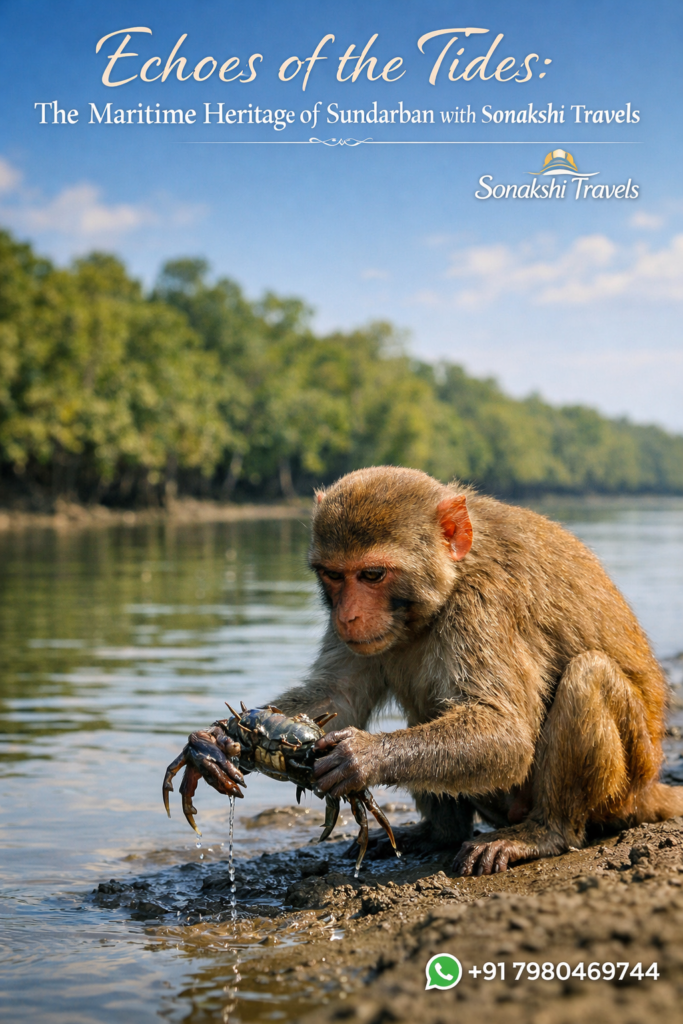
The maritime heritage of the Sundarban is not preserved in monuments or stone structures. It survives in movement. It lives in the rise and fall of tides, in the measured strokes of oars, and in the quiet skill of navigation through shifting creeks. This heritage is not a static record of the past. It is a working system shaped by water, risk, faith, and long practice.
Many readers first encounter the region through a structured reference overview on Sundarban Travel, but the maritime story becomes clearer only when you focus on the daily mechanics of life on water. In this delta, land is never fully stable. Islands change form, riverbanks collapse and rebuild, and channels widen or narrow with season and current. Under such conditions, maritime knowledge is not optional. It becomes the basis of safety, livelihood, and cultural identity.
This article explores that living maritime culture through layered themes—navigation, craft, economy, belief systems, ecological wisdom, and collective memory. The aim is not to romanticize the landscape, but to understand how water has shaped social structure, risk management, and continuity across generations.
The River as Authority: A Tidal Civilisation
In many riverine regions, rivers act as transport routes. In the Sundarban, rivers function as governing forces. The tide sets working hours, fishing windows, boat movement, and even the timing of gatherings. Unlike inland rivers with a stable direction of flow, these waterways reverse twice a day. That reversal changes the practical meaning of distance, timing, and safety.
The maritime heritage here begins with a simple understanding: control is limited, and adaptation is constant. Communities learn to respect the river not as scenery, but as a changing system that must be read with attention.
Boats do not travel from one point to another on fixed lines. They calculate tidal depth, current direction, channel width, and the shifting position of mudbanks. A small error can lead to grounding, delay, or being pulled into stronger currents. Over generations, local communities developed mental maps of creeks and tidal rhythms. This knowledge is rarely written down. It is memorized, tested, corrected, and passed on through daily practice.
This creates a culture where water literacy becomes as important as basic literacy. To understand why the river is treated as authority, it also helps to see how travel on water is organized in real time during a Sundarban Tour, where small route decisions are often made by reading the tide rather than following a fixed schedule.
Majhis: The Living Navigational Archives
Tidal Reading as Skill
The Majhis, or traditional boatmen, represent the operational core of Sundarban’s maritime intelligence. Their expertise is not based on instruments alone. It is observational and learned through repetition. Many read water colour to judge depth, watch wave texture to detect submerged banks, and note wind shifts that often signal a change in current behaviour. These are not dramatic acts. They are quiet judgments made continuously.
This knowledge is not theoretical. It is practiced daily. Children grow up watching elders steer through narrow channels without needing formal markers. Over time, they learn how safe routes shift across seasons, how river bends behave differently at high tide, and how a channel that was reliable last month may become shallow after erosion upstream.
Psychological Discipline
Navigation in tidal forests demands calm decision-making. Sudden wind changes, strong currents, low visibility, and wildlife presence require steady judgment rather than quick reaction. Majhi culture therefore values patience and restraint. Loud movement and panic are discouraged, not as a social rule, but as a safety practice. Observation comes first. Action follows.
This psychological framework is part of maritime heritage. It shapes how communities respond to uncertainty, how teams coordinate silently, and how risk is managed without constant verbal instruction. In a landscape where the tide does not negotiate, disciplined attention becomes a form of security.
Traditional Boat-Building: Engineering for Tides
Boat-building in the Sundarban is a practical engineering tradition shaped by local water conditions. Unlike large sea vessels, these boats are designed for shallow creeks, soft mudbanks, and narrow channels where turning space is limited. Hulls are often curved to reduce resistance and to move smoothly through changing currents. The base is structured to tolerate grounding without cracking, because contact with mud and sand is sometimes unavoidable.
Material Intelligence
Local woods are selected based on buoyancy, strength, and how they respond to brackish water. Jute ropes are used because they swell when wet and tighten naturally, improving grip at joints. Natural resins and sealants help protect surfaces while allowing a level of flexibility that is useful in changing temperatures and repeated water contact. This material logic is not accidental. It reflects long experience with what survives and what fails in this environment.
These vessels are not decorative artifacts. They are adaptive tools. Their form reflects centuries of refinement where each change was tested by tide, channel, and weather events. Understanding this craftsmanship also clarifies why many travellers choose a quieter, more controlled setting such as a Sundarban Private Tour when the purpose is observation of navigation skill and boat design rather than crowd movement.
Types of Boats
- Dinghis for small-scale fishing in narrow creeks.
- Bawalis for deeper tidal channels.
- Hybrid boats for mixed tidal conditions.
Each type responds to a specific hydrological need. Maritime heritage here is therefore functional heritage—designed to perform, not to display.
Fishing Economy: Livelihood on Moving Water
Fishing in the Sundarban is shaped by tidal timing and ecological limits. Crab, prawn, and Hilsa are central to local income systems, but fishing grounds are not chosen randomly. Families often maintain traditional zones recognized through community norms and informal agreements. These local arrangements reduce conflict and help maintain predictable access to resources.
This territorial understanding supports rotation. Rotational fishing reduces pressure on specific channels and allows breeding cycles to recover, which in turn supports long-term yield. In this way, maritime economy and environmental awareness are not separate. They are interlinked through daily need and community memory.
Risk and Ritual
Fishing is not merely labour. It involves exposure to strong currents, sharp tidal drops, and the constant need to remain alert. Before entering deeper zones, many fishermen perform small riverbank rituals. These actions are often explained as spiritual practice, but they also function as psychological preparation. They slow the body, focus the mind, and signal that a risk zone is beginning.
The maritime heritage therefore combines economy, ecology, and faith into a single working system. For visitors who want to understand these livelihoods as living heritage rather than as a simple activity list, the framing inside a well-structured Sundarban Tour Package can help by keeping the day organised around observation windows and community rhythms, not hurried stops.
Honey Collection and Forest Navigation
Honey collection requires entry into mangrove interiors where tidal water mixes with dense forest and limited visibility. Navigation here is not only about moving a boat. It is about coordinating time. Boats must be anchored with care, and the team must plan exit routes around the next tidal change to avoid being stranded when water withdraws.
Collectors memorize creek patterns and retreat paths. Communication between the boat team and forest team is precise and often minimal. Signals are practical. Timing is strict. This structured coordination shows how maritime understanding extends beyond fishing to forest-based livelihoods where the river remains the main access path.
The forest and river are operational partners in this system. The boat is not just transport. It becomes a mobile base that allows entry and safe return, especially when conditions change faster than planned.
Maritime Spirituality: Faith in Flow
Water in the Sundarban is not viewed as passive geography. It is respected as provider and judge. This perception shapes festivals, rituals, and the moral language used to explain survival. In many households, gratitude toward the river is expressed through routine actions, not only through formal ceremonies.
Hilsa and Sacred Return
The Hilsa season is not only an economic phase. It is treated as renewal. The first catch is often symbolically offered to the river, acknowledging dependence and risk. Boats may be cleaned and decorated, and food preparation becomes communal. The social act of sharing the first Hilsa meal connects family identity to river timing.
For readers who want to explore this relationship between river economy and seasonal culture in a focused way, the dedicated context around Sundarban Hilsa Festival 2026 helps explain how food traditions become part of maritime heritage rather than a separate attraction.
Riverbank Festivals
Events like Rash Mela and river-linked pilgrimages demonstrate the sacred relationship with water. Gatherings are timed around tidal convenience because access routes depend on the water level. Even spiritual assemblies must obey hydrological logic. People may not use technical language, but their choices show an accurate awareness of tide behaviour.
This integration of faith and tide reinforces maritime centrality in social life. Ritual, in this sense, is also a practical method for maintaining respect toward a force that can support life or remove it quickly.
Maritime Folklore: Oral Navigation
Oral stories in the Sundarban often involve boats, storms, spirits, and safe return. Figures such as Bonbibi and Dokkhin Rai appear not only as religious symbols but also as moral anchors. The narratives teach restraint, warn against pride, and remind listeners that survival depends on respect—for the forest, for water, and for community rules.
These tales function as cultural maps. They carry instructions in symbolic form, especially in areas where written charts or formal documentation were never central to local learning. In that sense, folklore is a system of education. It preserves memory about what happened, what risk looks like, and what behaviour improves the chance of returning safely.
Under starlit skies, elders recount incidents of boats that vanished with tide and storms and returned only after prayers, discipline, or collective effort. The details vary, but the lesson remains stable: the river rewards humility and punishes careless confidence.
Adaptive Architecture: Living with Tides
Maritime heritage extends to housing and settlement design. Stilt houses reduce flood impact. Elevated storage helps protect grain and tools from sudden water entry. Many homes are built with an understanding that soil stability can change after erosion, and rebuilding may become necessary within a lifetime.
Boat anchoring spaces are often integrated into the layout of settlements because boats are not luxury objects. They are extensions of household security, used for work, movement, and emergency exits. This is why coastal and riverbank architecture often reflects a practical balance between access and protection.
Community storm warning systems reflect collective maritime planning. Cyclone preparedness is not separate from daily life. It is part of social organisation. Each structural adaptation shows long-term engagement with tidal unpredictability and the acceptance that safety is maintained by preparation, not by assumption.
Ecological Intelligence and Rotational Systems
Rotational fishing, seasonal access limits, and selective harvesting demonstrate environmental foresight. Local knowledge often aligns with conservation principles because resource loss is felt immediately in household income. When a creek is overused, the decline becomes visible, so restraint becomes practical, not abstract.
Salt-tolerant crops are cultivated where tidal intrusion affects soil quality. Mangrove patches are respected because they reduce erosion and protect banks. Many communities understand that removing mangroves too aggressively weakens river edges and increases long-term damage. This ecological logic is built from observation, not from policy documents.
This system reveals how survival strategies evolved into community norms. In places where water governs everything, ecological mistakes are not theoretical. They are experienced. That experience becomes a form of environmental education passed down through practice.
The Social Structure of Water-Based Communities
Maritime work creates interdependence. Boatmen rely on fishermen. Fishermen depend on net-makers. Honey collectors coordinate with navigators. Economic roles overlap and support one another, creating a network where individual effort depends on shared skill.
Decision-making often occurs collectively, especially when tides or storms threaten safety. This encourages cooperation instead of isolated enterprise. People share tide knowledge, route changes, and safe timing because withholding information can place the whole community at risk.
In water-dominated landscapes, trust becomes a safety tool. It enables coordination on boats, sharing of resources during crisis, and the steady transfer of skills from elders to younger members. Maritime heritage, therefore, is also social heritage—built on cooperation under pressure.
Experiencing Maritime Heritage with Sonakshi Travels
Understanding maritime heritage requires close observation of daily life on water. Watching a Majhi adjust direction mid-current, observing fishermen repair nets in silence, and listening to boat songs matched to oar rhythm reveal how knowledge is stored in practice. These are small actions, but they hold centuries of accumulated learning.
Through structured engagement with local communities, visitors can witness how tide-based systems function without turning the experience into a performance. The focus remains on learning, listening, and respecting local pace. When the river is treated as authority, hurried observation often fails to capture what matters.
The objective is not to consume culture but to understand its structure. For travellers who want concentrated time on water without distraction from large group movement, a carefully arranged Sundarban Luxury Tour can support deeper attention to boat operations, river behaviour, and community interaction in a controlled setting.
Conclusion: A Heritage That Moves
The maritime heritage of the Sundarban is defined by motion. It is not preserved behind glass. It is performed daily on tidal water. It exists in skilled navigation, adaptive boat design, risk-aware livelihoods, ritualized gratitude, ecological restraint, and oral memory.
This heritage survives because it remains useful. It evolves without losing its foundation. It teaches that coexistence with nature requires discipline, observation, and humility. In a landscape where routes change and water reverses direction, people learn that certainty is temporary and attention is essential.
When one leaves the delta, the memory that remains is not only of rivers and mangroves. It is of a society shaped entirely by water—where tide is teacher, boat is classroom, and resilience is inherited knowledge.
In the Sundarban, maritime heritage does not echo from the past. It flows in the present. For readers who want to anchor this understanding to a short, time-bound field experience focused on river movement and working boat culture, a Sundarban Single Day Package can serve as a practical first observation window without changing the thematic focus of maritime life.