What Makes a Sundarban Tour Ecologically Unique?
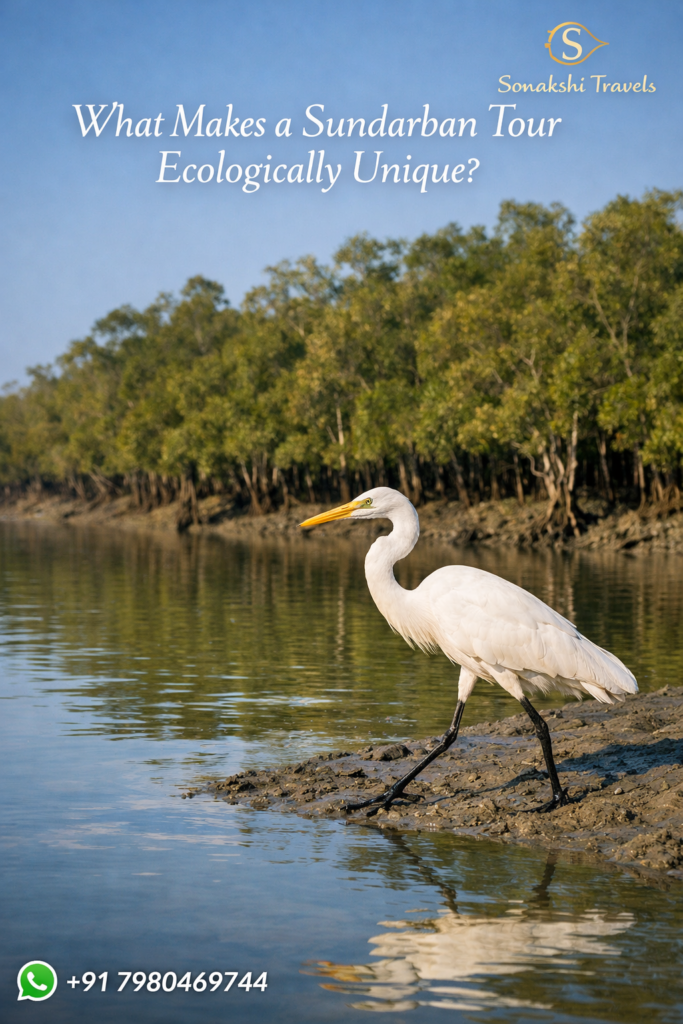
A Sundarban tour does not resemble a conventional forest visit. There are no long dry tracks cutting through land and no permanent pathways that remain unchanged over time. Instead, there is water, soft mud, and the constant rhythm of tide. The forest stands on shifting ground, and every movement is shaped by river currents and tidal cycles. For readers seeking a structured understanding of this delta landscape, the ecological context presented at Sundarban Travel offers a foundational overview of how this region functions.
Travelers often arrive with expectations formed by inland wildlife reserves — open grasslands, jeep safaris, and predictable sighting routes. The Sundarbans quietly reshape that assumption. Here, the forest is tidal, the soil is saline, and the trees breathe through exposed roots. Even direction feels fluid because creeks expand and narrow with the tide. This seamless blending of river, mangrove, wildlife, and human adjustment is what makes a Sundarban tour ecologically unique.
A Mangrove Forest Shaped by Tides
The Sundarbans form the world’s largest mangrove ecosystem, stretching across the delta of the Ganges, Brahmaputra, and Meghna rivers. Unlike inland forests, this region is deeply influenced by the Bay of Bengal. Twice each day, tides push saline water through narrow creeks and wide channels, transforming the landscape in subtle but visible ways.
During a well-structured Sundarban exploration through the delta waterways, visitors quickly recognize how water governs everything. Riverbanks shift, mudflats appear and disappear, and creeks that look expansive at high tide shrink into slender passages at low tide. The environment is never static. It breathes with tidal rhythm.
Mangrove trees survive here through remarkable adaptation. Species such as sundari, gewa, and goran grow in soil saturated with salt. Some develop breathing roots that rise above the mud to absorb oxygen. Others regulate salinity through their leaves. These biological strategies are not minor details. They are the structural basis of the ecosystem.
A Forest Without Roads
Most wildlife reserves rely on road networks for safari movement. The Sundarbans do not. Boats replace vehicles, and rivers function as natural corridors. Observation happens from decks rather than from land-based tracks.
This water-based movement defines the ecological experience. Boats glide slowly along forest edges. Engine noise is kept moderate. Wildlife is observed across channels rather than approached on foot. Many visitors who choose a more intimate Sundarban private tour notice how limited passenger numbers allow quieter travel, which aligns closely with the sensitivity of the habitat.
Because no roads cut through the forest core, disturbance remains comparatively low. Human presence is regulated to designated zones. This preserves large interior areas as undisturbed habitat, creating a buffer that supports ecological stability.
The Royal Bengal Tiger in a Tidal Habitat
The Sundarbans are known for the Royal Bengal Tiger, yet its behavior here differs from tigers in dry forests. It swims across creeks, navigates muddy islands, and adapts to terrain shaped by water rather than grassland.
Sightings during a planned Sundarban tour package are never guaranteed. Dense mangroves provide natural camouflage. Yet the ecological significance lies in the tiger’s adaptation to saline conditions and amphibious movement. Few large predators in the world survive within such a tidal mangrove system.
The tiger’s presence reflects a broader principle: survival here depends on adjustment to constant environmental change. The forest does not reward rigidity. It favors flexibility.
Interconnected Wildlife Beyond the Tiger
Although the tiger captures attention, the ecological network of the Sundarbans extends far beyond one species. Spotted deer graze along open patches. Saltwater crocodiles rest near creek mouths. Mudskippers transition between water and land. Irrawaddy dolphins surface quietly in deeper channels.
Birdlife is equally significant. Kingfishers, herons, egrets, brahminy kites, and migratory species rely on this delta for feeding and seasonal refuge. The mixing of freshwater and saltwater sustains fish populations, which in turn support birds and mammals. Visitors who opt for a more spacious Sundarban luxury tour experience often find that extended time on deck improves opportunities to observe this interconnected chain.
Each layer depends on another. Remove the mangroves, and breeding grounds collapse. Alter salinity balance, and fish stocks shift. The ecosystem functions as an integrated whole rather than as isolated components.
Human Life Within a Sensitive Ecosystem
Unlike many protected areas that exist in isolation, the Sundarbans include inhabited islands around the reserve forest. Communities depend on fishing, honey collection, and small-scale agriculture. Their lives are shaped by cyclones, tidal floods, and saline intrusion.
During a Sundarban journey, travelers often see mud embankments built to protect farmland. These embankments are repaired repeatedly after storms. Houses are raised slightly above ground level. Cultural traditions, including stories of Bonbibi, reflect an enduring relationship between humans and forest.
This coexistence deepens the ecological narrative. Conservation in the Sundarbans is not separate from community survival. It requires regulated entry systems, licensed boats, and controlled visitor movement.
Climate Vulnerability and Environmental Significance
The Sundarbans rank among the regions most vulnerable to climate change. Rising sea levels, stronger cyclones, and increasing salinity have already altered certain islands. Some land areas have gradually diminished over the decades.
At the same time, mangroves act as a natural defense system. They reduce storm surge intensity and protect inland settlements. Their dense root systems store carbon and stabilize sediment. These ecological services extend well beyond the delta itself.
For travelers planning a slightly longer immersion such as a 2 nights 3 days Sundarban tour package, the extended duration often reveals how tidal patterns and weather shifts shape the environment across multiple days, offering deeper perspective on its vulnerability.
Silence as an Ecological Element
In many tourist destinations, noise dominates the experience. Engines, crowds, and constant activity define the atmosphere. The Sundarbans feel markedly different. Silence becomes part of the ecological setting.
When a boat slows near a watchtower, wind and distant bird calls replace engine vibration. The stillness heightens observation. A ripple on the surface, a movement near a mudbank, or a sudden bird call gains significance.
This quiet reflects regulated tourism and limited infrastructure within core zones. Reduced disturbance supports breeding cycles and natural behavior patterns.
A Landscape That Changes Hour by Hour
In many forests, seasonal change defines scenery. In the Sundarbans, visible change can occur within hours. High tide submerges mudflats. Low tide exposes complex root systems. The same creek may appear entirely different between morning and afternoon.
Travelers sometimes describe watching deer tracks gradually disappear beneath rising water during a single boat ride. That fleeting transformation captures the essence of the delta. Nothing remains fixed. The forest reshapes itself repeatedly, guided by tide and time.
Such a dynamic environment demands patience. It rewards quiet attention rather than hurried expectation.
Ten Lines from the Mangrove Edge
Water moves where land once stood,
Roots rise like quiet questions in the mud,
Tide writes its name and washes it away,
Deer step lightly at the edge of day,
A kite circles above a silver stream,
Dolphins surface like fragments of a dream,
Wind threads through leaves of salt and green,
A tiger passes where none have seen,
Silence settles, deep and slow,
The forest breathes with the ebb and flow.
Why a Sundarban Tour Feels Different
The ecological uniqueness of a Sundarban tour lies not in a single feature but in its combination of forces. It is tidal yet forested, inhabited yet protected, fragile yet resilient. Beauty here is inseparable from environmental tension.
Visitors leave with a clearer understanding that conservation involves protecting processes — tidal movement, salinity balance, breeding cycles, and migratory pathways. Wildlife exists within these processes rather than apart from them.
Unlike destinations where animals appear in open landscapes, the Sundarbans require humility. The forest does not reveal itself on command. It unfolds gradually, often quietly.
As boats return toward the mainland and the mangrove line fades into the horizon, many travelers sense a shift in perception. They have not merely toured a forest. They have observed an ecosystem in motion — shaped by water, guarded by roots, sustained by balance. That living movement is what makes a Sundarban tour ecologically unique.