Why a Well-Placed Sundarban Tour Becomes More Than Travel: Planning, Privacy, Silence, Wildlife, and Inner Renewal in One Living Landscape
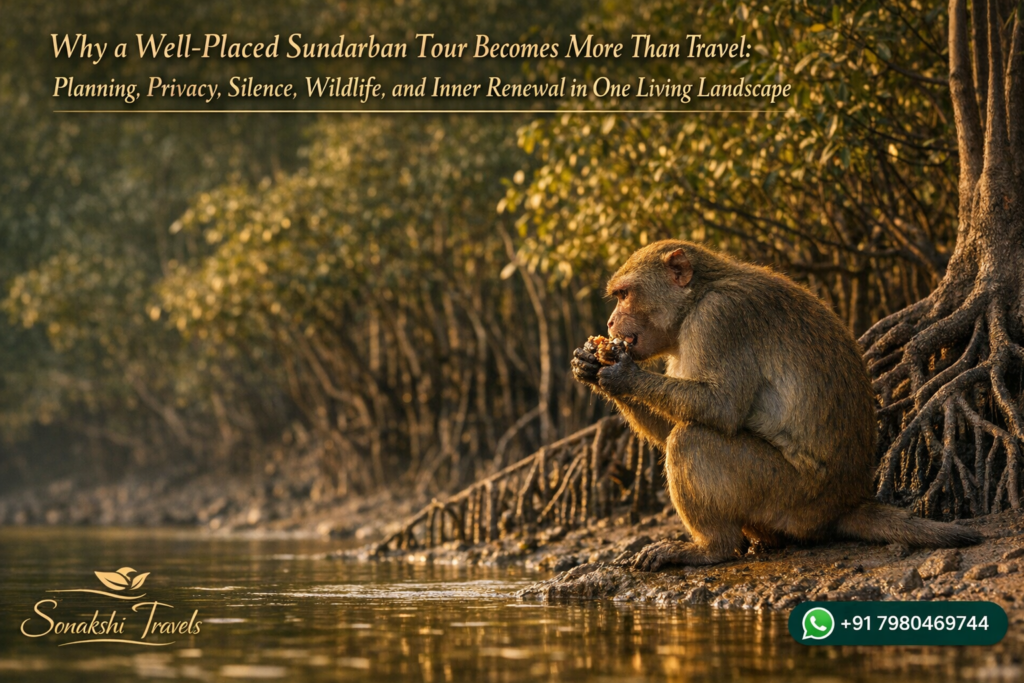
There are some journeys that remain only as photos. They look good for a few days, then slowly fade from memory. A Sundarban tour can be very different. When it is planned with care, lived at the right pace, and experienced with attention, it becomes more than a holiday. It becomes a rare meeting between outer movement and inner stillness.
The Sundarban is not a place that should be rushed. It is a land of tidal rivers, shifting light, quiet forests, mudbanks, village edges, birdsong, and long moments that ask the traveler to slow down. This is why the best journey here is not shaped only by distance or sightseeing. It is shaped by rhythm, privacy, timing, comfort, observation, and emotional readiness. A traveler may come to see mangroves and wildlife, but often returns with something deeper: a calmer mind, a clearer sense of space, and a stronger feeling of connection with nature.
That deeper side of the journey becomes clearer when one understands how Sundarban journey planning, rhythm, privacy, and inner renewal work together. The real value of the destination is not only in what is seen, but also in how the entire travel experience is arranged and felt. In that sense, the Sundarban is not merely visited. It is gradually entered, understood, and absorbed.
A meaningful journey through this region is built on balance. It must allow room for wonder, but it must also respect comfort. It must welcome adventure, but not become noisy or crowded. It must leave space for wildlife, but also for reflection. Most importantly, it must match the nature of the place itself. The Sundarban does not reveal itself through speed. It opens slowly, through silence, patience, and careful design.
The real meaning of a Sundarban tour lies in balance, not excess
Many people think a good trip must always be full of action. They expect constant movement, loud excitement, and one attraction after another. But the Sundarban teaches a different lesson. It shows that a powerful travel experience can come from balance rather than excess. Here, the river does not move like a city road. The forest does not speak in a direct voice. The beauty of the place arrives in layers.
This is why a thoughtful Sundarban private tour or carefully designed river journey often feels richer than a crowded and hurried outing. When the boat moves quietly through creeks and wider channels, the traveler begins to notice details that would otherwise be lost. The curve of exposed mangrove roots, the sudden flight of a kingfisher, the distant sound of a bird before sunrise, the changing colour of water under shifting light—these are not small things. Together, they create the true emotional shape of the journey.
The Sundarban also speaks to two very different travel wishes at the same time. One part of the traveler seeks movement, surprise, and the thrill of wild nature. Another part seeks calm, distance from noise, and relief from daily pressure. That is why the destination feels so complete. It can hold both adventure and peace without forcing one to destroy the other. This deeper dual quality is reflected beautifully in the idea of a Sundarban journey that speaks to both adventure and inner calm.
The best journeys here do not treat calm as emptiness or adventure as noise. Instead, they allow both to exist side by side. A traveler may spend one hour watching a riverbank with complete stillness and the next hour feeling the thrill of entering a wild stretch of forest water. This contrast is not a problem. It is the essence of the destination.
Why planning shapes the emotional quality of the journey
In many places, poor planning causes inconvenience. In the Sundarban, poor planning can also damage the emotional experience of the whole trip. Because this landscape depends on timing, access, comfort, and movement through water, thoughtful preparation becomes a central part of the journey itself. It is not separate from the experience. It quietly supports it.
A meaningful tour usually begins before the boat starts moving. It begins in decisions about timing, route, duration, accommodation, privacy level, and the kind of pace the traveler wants. A person looking only for a quick outing may choose a short and simple trip. But someone seeking a fuller and more reflective experience will benefit from a plan that allows breathing space. This means not trying to do too much in too little time. It means creating a journey where movement and pause both have value.
Good planning also protects comfort, and comfort matters more than many people first imagine. When a traveler feels safe, rested, and physically at ease, the mind becomes more open. The landscape can then be received with clarity. Without that ease, even beautiful surroundings may feel tiring. For this reason, travel design in the Sundarban must think beyond transport and meals. It must consider how the traveler will experience time, noise, privacy, and rest during the full course of the journey.
This is why the idea behind planning a meaningful Sundarban tour through preparation, perspective, comfort, and travel design is so important. The quality of the journey depends not only on what is offered, but on the way those parts work together. A better trip is often not the one with the longest list. It is the one with the strongest sense of order, flow, and purpose.
Proper planning also changes perspective. It helps the traveler arrive with the right expectations. The Sundarban is not a fixed performance. Wildlife sightings are never a machine-made promise. Weather, tide, light, and river conditions all shape what each day becomes. A well-informed traveler understands this and begins to value the journey itself, not just one dramatic moment. That understanding creates a more mature and rewarding travel experience.
Privacy, silence, and season make the Sundarban more meaningful
One of the most important truths about this landscape is that it responds best to quiet attention. The Sundarban is not meant to be consumed quickly. It is a place where silence has practical and emotional value. Silence allows the traveler to hear life before seeing it. It also allows the place to remain itself, without being covered by human noise.
This is where privacy becomes meaningful. A more personal and less crowded travel setting often changes everything. It creates room for observation, conversation, rest, and reflection. It allows the traveler to feel present instead of being carried along by the pace of a crowd. In such a setting, the river becomes easier to hear, the forest feels closer, and even ordinary moments gain depth.
Privacy also supports emotional renewal. Many travelers today live in constant noise—phones, traffic, schedules, screens, and pressure. The Sundarban offers a rare opposite condition. But this gift can only be fully felt when the journey itself protects space and quiet. A tour that is too loud, too packed, or too hurried may show the destination without allowing the traveler to truly feel it.
Season plays an equally important role. The emotional and practical shape of the journey changes with weather, light, and natural movement. A well-timed tour can improve comfort, visibility, mood, and the general quality of the river experience. The right season does not simply affect the view. It affects how the whole place is received by the senses.
This wider truth comes together in the idea behind why a Sundarban tour becomes most meaningful when wildlife, privacy, season, and silence come together. None of these elements works fully on its own. Wildlife becomes more moving when the surroundings are quiet. Silence becomes richer when the season supports comfort. Privacy becomes more valuable when it allows true observation. Together, they create a travel experience that feels complete rather than fragmented.
Wildlife in the Sundarban is not only about sighting, but about awareness
Wildlife is one of the strongest reasons people feel drawn to the Sundarban. Yet the deepest wildlife experience here is not always about seeing the most dramatic animal at the perfect moment. It is also about entering a world where life is sensed in many forms—through movement, sound, signs, patterns, and tension in the environment.
In such a place, awareness becomes more important than simple viewing. A ripple in the water, a fresh mark on the mud, a sudden silence among birds, a deer moving at the tree line, a crocodile resting in distant stillness, or the flash of wings over a creek can all become part of the living drama of the forest. The traveler learns to pay attention not only to the main event but also to the surrounding clues of life.
This creates a more respectful relationship with the landscape. Instead of expecting nature to perform on command, the traveler begins to understand that the forest has its own order. The Sundarban remains powerful because it is not fully controlled, not fully predictable, and not fully revealed. This uncertainty gives the journey its mystery and dignity.
That is why meaningful wildlife travel here depends on patience. A hurried tourist may ask, “What did I see?” A more attentive traveler may ask, “What did I learn to notice?” The second question often leads to a deeper memory. It turns the tour from a checklist into a lived experience.
For the same reason, the best Sundarban luxury tour or quiet river journey is often not the most crowded or loudly guided one. It is the one that gives enough time for the senses to settle. When the body slows down, the forest seems to come closer. What first looked empty begins to feel full.
Even a short journey can become a space for reflection and personal discovery
Many people assume that only long travel can create deep change. The Sundarban challenges that idea. Even a single day, when lived with awareness, can carry surprising emotional force. This happens because the landscape itself is so different from daily urban life. Water replaces roads. Birdsong replaces horns. Tides replace clocks. The mind responds to this change quickly.
When a person enters such an environment, something quiet often begins to shift. The constant pressure to think ahead may grow weaker. Observation becomes easier. Silence no longer feels empty. It begins to feel healing. In this state, even a short boat journey can become more than sightseeing. It can become reflection.
The Sundarban is especially powerful for this reason: it changes the traveler’s inner speed. A person may arrive with tiredness, stress, distraction, or restlessness. But as the day moves through river, light, mudbank, and birdsong, the mind begins to loosen. This is not magic. It is the natural result of being placed inside a slower and more living rhythm.
This deeper emotional possibility is captured in the idea of how a Sundarban tour turns a single day into mystery, reflection, birdsong, and personal discovery. The day becomes meaningful not because many things are forced into it, but because the place itself has enough depth to awaken thought and feeling.
Birdsound in particular often plays an important role in this process. In cities, people usually hear noise without listening. In the Sundarban, listening returns. One birdcall from a hidden branch, the low sound of river water against the boat, the distant life of the forest at dawn—these sounds draw the traveler into the present. Presence then opens the door to reflection.
For some travelers, that reflection brings peace. For others, it brings wonder. For many, it brings both. A short journey, when shaped well, can therefore leave a long emotional mark.
A meaningful Sundarban experience is designed through rhythm, not rush
If there is one principle that ties everything together, it is rhythm. The Sundarban rewards journeys that follow a natural flow. Planning matters, but it should not become pressure. Wildlife matters, but it should not become obsession. Comfort matters, but it should not remove the raw beauty of the place. Privacy matters, but it should still leave room for connection with the wider life of the delta.
A well-designed journey finds harmony among all these needs. It allows early movement when light is gentle and life is active. It allows slower hours for rest and observation. It respects season, weather, and the changing pulse of the tide. It creates enough comfort for the traveler to remain open, and enough quiet for the place to remain real.
This is why the finest Sundarban luxury private tour is not defined only by premium features. It is defined by how well the journey protects meaning. Real quality lies in thoughtful flow, emotional ease, natural timing, and the ability to let the landscape speak without interruption. In the same way, a strong Sundarban private tour package is not valuable only because it is private. It becomes valuable when that privacy supports deeper seeing, calmer travel, and stronger inner connection.
In the end, the Sundarban does not ask the traveler to conquer anything. It asks for attention. It asks for patience. It asks for respect. And when those are given, the journey often gives back something larger than expected.
A meaningful Sundarban tour is therefore not only about reaching a famous destination. It is about entering a rare landscape in the right spirit. When planning is thoughtful, pace is natural, silence is protected, wildlife is respected, and the traveler is given room to breathe, the experience becomes far more than tourism. It becomes a meeting between the human mind and a living world that still moves by river, light, tide, and instinct. That is why the memory lasts. That is why the journey stays within the traveler long after the boat has returned.