Updated: March 11, 2026
5 Cultural Highlights of Sundarban Hilsa Festival 2026
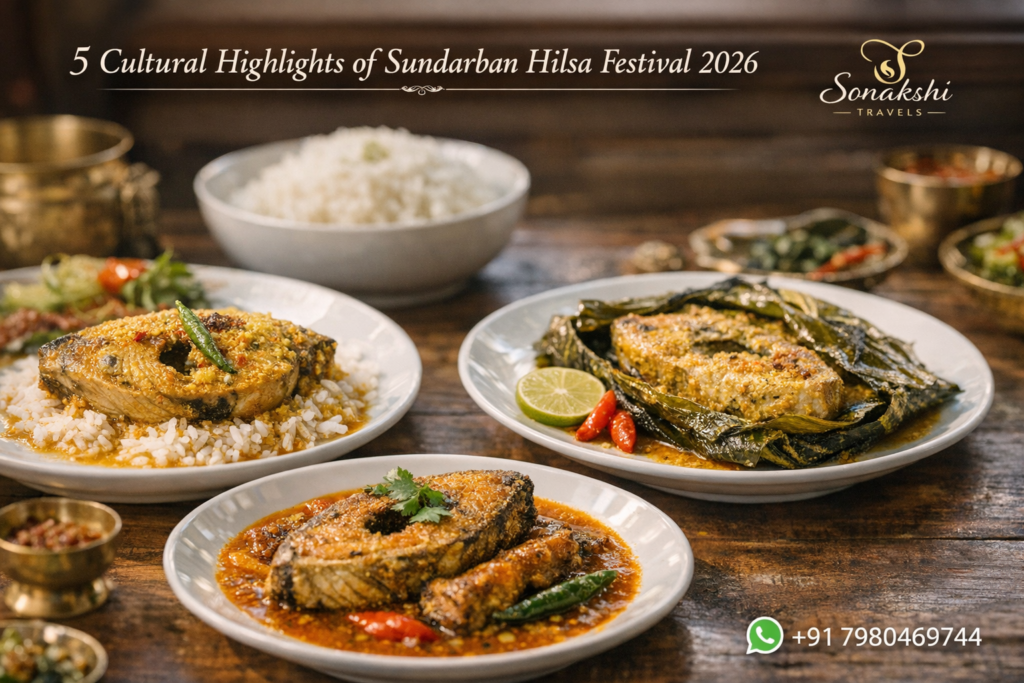
The value of a food festival is not measured only by the variety on the plate. Its deeper meaning lies in what it reveals about memory, livelihood, ritual, and the habits of a place. That is why the Sundarban hilsa festival 2026 deserves attention not merely as a culinary gathering, but as a cultural event shaped by river life, Bengali taste, seasonal identity, and the social language of hospitality. In the delta, hilsa is never just a fish. It is a marker of heritage, a subject of poetry and conversation, an economic symbol, and a seasonal presence that carries emotional weight across households and communities.
The festival becomes important because it gathers these meanings into one living experience. A visitor does not encounter food in isolation. One encounters cooking practices handed down through families, songs and spoken rhythms rooted in Bengal, serving traditions shaped by respect for guests, and a river-facing atmosphere in which cuisine remains inseparable from geography. The event therefore functions as a cultural lens. It shows how the Sundarban receives, interprets, and presents one of Bengal’s most beloved ingredients through its own local sensibility.
For those who arrive through a Sundarban tour or as part of a specialized seasonal journey, the festival offers something more than sightseeing. It offers entry into a regional mood. Even travelers who usually choose a Sundarban tour package for wildlife, waterways, and landscape discover that the hilsa festival introduces another dimension of the delta: its table culture, its domestic aesthetics, and its emotional relationship with river produce. In that sense, the festival is one of the most refined ways to understand how culture is lived in the Sundarban rather than merely described.
1. Hilsa as a Cultural Symbol, Not Just a Festival Dish
The first cultural highlight of the festival lies in the status of hilsa itself. Across Bengal, hilsa occupies a place that few ingredients can claim. It is associated with festivity, family meals, monsoon memory, literary nostalgia, and a form of culinary prestige that reaches across class and geography. At the Sundarban festival, that wider Bengali reverence meets the texture of delta life. The result is not generic celebration, but a specific regional reading of hilsa as both food and identity.
What makes this meaningful is the way the fish is discussed and presented. It is spoken of with discernment. People notice size, texture, fat content, aroma, the cut of each piece, and the way the bones interact with the eating experience. This language of attention is itself cultural. It reflects a culinary intelligence developed over generations. A festival built around hilsa therefore becomes a public expression of private knowledge that has long existed in Bengali homes.
In the Sundarban setting, the symbolism becomes even more layered. The delta is a world of tidal movement, fishing communities, wet markets, mudbanks, mangrove edges, and food traditions shaped by water. Hilsa naturally belongs to this emotional geography. Even when served in a carefully curated festival meal, it still carries traces of river imagination. One can feel that the ingredient has not been imported into the landscape for spectacle; it belongs to a wider aquatic civilization of which the Sundarban is a profound part.
This is why the festival has more depth than a simple food event. The fish on the plate stands for inheritance. It represents taste learned in childhood, seasonal longing, and the Bengali instinct to connect ingredients with emotion. Within the framework of the Sundarban ilish utsav, hilsa becomes a cultural text, and the meal becomes a way of reading the region.
2. Traditional Bengali Cooking Styles as Living Heritage
The second cultural highlight is the preservation and public display of traditional Bengali hilsa preparations. Festivals often flatten cuisine into quick consumption, but the stronger versions do the opposite. They restore attention to technique. At this event, the cultural richness lies in how the cooking methods themselves become part of the experience. Mustard-based gravies, steamed preparations, leaf-wrapped forms, lightly spiced broths, fried cuts, and slow-balanced household recipes all point to a domestic culinary archive still alive in practice.
These preparations matter because Bengali cuisine has long depended on proportion, timing, and restraint. Hilsa is especially sensitive. Too much spice can overwhelm it. Too much handling can damage its delicate structure. Too much haste can erase its subtle oil and aroma. When a festival respects these principles, it is not merely offering variety. It is honoring a system of knowledge. That system is cultural heritage in edible form.
One of the most compelling aspects of the festival is the way familiar dishes gain regional texture through context. A mustard hilsa preparation eaten in an urban restaurant and the same dish eaten in a riverine cultural setting do not carry the same meaning. In the Sundarban, the sensory environment changes the interpretation. Steam rising from rice, the fragrance of mustard, the softness of fish, and the nearby presence of tidal air create a more complete cultural field. Food is no longer isolated from place.
The cooking also reflects a Bengali aesthetic of balance rather than excess. The finest hilsa dishes do not shout. They persuade quietly through aroma, oil, warmth, and precision. This aligns closely with the wider cultural temperament of the delta, where depth often appears through rhythm and subtlety rather than grand display. That is why the culinary component of the festival should be understood as a form of heritage performance, though it remains rooted in authenticity rather than staged theatricality.
For travelers who usually book a Sundarban private tour or a quieter family journey, this culinary dimension often becomes unexpectedly memorable. It offers intimate access to local taste structures that cannot be understood through landscape alone.
3. The Festival Table as a Space of Bengali Hospitality
The third cultural highlight is the role of hospitality. In Bengal, food is not served as a neutral transaction. It is offered with social meaning. The arrangement of dishes, the order of service, the encouragement to eat more, the attentive observation of guest response, and the pride attached to feeding someone well all belong to a deeply rooted cultural ethic. At the hilsa festival, this ethic becomes visible in concentrated form.
The meal table becomes a social institution. It is where strangers speak more freely, where memory is exchanged, where culinary comparison becomes a form of regional conversation, and where the host’s cultural identity is expressed through care. One does not simply receive food; one is invited into a tradition of receiving. This distinction is important. Hospitality in the Bengali sense is relational. It values emotional warmth as much as technical service.
At the festival, this hospitality often appears through abundance managed with grace. Multiple preparations of hilsa are not presented only to impress. They express a cultural desire to show range, to honor the ingredient, and to make the guest feel the richness of the occasion. Rice, accompaniments, side flavors, and sequencing all contribute to a meal structure that reflects social refinement rather than random excess.
The cultural seriousness of serving is especially striking because hilsa itself demands patience from the eater. Its bones require attention. Its flavor rewards slowness. The meal therefore encourages a calmer pace than many modern dining environments permit. In that slower rhythm, conversation deepens. People recall recipes from mothers and grandmothers, compare river fish traditions, and speak about the emotional authority of certain dishes. The table becomes a vessel of oral culture.
Even visitors who enter the region through a Sundarban luxury tour often find that the most lasting memory is not grandeur, but this quieter human refinement. The festival reveals that hospitality in the Sundarban is not decorative. It is a disciplined social value shaped by food, dignity, and attentiveness.
4. Folk Expression, Local Voice, and the Soundscape of Celebration
The fourth cultural highlight is the atmosphere created by local voice, folk expression, and the subtle soundscape of celebration. A meaningful regional festival is never only visual. It is also carried by speech patterns, song fragments, laughter, market-like conversation, kitchen rhythms, and the tonal qualities of public gathering. In the Sundarban, where rivers and settlement life have shaped local expression for generations, these sounds give the festival its emotional texture.
Food festivals become culturally significant when they preserve the human environment around the meal. During the hilsa celebration, one hears not only the language of serving, but the language of recollection. People speak of how hilsa was cooked in earlier years, how certain dishes are linked with family seasons, and why particular forms of preparation still command respect. Such speech is not minor background detail. It is intangible heritage. It keeps the ingredient connected to story rather than reducing it to consumption.
There is also a specifically Bengali pleasure in public food conversation. Debates over the best preparation, the proper sharpness of mustard, the elegance of a steamed version, or the superiority of a lighter broth all reveal a living culinary culture comfortable with nuance. The festival becomes a stage for that nuance. Taste is discussed with seriousness, but also with humor and intimacy.
When local cultural performances or folk-inflected elements accompany the event, they do not feel separate from the meal. They extend it. The fish on the plate, the river nearby, the spoken cadence of Bengali, and the collective mood of the gathering all work together. One begins to understand that cultural identity in the Sundarban is not stored in one object. It lives in relations: between food and memory, between hospitality and song, between season and speech.
This is one reason the Sundarban ilish Utsav 2026 stands apart from ordinary seasonal events. It has the capacity to hold cuisine and expression in the same frame. The visitor does not merely eat regional culture; the visitor hears it and feels its social rhythm.
5. Riverine Identity and the Deep Bond Between Food and Landscape
The fifth cultural highlight is the way the festival clarifies the relationship between food and riverine identity. In the Sundarban, landscape is never a silent backdrop. It actively shapes livelihood, timing, appetite, and imagination. The mangrove delta, with its tides, channels, soft mudbanks, and shifting edges, teaches a distinct form of attention. A hilsa-centered festival in such a place cannot be separated from that ecological psychology.
This does not mean the event should drift into generic nature writing. Its cultural significance lies in a more precise fact: communities formed by water develop ways of eating, serving, remembering, and valuing ingredients that are inseparable from aquatic life. Hilsa, with all its prestige in Bengali culture, becomes especially resonant in a region where river presence is part of daily consciousness. The festival makes that relationship legible.
One sees it in the emotional tone of the event. The meal does not feel detached from the surroundings. It feels in conversation with them. The soft weight of fish, the gleam of oil, the centrality of rice, and the seasonal appetite for classic hilsa preparations all appear more meaningful in the delta than they would in an abstract venue. The place gives the cuisine depth; the cuisine gives the place intimacy.
This is why the festival can also enrich a broader Sundarban tourism narrative without becoming generic. It shows that the region is not understood fully through scenery alone. Cultural reading is essential. The delta must also be approached through foodways, social ritual, and the everyday aesthetics of how people honor ingredients. In that sense, the festival provides one of the clearest cultural gateways into the lived identity of the Sundarban.
For some visitors, the event may even reshape the logic of their travel expectations. Those who come for a polished experience through a Sundarban luxury private tour may discover that refinement in the delta is not only found in comfort, but in the authenticity with which culture is preserved and presented. The true luxury is access to something regionally grounded, emotionally intelligent, and carefully sustained.
Why These Five Highlights Matter Together
Each of these five highlights is meaningful on its own, but their real strength lies in their connection. Hilsa as a symbol, traditional Bengali cooking, the ethics of hospitality, the soundscape of local expression, and the bond between food and riverine identity together create a complete cultural portrait. Remove any one element, and the festival becomes thinner. Keep them together, and the event becomes a serious regional experience rather than a temporary attraction.
What emerges is a layered understanding of the Sundarban. The region is shown not as a distant landscape to be observed from outside, but as a living cultural world with its own values of taste, memory, and social grace. The festival reveals that cuisine here is not secondary to place. It is one of the most articulate ways the place speaks.
That is why the Sundarban hilsa festival should be appreciated as a cultural document in motion. It preserves culinary intelligence, honors Bengali emotional history, and translates the delta’s river-centered life into a form that visitors can experience directly. The result is not only pleasure, though there is certainly pleasure in it. It is understanding.
In the end, the festival’s finest achievement is that it allows people to encounter culture through appetite without reducing culture to appetite. One leaves with remembered flavors, but also with remembered voices, gestures, serving styles, aromas, and social rhythms. That is the mark of a genuine cultural event. It feeds the body, but it also enlarges one’s sense of how a region lives, remembers, and welcomes.