How a Thoughtfully Designed Sundarban Tour Brings Together Wilderness, River Comfort, Culinary Heritage, and the Quiet Luxury of the Delta
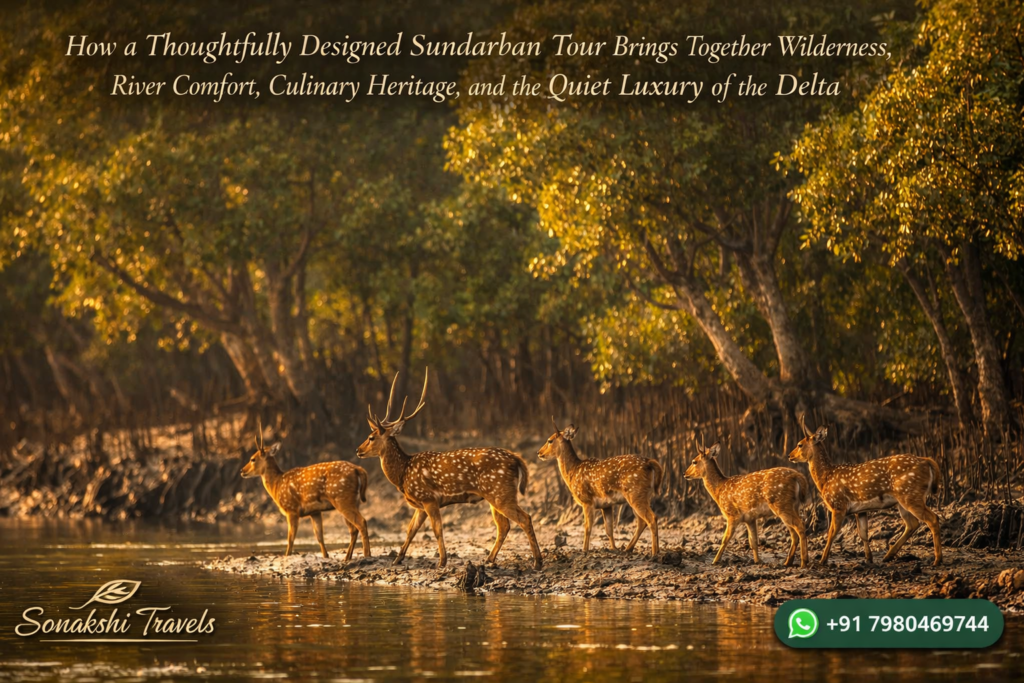
The Sundarban is often introduced through familiar travel language: forest, river cruise, wildlife destination, weekend escape, or mangrove landscape. Yet none of these descriptions is sufficient on its own. The region is not merely a place of natural beauty, nor only a setting for adventure. It is a living tidal world where ecology, culture, food, silence, and travel design come together in a way that few destinations can offer. To understand the true value of a journey here, one must move beyond the idea of sightseeing and begin to think in terms of experience architecture.
A well-planned Sundarban tour is not defined only by distance covered or attractions checked off an itinerary. Its quality depends on how carefully the journey is arranged: how one enters the delta, how time is spent on the river, how the boat experience is managed, how local cuisine is interpreted, and how the atmosphere of the landscape is allowed to reveal itself. In this sense, the delta rewards thoughtful travel far more than hurried tourism. Whether one is considering the clarity and efficiency of a day excursion, the depth of a premium river journey, or the refinement of a more exclusive escape, the essential question remains the same: how can the journey be designed so that the place is truly felt rather than merely visited?
This is why the modern traveler is increasingly drawn to experiences that combine immersion with comfort. A visitor may begin by understanding what is included in the Sundarban single day package, but the deeper appeal of the region unfolds when logistics, atmosphere, cuisine, and interpretation are considered together. The delta is not a destination that reveals its meaning through noise. It asks for patience, careful pacing, and a certain kind of receptivity. When those elements are respected, the journey becomes far richer than a conventional outing.
The Real Meaning of a Sundarban Journey Lies in Experience Design
One of the most important truths about the Sundarban is that travel quality here depends less on abundance and more on arrangement. The destination cannot be understood through the logic of mass tourism, where more stops, more speed, and more visible activity are assumed to create value. In the delta, value comes from how intelligently the day unfolds. The rhythm of transfer, the balance between land and water, the availability of meals at the right moments, the comfort of the vessel, and the presence of knowledgeable local guidance all shape how the traveler perceives the landscape.
This is especially relevant in a place where movement itself is part of the experience. Roads do not define the Sundarban in the way they define most destinations. Water does. That means a journey is not simply about arrival but about transition. The passage from city to jetty, from jetty to boat, and from boat to open tidal channels creates a gradual psychological shift. The traveler leaves behind urban compression and enters a slower, more attentive mode of being. The success of the tour lies in supporting that transition instead of disrupting it.
For this reason, package structure matters. A single-day journey, a longer river exploration, and a premium curated escape may differ in duration, but they are united by one principle: the delta must be approached with order, care, and sensitivity to environment. When the itinerary is built well, even a shorter journey can feel complete because it carries the traveler through a coherent narrative of departure, river immersion, observation, food, and return. When it is built poorly, even a longer trip can feel fragmented.
The modern appeal of the Sundarban therefore lies in the fusion of wildlife travel, river-based comfort, and cultural intelligence. Travelers no longer seek only movement; they seek meaning. They want to know that the route has been chosen with purpose, that the inclusions serve the experience rather than clutter it, and that every component contributes to a sense of presence in the mangrove world.
From Day Excursion to Premium Escape: Why Every Format Needs a Sense of Purpose
The distinction between a day package and a luxury journey is often misunderstood. Many assume that the difference lies only in price or in visible upgrades. In reality, the more important distinction is experiential intention. A day package is most successful when it offers clarity, efficiency, and a concentrated introduction to the tidal forest. A luxury-format journey, by contrast, succeeds when it expands atmosphere, privacy, culinary quality, and interpretive depth. Both formats can be meaningful, but only when each is true to its own purpose.
A day itinerary has the advantage of intensity. It can deliver a memorable encounter with the river landscape when transport is timed well, meals are coordinated smoothly, and the boat safari is structured around comfort rather than rush. In such cases, the traveler does not feel deprived by the shorter duration. Instead, the journey feels distilled, focused, and satisfying. The key is that inclusions should not merely exist on paper; they must function together to create an uninterrupted flow.
A premium experience, however, carries a different promise. It allows the traveler to move beyond the essentials and into a more composed form of exploration. Privacy becomes more valuable. Seating comfort, meal presentation, pacing, and atmosphere become part of the product itself. The river is no longer only a route to the forest; it becomes a setting for reflection, hospitality, and visual pleasure. This is why travelers looking for refinement often search for experiences shaped around top attractions included in a Sundarban luxury tour. The expectation is not only to see more, but to experience the delta with greater elegance and ease.
At its best, a Sundarban luxury tour is not excessive. It is disciplined. It removes friction from the journey. It makes the traveler feel supported without diluting the authenticity of the place. The boat is not only transportation; it is a floating point of comfort. The itinerary is not overloaded; it is curated. The traveler is not hurried from one highlight to another; instead, the day or multi-day sequence is arranged in a way that allows atmosphere to accumulate.
This distinction matters because the Sundarban rewards calm observation. A rushed traveler may see the surface of the landscape. A well-supported traveler begins to notice texture: the colour of tidal water under changing light, the geometry of mangrove roots, the silence between bird calls, the way river wind changes as the channels widen. These are not small details. They are the essence of the experience.
The Mangrove Landscape Is Not Only Scenic, It Is Spiritual in Its Silence
There is another dimension to the Sundarban that thoughtful travelers increasingly recognize: the emotional and almost contemplative quality of the landscape. The mangroves do not impress in the dramatic manner of mountains or monumental architecture. Their power is quieter. The green density, the reflective water, the mudbanks, the roots, and the moving light create an atmosphere that feels inward rather than theatrical. The traveler does not merely observe the delta; one gradually settles into it.
This explains why many journeys through the region leave behind a feeling that is difficult to describe in standard tourism language. The forest appears to breathe through colour, stillness, and layered sound. Even the green itself seems to carry a certain devotional force, as suggested in the evocative spirit of even the mangroves pray in green on a Sundarban tour. The phrase captures something important: the delta is not merely a visual destination. It is also a sensory and emotional environment.
For travelers accustomed to crowded itineraries, this can be a powerful shift. The Sundarban teaches a different style of attention. One listens more. One waits more. One begins to value pauses. In such a place, silence is not emptiness; it is part of the meaning of travel. The slow drift of a boat beside the forest edge, the stillness of a watchtower view, or the sight of a distant bird cutting across late afternoon light can create a sense of depth that no hurried checklist can provide.
This spiritual dimension does not require overt religious framing. It arises naturally from immersion in an ecosystem that feels ancient, adaptive, and slightly beyond ordinary human scale. The traveler becomes aware not only of beauty, but of relationship: water and land, salinity and survival, risk and resilience, isolation and interdependence. That awareness gives the journey moral as well as aesthetic depth. The delta is beautiful, but it is also instructive. It reminds visitors that nature is not background. It is structure, rhythm, and authority.
That is why experience design matters so much. Comfort should not drown out the landscape. Good hospitality in the Sundarban should support perception, not distract from it. The best operators understand that travelers come not merely to relax, but to feel the atmosphere of a rare tidal world without strain, confusion, or unnecessary noise.
Cuisine Turns the Journey Into Culture, and Culture Turns Travel Into Memory
No journey into the Sundarban is complete if it treats food as a minor inclusion. In this region, cuisine is not incidental. It is one of the most powerful ways in which landscape becomes culture. Rivers, estuarine life, seasonal ingredients, Bengali culinary tradition, and local hospitality all meet on the dining table. A thoughtfully prepared meal does more than satisfy hunger; it gives travelers a deeper sense of place.
This is especially true when the culinary experience highlights the wider cultural imagination of Bengal. Among the most evocative examples is the celebration of Hilsa cuisine, which carries emotional, seasonal, and gastronomic significance across the region. The sensuous richness of mustard, banana leaf, subtle steaming, and river fish tradition reflects not only taste but memory. A thematic culinary lens such as from sorshe ilish to paturi: 5 classic hilsa dishes at Sundarban festival 2026 reminds us that the delta journey can also be read through food heritage.
When cuisine is integrated well into the itinerary, the experience gains warmth and narrative continuity. Breakfast taken before river movement, snacks served while the journey unfolds, lunch presented as a pause in the day’s exploration, and evening refreshments before departure all shape how the traveler remembers the excursion. Meals create temporal markers. They divide the experience into meaningful phases while also grounding it in hospitality.
In premium travel formats, this becomes even more important. Luxury is not only softer seating or exclusivity. It is the refinement of detail. A well-composed lunch, properly timed service, fresh local preparation, and a sense of place in menu design all contribute to a deeper perception of value. Food becomes evidence that the journey has been curated rather than mechanically assembled.
This is particularly relevant for the Sundarban because the destination is so strongly tied to regional identity. To travel here without a food story would be to miss one of the clearest bridges between ecology and culture. The waterways shape livelihood, season shapes taste, and cuisine carries that lived relationship into the visitor’s experience. As a result, a memorable tour is never only about what was seen. It is also about what was shared at the table.
Luxury in the Sundarban Means Privacy, Ease, and a More Intelligent Relationship With the Wild
The word luxury is often misused in travel marketing, especially in nature-based destinations. It is sometimes reduced to decorative surfaces or empty promises of exclusivity. In the Sundarban, however, true luxury should be understood in a more disciplined and meaningful way. It is not about overpowering the environment with excess. It is about making the environment more accessible, more legible, and more enjoyable through care, privacy, and thoughtful service.
This is where a refined package offering can make a real difference. Travelers seeking a more composed experience are often looking for a setting in which the stress of coordination has been removed. They want smoother transfers, better vessel quality, more privacy, better meal standards, cleaner pacing, and a more attentive interpretation of the region. In essence, they want the opportunity to encounter the wild without unnecessary discomfort. That aspiration is reflected in the idea of Sundarban luxury tour package offers where wild elegance lies, where refinement does not oppose wilderness but allows it to be felt more fully.
Sundarban private tour and luxury-oriented travel models are especially valuable for families, couples, senior travelers, and visitors who prefer space and personalized pacing. Privacy changes the emotional texture of the journey. Conversation becomes easier. Observation becomes more intimate. One can spend time at a scenic point without feeling managed by a crowd. Children and older guests often feel more comfortable in such a format because the experience can adapt to the rhythm of the group rather than forcing the group to adapt to the rush of the package.
Luxury also changes the meaning of time. In a hurried itinerary, time is consumed. In a carefully designed one, time is inhabited. The traveler is allowed to linger, to notice, to photograph, to rest, and to enjoy the river as environment rather than corridor. This is especially important in the Sundarban, where the mood of the place emerges gradually. No premium promise has real value unless it protects that gradual unfolding.
At its finest, therefore, luxury in the delta is a form of respect: respect for the traveler’s comfort, respect for the destination’s rhythms, and respect for the idea that meaningful nature travel must balance access with restraint. That balance is what turns a package into an experience of lasting value.
A Memorable Sundarban Tour Is One in Which Nature, Hospitality, and Meaning Move Together
The lasting power of the Sundarban lies in its ability to unite elements that many destinations keep separate. Here, river safari, mangrove ecology, Bengali food heritage, and premium travel design can exist within one coherent journey. This is why the region attracts not only wildlife enthusiasts, but also families, culinary travelers, photographers, reflective travelers, and those seeking a quieter form of luxury.
To travel well in the delta is to understand that no single element is sufficient by itself. Wildlife without comfort can become exhausting. Comfort without atmosphere becomes generic. Cuisine without context feels decorative. Scenic beauty without pacing remains superficial. The finest journeys succeed because they bring these components into relationship. They allow the traveler to move through the day with ease while still feeling the raw intelligence of the landscape.
That is the true promise of a thoughtfully designed Sundarban luxury tour package or even a carefully structured shorter excursion. The journey should not feel like a collection of inclusions. It should feel like a narrative. There is departure, transition, immersion, nourishment, interpretation, and return. There is the outward movement into the delta and the inward deepening of attention. There is wonder, but also calm. There is comfort, but also humility before the living force of the mangrove world.
In the end, the Sundarban offers something more enduring than ordinary tourism. It offers a way of travelling that reconnects observation with feeling, and comfort with meaning. The most successful journeys here are those that understand that the delta is not simply to be consumed. It is to be approached carefully, experienced fully, and remembered not only for what it showed, but for how it changed the pace and quality of one’s attention. That is where the real elegance of the Sundarban lies.