How to Plan a Meaningful Sundarban Journey Through Comfort, Wildlife, Privacy, and Family-Friendly Design
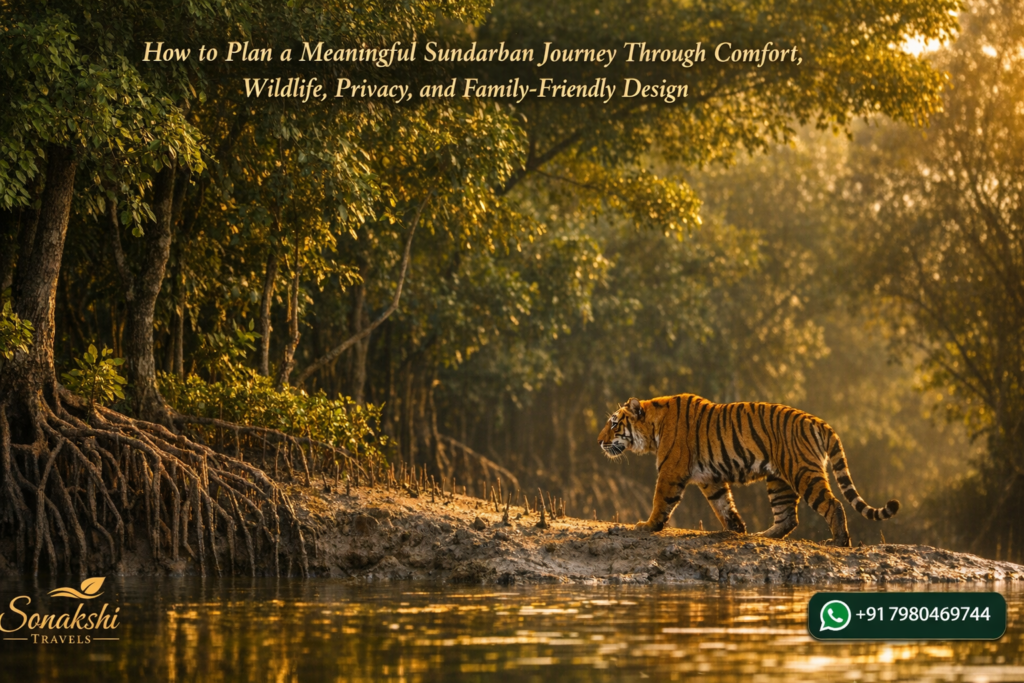
The Sundarban is not a destination that reveals itself through noise, speed, or crowded sightseeing. It is a landscape of shifting water, mangrove shadows, tidal rhythm, and long moments of observation. To travel here well, one must understand that the quality of the journey depends less on spectacle and more on how the experience is designed. In such a place, accommodation matters because rest shapes perception. Privacy matters because silence deepens attention. Wildlife matters because the forest is never merely scenery; it is a living ecological theatre. Cost matters because value in the delta cannot be judged only by price, but by what that price makes possible. Family suitability matters because a place often considered wild and remote can become deeply rewarding when approached with care and thoughtful planning.
A truly memorable Sundarban tour therefore lies at the intersection of several connected ideas: where one stays, how one travels, what level of comfort is chosen, what type of wildlife experience is expected, and whether the journey is suitable for different kinds of travelers, including children and multigenerational families. When these elements are aligned properly, the result is not simply a holiday but a more intelligent and immersive encounter with one of the world’s most extraordinary mangrove ecosystems.
The Sundarban Experience Begins With the Right Travel Philosophy
Many travelers approach the delta with conventional tourism expectations. They look first for rooms, packages, transport, and lists of attractions. But the Sundarban demands a different way of thinking. This is not a destination that should be measured only through hotel categories or itinerary length. It is better understood as a place where environment, comfort, and pace must support one another. A rushed schedule or poorly planned stay can flatten the experience, while a well-structured journey allows the rivers, creeks, watchtowers, village edges, and forest silence to acquire meaning.
That is why a refined journey into the delta often begins not with the question of “what is cheapest” or “what is most luxurious,” but with “what kind of experience do I want the landscape to make possible?” For some travelers, that means privacy and a quieter rhythm. For others, it means family comfort, wildlife interpretation, and reduced logistical stress. For many, it means combining these elements into a single seamless itinerary that respects both the character of the destination and the needs of the travelers.
This is also where the distinction between ordinary travel and a Sundarban luxury tour becomes clearer. Luxury in the delta is rarely about extravagance in the urban sense. It is more often about thoughtful design: smoother transfers, better room quality, more exclusive boat use, calmer dining environments, more attentive service, and the freedom to experience the forest without the distractions that come from crowding or poor coordination. In a tidal wilderness, comfort is not only an indulgence. It is part of the interpretive framework of the journey itself.
Accommodation Shapes the Emotional and Physical Quality of the Journey
In the Sundarban, accommodation is not a secondary detail added after the itinerary is chosen. It directly affects how the destination is felt. A stay that is too basic, too noisy, or poorly managed can exhaust travelers and reduce their capacity to appreciate the subtle mood of the mangrove landscape. A more suitable stay allows for rest, recovery, and a sense of continuity between the river safari and the evening atmosphere on land.
Travelers often ask whether there are premium stays that can support a more comfortable and exclusive experience, and that question reflects an important shift in how the delta is now being approached. The interest in luxury accommodations in Sundarban is not merely about upgraded rooms. It reflects a desire for privacy, hygiene, better service standards, calmer surroundings, and a more restorative base from which to explore the region. In a landscape governed by humidity, travel time, and ecological immersion, these details matter deeply.
Yet it would be simplistic to assume that only one style of accommodation suits every traveler. The best stay depends on the purpose of the journey. Some travelers want a premium riverside property with spacious rooms and curated hospitality. Others may prefer a cleaner, quieter mid-range stay that offers authenticity without sacrificing the essentials. The more important question is whether the accommodation supports the emotional logic of the trip. Does it allow guests to rest properly before the next day’s safari? Does it create a sense of place rather than a feeling of interruption? Does it offer enough comfort for children, older family members, or travelers unfamiliar with remote destinations?
These concerns become especially relevant when choosing the best accommodations for experiencing the Sundarban. The ideal stay is not simply the most expensive one, but the one that aligns best with the desired travel mood. A well-chosen property can help transform the trip from a functional excursion into a balanced experience of wilderness, hospitality, and reflection.
Cost Should Be Understood as Experience Value, Not Just a Number
Price is one of the most frequently discussed aspects of planning a Sundarban journey, but it is also one of the most misunderstood. In many destinations, travelers can compare costs by looking at star ratings or standard inclusions. In the delta, that method is incomplete. Two packages may appear similar on paper and yet deliver entirely different experiences depending on how transfers are arranged, how crowded the boat is, what kind of accommodation is included, how meals are managed, and whether the journey is shared or private.
When travelers explore the cost of a Sundarban luxury tour package, they are often asking a deeper question about what premium travel in the delta truly includes. The answer is rarely just about room tariffs or vehicle categories. It is about the structure of comfort. A higher-priced journey may include more seamless transport, better accommodation quality, enhanced meal planning, greater exclusivity on the water, improved service coordination, and the emotional ease that comes from traveling without confusion or crowd pressure.
This does not mean that every traveler must choose the highest-priced option. It means that price should be read in relation to purpose. A couple seeking privacy, a family traveling with children, a photography enthusiast hoping for longer observation windows, and older guests needing comfort will each define value differently. What matters is whether the expenditure supports a more coherent experience. In this sense, a well-designed package offers not just services, but relief from friction. It reduces uncertainty, preserves energy, and allows the traveler to focus on the river, the forest line, the birds on the mudflats, and the changing light rather than on operational inconvenience.
A good planner therefore does not ask only, “How much does it cost?” but also, “What kind of stillness, access, ease, and safety does that cost create?” In the Sundarban, that is the more intelligent measure of travel value.
Wildlife Expectations Should Be Rooted in Ecology, Patience, and Private Observation
The Sundarban holds one of the most compelling wildlife environments in India, but it is not a safari landscape in the conventional sense. Sightings here are shaped by tide, season, weather, timing, boat movement, habitat sensitivity, and above all patience. This is why expectations must be framed carefully. The forest does not perform on demand. It reveals itself slowly, often through fragments: a kingfisher darting across a creek, a crocodile resting near the bank, deer movement at a distance, raptors scanning the tide line, mudskippers animating the edge of wet ground, or the sudden stillness that suggests unseen life deeper within the mangroves.
Travelers interested in a more exclusive experience often ask about wildlife on a Sundarban private tour, and the question is significant because privacy changes the quality of observation. A private journey does not guarantee dramatic sightings, but it often improves the conditions under which observation becomes meaningful. Fewer people on the boat usually means less noise, more flexibility in rhythm, and a greater ability to linger in silence. This makes smaller ecological moments easier to appreciate and allows guides to interpret behavior, habitat, and environmental cues more effectively.
Sundarban private tour experiences are especially valuable for travelers who do not want wildlife reduced to a checklist. In a private format, the forest can be encountered with more seriousness. One begins to notice the relationship between tide and movement, between bird activity and time of day, between mangrove density and the atmosphere of each water channel. This is not only a visual experience but an interpretive one. Even when the most iconic animals remain elusive, the sense of presence can be powerful. The journey becomes less about a single dramatic moment and more about learning how a living tidal forest communicates.
For families, photographers, older travelers, and those seeking a quieter premium holiday, this style of wildlife engagement is often more rewarding than a crowded or hurried route. It preserves both dignity and wonder. The forest remains itself, and the traveler becomes more attentive rather than more demanding.
Family-Friendly Travel in the Sundarban Depends on Design, Not Assumption
Some travelers assume that the Sundarban is too remote or unpredictable for children, while others assume that any standard package will automatically suit a family. Neither assumption is entirely reliable. The truth is that the delta can be deeply rewarding for families when the journey is planned with age, comfort, pacing, and safety in mind. Children often respond strongly to river movement, birds, local food, village encounters, and the imaginative mystery of the mangrove landscape. But these rewards appear best when the itinerary avoids unnecessary strain.
This is why the question of whether a Sundarban tour is suitable for families with kids should be answered through design rather than generalization. A family-friendly trip is not defined merely by the fact that children are allowed to join. It is defined by whether the route, accommodation, meal timing, transport, rest intervals, and boat environment are supportive of a child’s physical and emotional comfort. The same applies to elderly parents traveling alongside younger family members. A thoughtful itinerary respects energy levels, attention span, and practical needs without reducing the experience to something shallow.
In fact, a well-organized Sundarban family tour can offer unusually rich educational and emotional value. Children encounter a landscape unlike urban life: tidal rivers instead of roads, silence instead of traffic, ecological complexity instead of entertainment overload. Families share long stretches of observation, meals in slower settings, and conversations shaped by place rather than by screens. This kind of travel often produces memory with unusual depth because the environment itself invites presence.
However, the success of such a journey depends on choosing the right accommodation standard, the right boat arrangement, and the right duration. Very young children may need shorter, better-paced itineraries. Families with older children may benefit from more interpretive wildlife focus. Those seeking comfort should not hesitate to prioritize better rooms and smoother logistics. In the Sundarban, family suitability is never accidental. It is the result of deliberate planning.
The Best Sundarban Journey Is One Where Comfort Supports Ecological Attention
When the various planning elements are brought together, a larger truth emerges. The best Sundarban journey is not the most luxurious in an ornamental sense, nor the most adventurous in a performative sense. It is the one in which comfort, ecology, cost, wildlife expectations, and traveler profile are aligned into a single coherent design. The mangrove delta rewards thoughtful structure. It asks for patience, but it also deserves preparation.
For some travelers, that means choosing premium accommodation so that the body remains rested and the mind remains receptive. For others, it means selecting a private format that makes wildlife observation quieter and more personal. For families, it means making sure the pace of the trip welcomes children rather than exhausting them. For all travelers, it means recognizing that the value of the journey lies not only in what is included, but in what is made possible: silence, clarity, meaningful observation, and an authentic sense of being within a living river forest.
Sundarban tour packages are therefore best judged not by marketing language alone but by experiential logic. Does the itinerary leave space for the forest to be felt? Does the accommodation restore rather than drain? Does the price reflect real quality or only surface presentation? Does the travel format support the kind of wildlife encounter the destination can genuinely offer? Does the plan respect the needs of children, older guests, or privacy-seeking travelers? These are the questions that turn planning into wisdom.
In the end, the Sundarban offers something rare in contemporary travel: a landscape where stillness itself becomes memorable. But stillness is not automatically accessible. It must be protected by good decisions. The right room, the right boat, the right expectations, and the right pacing do not distract from the forest. They allow the forest to speak more clearly. That is why the most meaningful journey through the delta is one where comfort does not replace wildness, but helps the traveler receive it with greater depth, calm, and understanding.