Sundarban tour that slows the rhythm of time – Escape the noise of the world
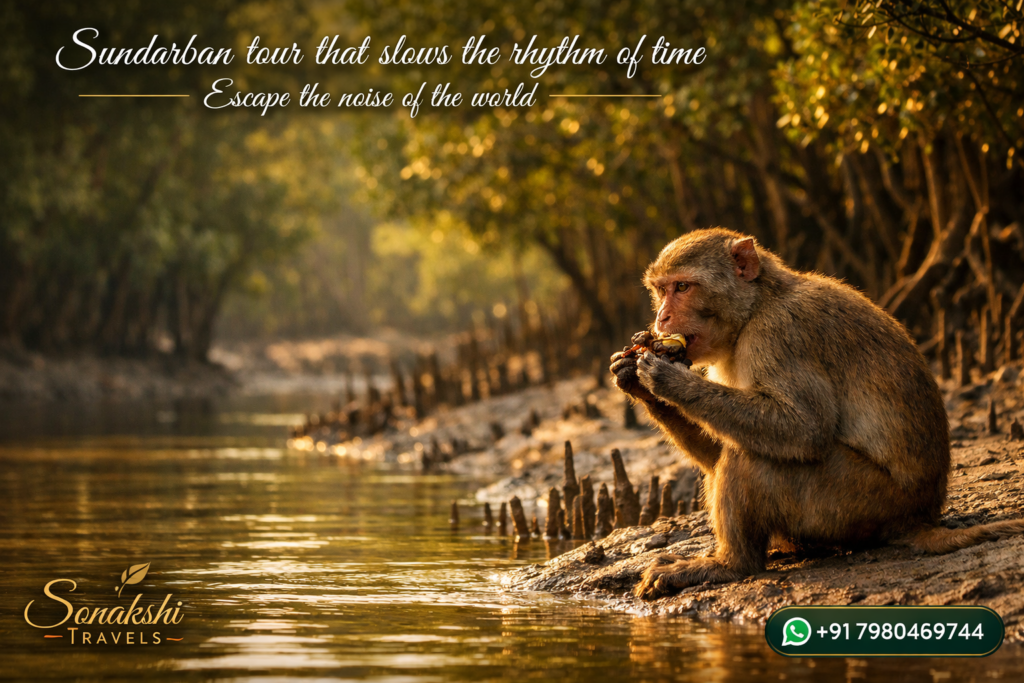
There are some journeys that do not ask a traveler to move faster. They ask the traveler to become quieter. A Sundarban tour belongs to that rare kind of experience. It does not impress the mind through noise, speed, or crowded activity. It works in a different way. The rivers move slowly. The creeks open without warning. The mangrove edge changes with tide and light. The air itself seems to carry patience. In such a place, time does not stop, but it does begin to feel different.
That is why the title matters so deeply. A Sundarban tour that slows the rhythm of time is not simply a poetic idea. It is a practical truth about the nature of the delta. The Sundarban is one of those landscapes where fast travel often leads to shallow experience. A rushed visitor may see water, forest, and watch towers, yet still miss the real character of the region. But a traveler who allows the place to unfold slowly begins to notice more. The mind becomes less crowded. The senses become sharper. The journey becomes fuller.
In many modern holidays, people try to collect moments. In the Sundarban, the place teaches the opposite lesson. It asks you to remain present inside one moment for longer. The passing of a boat over calm water, the silence before a bird call, the pattern of roots along a muddy bank, or the soft turn into a narrow creek can become more memorable than any loud attraction. This is why a careful reader of a meaningful Sundarban journey shaped by privacy, comfort, safety, silence, and the true spirit of the living delta immediately understands that the finest journey here is built around mood, pace, and attention.
Why the Sundarban changes the feeling of time
The Sundarban is not an ordinary destination. It is a tidal world. Water is not fixed here. Light is not fixed. Even the visible shape of the land seems to shift with the hour. Such a landscape does not suit hurried movement. It is best understood through slow looking and careful travel. This is one reason why the region often leaves a deeper effect on visitors than they first expect.
In a city, time is broken into pressure. There are calls, screens, traffic, deadlines, and constant interruption. The mind jumps from one thing to another. In the Sundarban, that habit begins to weaken. The river has its own measure. The boat follows a natural line. The forest remains quiet, but never empty. Instead of noise, there is layered stillness. Instead of crowd-based urgency, there is distance and breathing space. A person who spends even a short time in such an environment often feels that the day has become wider.
This widening of time happens because the place changes human attention. The traveler is no longer forced to react every second. That pressure falls away. What enters in its place is observation. A small movement on the bank matters. A change in wind matters. A distant bird sound matters. The silence is not a gap in experience. It is the experience. This is why the Sundarban does not merely offer scenery. It offers a slower way of seeing.
Silence is not emptiness in the delta
Many people use the word silence in a simple way, as if it only means the absence of sound. In the Sundarban, silence carries much more meaning. It is full of presence. Water touches the boat softly. Birds call from hidden places. Leaves move in the wind. Somewhere, a creek opens into a wider channel. The silence of the delta is active, but not harsh. It allows the traveler to feel the living environment without confusion.
This is one of the strongest reasons why a meaningful Sundarban tour feels so different from a fast outing. Silence gives emotional depth to the landscape. It allows beauty to arrive gradually. A forest seen in noise can remain only a forest. A forest seen in quiet becomes something larger. It becomes atmosphere, tension, beauty, mystery, and rest all at once.
That is also why too much crowd can reduce the experience. Noise breaks the relationship between traveler and place. A hurried group may still complete the route, but the inward quality of the journey becomes weak. The Sundarban is a region where silence protects meaning. It keeps the traveler close to the river, the forest edge, and the true pace of the land.
Slow travel creates a deeper form of attention
Slow travel is sometimes misunderstood as laziness or lack of planning. In truth, it often requires more intelligence. It asks for better timing, better structure, and more respect for the nature of the destination. In the Sundarban, slow travel is not a luxury idea alone. It is one of the most sensible ways to experience the delta properly.
A traveler moving too quickly may only search for major sights. But the Sundarban is not built only around big moments. It is built around continuity. One river joins another. A broad waterway narrows into a creek. Light shifts across mudbanks. The journey becomes meaningful through progression. That is why a slower pace creates richer memory. You are not merely moving through space. You are entering the rhythm of the place.
This slower movement also supports mental calm. When the day is not overloaded, the traveler begins to relax. When the schedule leaves room to look, the mind becomes more open. When the boat journey is not treated as a simple transfer but as part of the experience itself, even the quietest hour gains value. In this sense, the Sundarban teaches a lesson that many modern travelers have forgotten: depth often comes from allowing time to breathe.
Planning matters because peace does not happen by accident
A peaceful journey is not created by chance. It is shaped by wise decisions before the trip begins. In a landscape like the Sundarban, planning affects everything. The travel route, the quality of the boat, the comfort of the stay, the spacing of the schedule, the reliability of arrangements, and the degree of privacy all influence whether the traveler truly experiences calm or only passes through a destination in a tired state.
This is where the meaning of the second provided blog becomes very useful. A traveler who studies how a meaningful Sundarban tour brings together planning, silence, safety, private comfort, and the living spirit of the delta can understand that good planning is not separate from emotion. It shapes emotion. When movement is smooth, the mind stays calm. When timing is sensible, the traveler is less strained. When privacy is protected, silence becomes possible. When safety is clear, trust becomes stronger.
In other words, escaping the noise of the world does not mean escaping structure. It means choosing the right structure. Good planning removes unnecessary noise from the journey itself. It prevents confusion, hurry, and discomfort from taking over. Only then can the natural quiet of the Sundarban do its work on the traveler’s mind.
Privacy gives space to feel the landscape
Privacy in the Sundarban is often understood too narrowly. It does not only mean exclusiveness. It means space. It means the freedom to experience the delta without constant disturbance. This can matter deeply for couples, families, senior travelers, reflective travelers, and anyone who wants to feel the emotional side of the place rather than merely finish a standard route.
When there is enough personal space, the whole tone of the journey changes. Conversations become softer. Rest becomes easier. Observation becomes deeper. The traveler can spend more time looking at the river instead of adjusting to the movement of a large group. The mind becomes less defensive and more receptive. In a place where subtle experience matters so much, this difference is not small.
This is why private comfort has a real role in the Sundarban. It is not about display. It is about enabling presence. Too much crowd makes the river feel external. Too much disturbance makes the forest feel far away. But privacy creates a closer meeting between traveler and delta. It gives the natural world a better chance to enter memory in a lasting way.
Comfort supports stillness when it is handled in the right way
There is an old belief that true nature travel must always be hard and physically uncomfortable. That belief is not always wise. In the Sundarban, practical comfort often makes the experience more real, not less. A clean stay, steady boat arrangement, proper meals, safe drinking water, and a balanced pace do not reduce the authenticity of the journey. They support the traveler’s ability to feel it properly.
A tired mind notices less. An uneasy traveler becomes impatient. A confused schedule weakens attention. But when basic arrangements are handled well, the traveler becomes calmer. Then the eye can rest on details. Then long hours on the water become enjoyable instead of exhausting. Then silence becomes restorative rather than difficult.
This is why Sundarban private tour packages and Sundarban luxury private tour ideas should be understood with care. In this landscape, real comfort is gentle. It does not fight against the delta. It works quietly in the background. It removes stress without removing nature. It offers ease without creating noise. That is a far stronger form of luxury than loud decoration or unnecessary excess.
Safety and trust help the mind become quiet
No traveler can fully relax in an unfamiliar environment without trust. In the Sundarban, this is especially important because the region is shaped by rivers, routes, timing, and local conditions. The traveler does not need fear, but the traveler does need dependable arrangements. Safety is not an extra benefit here. It is part of the foundation of meaningful travel.
When people feel secure, they stop spending mental energy on doubt. They begin to look outward instead of worrying inwardly. That shift matters. A person who trusts the journey can enjoy the long calm view of the river. They can listen to local explanation. They can remain patient during quiet stretches. They can receive the delta as a living place instead of as a stressful challenge.
So when we speak about escaping the noise of the world, we are not only speaking about outer noise. We are also speaking about inner noise. Uncertainty creates its own kind of disturbance. Trust removes that burden. Safety allows silence to be felt more honestly.
The Sundarban does not perform for the traveler
One of the finest truths about the Sundarban is that it does not put on a show. It continues its own life whether the visitor is present or not. This gives the region dignity. It also changes the traveler’s attitude. Instead of demanding quick display, the traveler learns patience. Instead of expecting constant activity, the traveler begins to value waiting. This shift is one of the deepest gifts of the journey.
The mangrove world does not reveal itself all at once. Its beauty comes through signs, intervals, reflections, hidden movement, and long quiet stretches. That is why the place stays in memory. It is not only what is seen. It is how the seeing happens. A bend in the river becomes important because it comes after a period of stillness. A bird call becomes meaningful because silence held it first. A view of open water becomes powerful because the journey has slowed enough to let that openness enter the mind.
In this way, the Sundarban gently retrains attention. It helps the traveler move away from the modern habit of consuming places quickly. It teaches respect, patience, and alert calm. That lesson remains valuable long after the tour ends.
Escape from noise becomes a form of inner renewal
Not every journey changes a person inwardly. Some holidays are pleasant but leave the mind exactly as it was. The Sundarban can do something different. Because it slows the rhythm of time, it can also soften the pressure inside the traveler. The effect is not dramatic in a loud way. It is quiet. Yet it is often powerful.
Many people live under constant mental interruption. Even rest is often mixed with distraction. The Sundarban creates another condition. The eye rests on water. The body adjusts to the boat’s measured movement. The ear accepts a smaller world of sound. The mind gradually becomes less fragmented. That is why the journey can feel renewing even when nothing spectacular happens in a conventional sense.
This renewal is closely linked with the ideas found in a meaningful Sundarban journey where privacy, comfort, safety, and silence reveal the true spirit of the living delta. The true spirit of the delta is not only ecological or scenic. It is also emotional. It touches the traveler through calm, through spaciousness, and through the strange relief of no longer needing to hurry.
What makes this kind of journey truly lasting
A lasting journey is not always the one with the most events. Very often, it is the one where all the important elements work together in quiet balance. In the Sundarban, that balance includes slow travel, private comfort, meaningful planning, natural silence, and safe movement. None of these parts alone is enough. But together they create the right condition for real experience.
That is why this kind of Sundarban tour stays in memory. It does not feel like a rushed escape. It feels like a measured return to attention. The traveler comes back not only with images of rivers and mangroves, but with a felt understanding of another rhythm of life. They remember how the day opened slowly. They remember how the world became quieter. They remember how little noise was needed for the journey to feel complete.
In the end, the value of the Sundarban lies not only in what it contains, but in what it removes. It removes hurry. It removes crowd-based pressure. It removes the illusion that travel must always be fast to be meaningful. In its place, it offers stillness, depth, and a gentler measure of time. That is why a Sundarban luxury tour package or a carefully arranged private journey becomes important not merely as a travel product, but as a way of meeting the delta with the respect it deserves.
To escape the noise of the world is not only to go far away. It is to enter a landscape that teaches the mind another pace. The Sundarban does exactly that. It slows the rhythm of time, and in doing so, it helps the traveler hear life more clearly.