Why the Finest Sundarban Private Tour Experiences Are Defined by Silence, Safety, Privacy, and a Deeper Relationship with the Living Delta
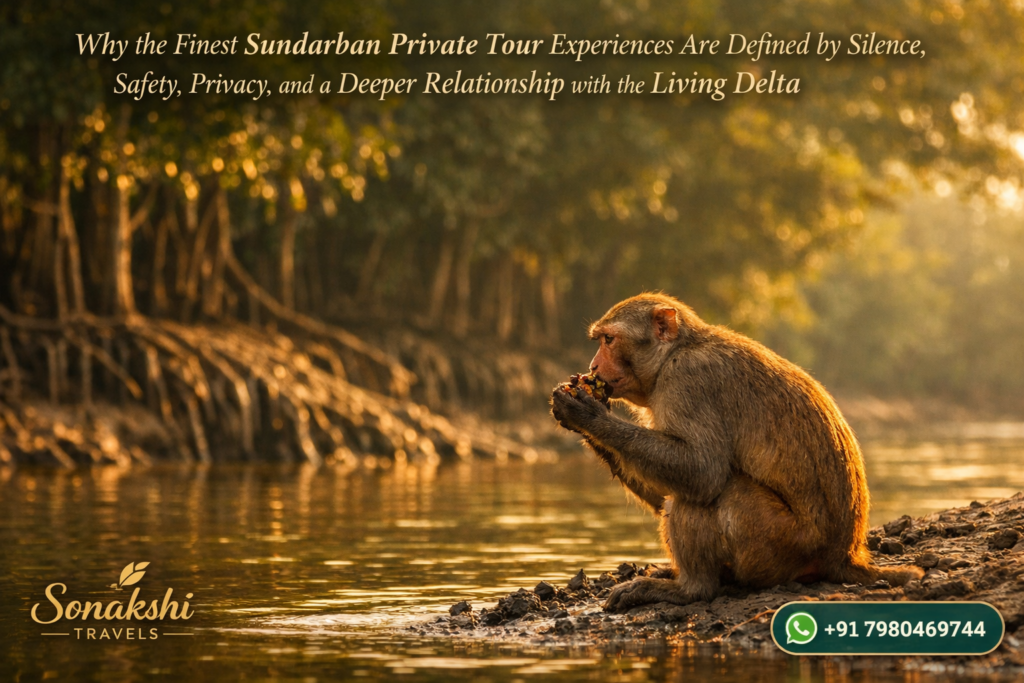
There are places that respond easily to ordinary tourism. They can be approached through speed, convenience, and a checklist of visible attractions. The Sundarban does not belong to that category. This immense tidal forest asks for a different kind of travel intelligence. It rewards patience rather than haste, awareness rather than noise, and depth rather than display. For that reason, the most meaningful journey here is rarely the most crowded or the most hurried. It is usually the one designed with intention.
A truly well-conceived Sundarban private tour is not simply a premium version of a standard itinerary. It is a different philosophy of movement through the delta. It changes the rhythm of the experience, the quality of observation, the level of comfort, and the emotional texture of the journey itself. In the Sundarban, privacy is not only a luxury. It is a practical condition that allows the landscape to be understood more fully. Silence is not emptiness. It is the medium through which the forest begins to speak. Safety is not a separate operational matter. It is part of what makes deeper exploration possible. And comfort, when properly understood, is not indulgence detached from nature. It is the foundation that allows travelers of different ages and expectations to remain open, attentive, and immersed.
That is why modern interest in a Sundarban private tour that redefines wildlife travel through silence, risk, and deep river discovery reflects something larger than a preference for exclusivity. It reflects a growing recognition that some destinations can only be appreciated when the journey is shaped around the nature of the place itself. In the Sundarban, where river channels shift, mangroves hold their own hidden logic, and wildlife presence is often sensed before it is seen, the design of the tour becomes inseparable from the meaning of the experience.
The Sundarban Is Not a Destination of Spectacle but of Gradual Revelation
The first truth one must understand about the Sundarban is that it does not reveal itself through immediate spectacle. Unlike destinations built around monumental landmarks or constant activity, the delta communicates through layers. Water changes direction and color with the tide. Light gathers differently on the river at morning and late afternoon. Bird calls punctuate long intervals of stillness. Mudbanks, creeks, watchtowers, fishing routes, and mangrove edges all form part of a living system whose logic is ecological rather than theatrical.
For this reason, the finest Sundarban tour experiences are not those that attempt to overwhelm travelers with activity. They are the ones that help visitors enter the rhythm of the place. A journey through this landscape is not meaningful because it is packed with motion; it becomes meaningful because it teaches a different quality of attention. The river is not merely a route between points. It is the central narrative space. The silence is not the absence of content. It is the very condition that allows content to emerge.
This is why a thoughtful understanding of the region must go beyond sightseeing language and move toward a more ecological and experiential reading of travel. In that sense, a Sundarban tour understood through silence, tides, and the living intelligence of the delta offers a far more accurate framework than generic wildlife tourism categories. The delta is intelligent not in a poetic exaggeration, but in the way its systems continuously interact: tides regulate access, vegetation shapes animal movement, river width changes perception, and weather influences the entire emotional atmosphere of the journey.
When travelers enter this world through a rushed, noisy, or standardized setup, much of that intelligence remains inaccessible. The forest is reduced to scenery. But when travel is slowed down and carefully curated, the Sundarban becomes legible in a deeper way. One begins to understand that the destination is not a backdrop. It is an active, living environment that shapes the form and meaning of every successful visit.
Why Privacy Changes the Quality of Experience in the Delta
Privacy in the Sundarban should never be mistaken for mere exclusivity. It changes the travel experience at a structural level. A private journey allows families, couples, small groups, and serious nature travelers to move according to their own pace rather than the compromise of a crowd. That freedom affects everything: when conversations happen, how long a boat can remain in a promising stretch of river, how calmly meals are enjoyed, how children or elderly travelers are accommodated, and how deeply the mood of the forest can be absorbed.
In crowded travel formats, attention is often fragmented. Noise levels rise. Time becomes mechanical. Observation is interrupted. Travelers may still see the landscape, but they do not fully inhabit it. By contrast, a Sundarban private tour package creates continuity. The journey feels less like participation in a tourism system and more like entry into a floating, moving retreat designed around the reality of the delta.
This private format is especially valuable in a place where subtlety matters. Wildlife encounters are rarely theatrical guarantees. They depend on atmosphere, discipline, timing, and stillness. Mangrove travel becomes richer when there is room for quiet interpretation, unhurried photography, family comfort, and reflective observation. It is precisely here that luxury stops meaning surface embellishment and begins meaning experiential precision.
A nuanced perspective on this appears in the idea of a thoughtfully designed Sundarban private tour centered on intimacy, access, conservation, and the meaning of travel. Intimacy in this context is not only personal. It also refers to the relationship between traveler and environment. The smaller, calmer, and more intentionally designed the journey, the greater the possibility of meaningful connection. That connection may take the form of watching the changing tide in silence, listening to a guide explain the habits of estuarine wildlife, noticing the geometry of exposed roots, or understanding why certain waterways feel open while others feel secretive and tense.
Privacy therefore becomes one of the most important interpretive tools in the Sundarban. It allows the destination to be encountered on its own terms rather than through the pressure of group management. That difference is not superficial. It is central to the emotional and sensory depth of the tour.
Silence, Risk, and Safety Form a Single Travel Logic
One of the greatest misunderstandings about the Sundarban is the assumption that luxury and wilderness stand in opposition to each other. In reality, the most refined journeys into the delta are often those that understand risk most honestly. This is a powerful landscape, not a domesticated one. Waterways can feel serene and yet remain unpredictable. The forest carries mystery not because it is marketed as dangerous, but because it remains alive, autonomous, and not fully available to human control.
That is why serious travelers increasingly value experiences where silence, caution, and comfort are integrated rather than separated. A well-planned Sundarban luxury private tour does not deny the wildness of the region. It respects it. Safety becomes meaningful precisely because the environment is real. Proper route planning, experienced boat crews, careful timing, measured movement, responsible guiding, and thoughtful guest management are what make deep river exploration possible without turning the journey into spectacle or anxiety.
This relationship between refinement and preparedness is captured well in the idea of a Sundarban private luxury journey defined by silence, safety, and the courage to travel deep into the wild. The courage involved here is not recklessness. It is the willingness to experience the delta properly, with humility and with competent support. The traveler does not conquer the wilderness. Instead, the journey is shaped so that the wilderness may be approached with dignity and respect.
Silence also belongs to this logic of safety. In wildlife environments, noise is not neutral. It alters mood, disturbs concentration, and weakens the immersive value of movement through the forested waterways. Calm travel encourages sharper perception from both guests and guides. It creates a sense of collective attentiveness. Even when no dramatic sighting occurs, the experience remains full because the mind is allowed to register small signals: the pause of birds, the shift of current, the sudden density of mangrove growth, the quality of light in a narrow creek.
In that sense, safety in the Sundarban is not merely operational efficiency behind the scenes. It is part of the philosophical architecture of a good journey. It protects the traveler, but it also protects the seriousness of the experience itself.
Modern Luxury in the Sundarban Means Comfort Without Breaking Immersion
The word luxury is often misunderstood in nature travel. In many destinations, it suggests visual excess, decorative indulgence, or distance from environmental reality. But in the Sundarban, true luxury must be defined differently. It is not about imposing urban habits upon the delta. It is about removing unnecessary strain so that the landscape can be experienced more fully.
A well-structured Sundarban Luxury tour therefore depends on intelligent comfort rather than showmanship. Clean and spacious accommodation, restful sleeping arrangements, good food, thoughtful service, hygienic facilities, smooth transfers, controlled group size, and well-managed boating conditions all matter because they reduce fatigue and distraction. When travelers are physically at ease, they become more emotionally and intellectually available to the environment around them.
This matters greatly for multi-generational travel. Families visiting the Sundarban often include children, elderly members, or travelers with different expectations of pace and comfort. A carefully curated journey creates room for all of them. The forest remains central, but the experience is interpreted through an atmosphere of care. That allows the destination to be shared rather than endured.
The clearest articulation of this perspective appears in the concept of a well-curated Sundarban private tour shaped by privacy, family comfort, and immersion in a living mangrove world. This is modern luxury in its most mature form. It does not seek to overpower the setting. Instead, it supports immersion. It recognizes that guests remember not only what they saw, but how the journey felt: whether they had room to breathe, whether meals were enjoyed without hurry, whether the boat became a place of calm observation, whether the family moved together in comfort, and whether the experience carried coherence from beginning to end.
When comfort is properly aligned with ecology, the result is not artificial softness. It is enhanced receptivity. Travelers notice more, feel more secure, and remain more open to the subtle intensity of the delta. That is precisely why luxury in the Sundarban should be understood as a form of better access to reality, not escape from it.
Conservation, Access, and Meaningful Travel Must Stay Connected
No serious discussion of the Sundarban can ignore conservation. This is not an ornamental landscape built for consumption. It is a fragile and dynamic habitat whose value extends far beyond tourism. Any meaningful travel model in the region must therefore balance access with restraint. The goal is not simply to bring visitors closer to the forest, but to do so in a manner that preserves the integrity of the environment and honors its ecological limits.
Here again, the private and curated model often proves more responsible when properly managed. Controlled movement, better interpretation, lower noise, more disciplined scheduling, and greater guest awareness can produce a more ethical form of visitation. Travelers are not merely entertained; they are educated into attention. They begin to understand that the Sundarban is not only a wildlife destination, but also a complex estuarine world shaped by tides, salinity, adaptation, and interdependence.
Meaningful travel arises when the guest is invited to see this complexity rather than consume only a simplified fantasy of wilderness. A strong guide or host does not reduce the forest to tiger expectation alone. Instead, the journey becomes an education in habitat, resilience, unpredictability, and coexistence. That broader understanding creates respect, and respect is the emotional foundation of conservation-minded tourism.
In practical terms, this means that the best Sundarban luxury tour package is not the one that promises exaggerated drama. It is the one that creates measured access, informed hospitality, and a form of travel that feels ethically proportionate to the place. Guests leave not only with photographs or memories, but with a transformed understanding of what this mangrove world is and why it must be approached carefully.
The Future of High-Value Sundarban Travel Lies in Depth, Not Volume
As travelers increasingly seek more personal, quieter, and more meaningful experiences, the Sundarban stands out as a destination that naturally favors depth over volume. Its character resists mass interpretation. It cannot be fully translated through hurried tourism language. The future of high-value travel here therefore depends on a model that respects the essential nature of the delta: immersive rather than noisy, private rather than crowded, ecologically aware rather than extractive, and comfortable without becoming disconnected from the wilderness it seeks to reveal.
The most memorable journeys in the Sundarban are not necessarily those with the greatest number of visible events. They are the ones in which the traveler feels that the destination has been genuinely encountered. That feeling comes from the right balance of privacy, safety, interpretation, comfort, and timing. It comes from allowing the river to set the rhythm, allowing silence to shape perception, and allowing the forest to remain something more than an object of consumption.
For this reason, the contemporary appeal of the Sundarban private tour is not a passing travel preference. It reflects a broader shift in how people now value extraordinary destinations. They want fewer distractions, better design, deeper meaning, and a stronger sense that the journey is aligned with the truth of the place. In the Sundarban, that alignment matters more than anywhere else. The delta is not improved by excess. It is revealed through care.
Ultimately, the finest journey through this mangrove world is one that understands that luxury is not the opposite of wilderness, privacy is not the opposite of engagement, and safety is not the opposite of adventure. When these elements are brought together with intelligence, humility, and ecological respect, the result is more than a holiday. It becomes a rare form of travel in which the wild is not simplified, the traveler is not rushed, and the experience acquires the depth necessary to be remembered for years.