Updated Date: 24 February 2026
Can I Customize Luxury Tours to Sundarban?
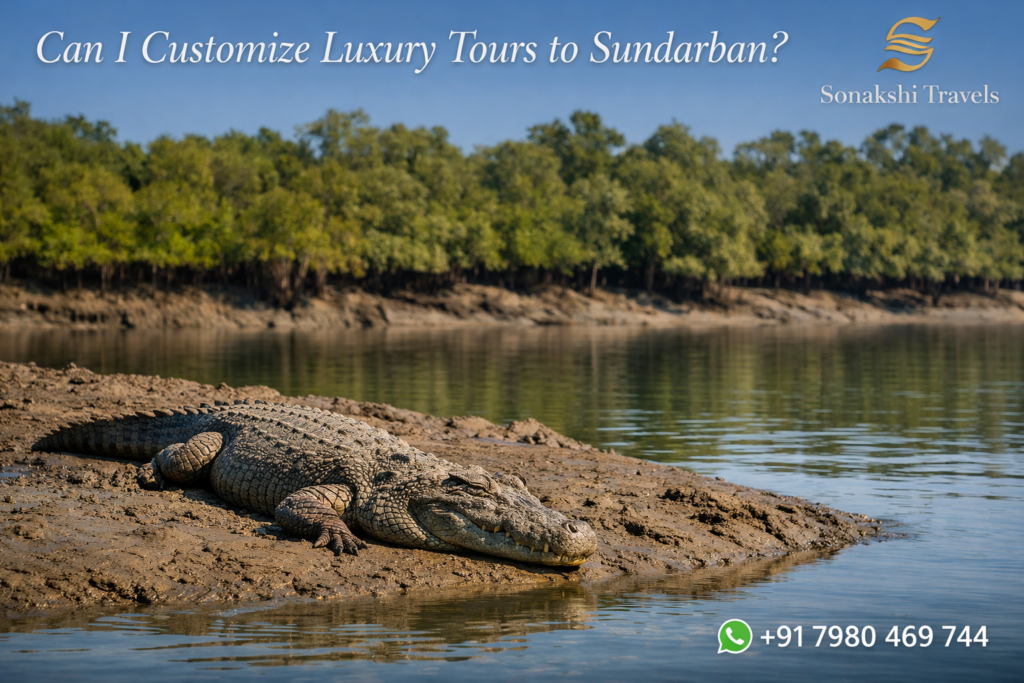
Among travelers who value privacy, comfort, and deliberate pace, one question has become increasingly common: can a luxury journey into the Sundarban be tailored end-to-end? The answer is yes, but genuine customization in this destination is never a superficial exercise. It involves ecological awareness, operational precision, and a clear understanding of how personal preference can be aligned with the realities of a protected mangrove landscape.
A luxury experience in the Sundarban cannot be understood only through accommodation standards or premium services. It is shaped by regulated access, tidal navigation, community livelihoods, and conservation priorities. Planning therefore begins with context: travelers often explore foundational planning knowledge through SundarbanTravel.com’s broader Sundarban resource framework before making personalization decisions that remain compatible with on-ground regulations.
Within that framework, customization becomes a disciplined design process. It is the art of structuring privacy, pacing, interpretive depth, onboard comfort, and ethical engagement into a coherent journey. This article explains how customized luxury travel is built in the Sundarban, which dimensions can be tailored without compromising conservation integrity, and why bespoke planning differs meaningfully from standardized formats.
Understanding What “Customization” Means in a Protected Delta
In many destinations, personalization is treated as a set of optional upgrades. In the Sundarban, it functions as architecture. A customized luxury plan is built around constraints that exist for ecological reasons, and around opportunities that emerge from private operations. For this reason, customization is not about adding more features; it is about designing a travel system that reflects the traveler while respecting the landscape.
Operational Constraints and Responsible Design
The Sundarban is managed through regulated forest access, restricted movement corridors, and compliance-oriented boating operations. A luxury plan that claims full flexibility but ignores these realities is not custom—it is simply unworkable. Meaningful customization is achieved through intelligent sequencing, controlled timing, and services that deepen experience without pushing beyond permitted boundaries.
Departure windows, cruising durations, and access permissions are synchronized with forest procedures and navigational feasibility. Personalization therefore concentrates on what can be precisely shaped: the density of the day, the privacy layer of the boat, the quality and rhythm of guiding, the food program, the tone of cultural engagement, and the overall pace of wilderness observation.
From Standardized to Structured Personalization
A standardized tour operates with a fixed framework where the traveler adjusts to the plan. A customized luxury tour begins with consultation, where preferences are translated into operational detail. Some guests seek contemplative quiet, others want information-rich naturalist interpretation, and some prioritize photographic time-over-speed. The shift is structural: the journey is designed to fit the traveler, rather than the traveler being fitted into a pre-written schedule.
Personalized Itinerary Architecture
Itinerary customization in a luxury context is not defined by a larger checklist. Its quality is determined by how the journey is composed: pace, attention, and thematic emphasis. In practice, this can mean fewer transitions, longer observation windows, and a better alignment between the traveler’s energy curve and the day’s field operations.
Pace Calibration
Travelers often underestimate how strongly pace shapes perception in ecological environments. Research in experience design and nature-based tourism repeatedly shows that slower, less compressed schedules increase situational awareness and improve recall. In the Sundarban—where sound, light, and movement shift gradually—time is not simply a logistical unit; it is the medium through which the landscape becomes legible.
Luxury customization typically involves removing avoidable pressure points: reducing rigid hour-to-hour compression, allowing longer drift windows, and protecting silence intervals where observation becomes deeper. This approach benefits not only comfort, but also interpretive clarity, because learning and noticing require time more than novelty.
Interest-Based Prioritization
Customization becomes most visible when the itinerary is built around a central interest. Wildlife-focused travelers often request deeper interpretation, quieter cruising, and careful attention to habitat indicators. Photography-oriented travelers frequently require longer pause durations, stable viewing positions, and a planning style that respects light sensitivity without forcing rushed movement. Culture-oriented travelers often prefer curated interaction that is respectful, compensated, and non-intrusive.
When design is interest-led, the itinerary stops being generic and becomes thematic. This is the core difference between a simple “private booking” and a carefully planned private Sundarban tour shaped around personal priorities.
Accommodation Customization: Comfort Within Ecological Sensitivity
Luxury lodging in the Sundarban is meaningful only when it balances comfort with environmental sensitivity. The best experiences are not those that isolate guests from the landscape, but those that allow rest, recovery, and privacy without disturbing the character of the delta.
Spatial Privacy and Layout Selection
Customization includes choosing room categories, cottage layouts, and privacy levels appropriate to the travel group. Couples may prefer secluded spaces with minimal shared circulation; multi-generational families may require adjacency and accessibility; solo travelers may prioritize quiet river-facing sit-outs that support reflective time. The goal is not maximum space, but correct spatial fit—so that comfort supports immersion rather than distracting from it.
Sustainability Parameters
Well-informed luxury travelers increasingly ask precise questions: waste management methods, water treatment, energy sourcing, local procurement, and community employment practices. These concerns are not separate from luxury; they are part of it, because ethical alignment reduces psychological friction. Customization can therefore include sustainability preferences as selection criteria, ensuring that comfort is delivered without compromising the traveler’s values.
Customized Wildlife Interpretation and Expert-Led Engagement
Wildlife engagement is often the emotional centre of a Sundarban tour. In a customized luxury setting, the most important variable is not simply the possibility of sightings, but the quality of interpretation and the conditions under which observation occurs.
Guide Specialization
Private travel makes it possible to match guiding style to guest preference. Some travelers want data-driven ecological explanation, with clear links between species behaviour, habitat structure, and tidal dynamics. Others prefer narrative interpretation that integrates local knowledge and lived experience, offered with restraint and accuracy. When the guide’s approach is aligned with the guest’s learning style, the overall journey becomes more coherent and less fragmented.
This alignment is not a minor detail. Interpretation strongly influences satisfaction in nature tourism, because many ecological signals are subtle. A skilled naturalist does not manufacture excitement; they teach attention.
Observation Strategy Design
Within permitted corridors, observation strategy can be refined through operational choices: cruising speed, pause timing, route selection based on habitat cues, and minimizing unnecessary noise. Photographers may request additional stationary time at promising stretches so that composition, light, and animal movement can be respected rather than chased.
These refinements require coordination between crew, guide, and on-ground permissions. That complexity is precisely why customization is valuable: it converts individual preferences into operational reality without violating ecological boundaries.
Exclusive Boat Experiences: Floating Privacy
In the Sundarban, the boat is not a simple vehicle. It is the primary living space during active exploration, and the quality of that space has direct influence on comfort, observation, and privacy.
Private Vessel Allocation
A private boat eliminates shared passenger dynamics and enables a calmer, more controllable environment. It allows flexible timing, uninterrupted viewing access, and an atmosphere where conversation, silence, and interpretation can flow naturally. Seating orientation, deck use, and rest intervals can be planned to suit the group’s comfort rather than the needs of unrelated travellers.
Onboard Service Personalization
Luxury customization on water often includes tailored meal timing, curated beverages, dedicated service attendants, and a hospitality rhythm that matches the day’s energy. Some travelers prefer discreet service and minimal interaction; others want a more engaged hosting style. Lighting levels, quiet intervals, and sensory comfort can be adjusted so that the boat supports observation rather than competing with it.
In this sense, the boat becomes a controlled environment that strengthens the wilderness experience instead of diluting it.
Culinary Customization as Experiential Depth
In luxury travel, dining is not merely fuel. It is part of emotional memory and a key element of perceived care. In remote landscapes, it also becomes a measure of operational competence: good food in a difficult setting signals that planning has been done properly.
Dietary Personalization
Vegetarian, vegan, gluten-free, low-spice, allergy-sensitive, and medically restricted diets can be supported when planned in advance. Customization in this domain is primarily logistical: ingredient sourcing, kitchen readiness, cross-contamination awareness, and menu mapping across the travel window. The goal is reliability—so that dietary needs are respected without the traveler having to repeatedly negotiate them on-site.
Contextual Dining Settings
Many luxury travelers value how food is experienced as much as what is served. Private deck dining under controlled lighting, breakfast aligned with quiet river movement, or indoor arrangements designed for comfort during evening stillness can be structured upon request. These are not decorative flourishes; they influence mood and help shape a sense of occasion in a landscape defined by subtlety.
Culinary customization is therefore a strategic tool for deepening experience while preserving the travel rhythm.
Cultural Engagement: Controlled Authenticity
Culture in the Sundarban cannot be treated as entertainment. Communities in the delta live within a complex relationship with rivers, forests, and conservation governance. Customization allows cultural engagement to be designed with respect, clarity, and appropriate distance.
Depth Versus Distance
Some travelers prefer limited interaction, choosing to observe community life without direct participation. Others seek meaningful, guided conversation with artisans or cultural performers. A customized plan can calibrate that distance in accordance with comfort, ethics, and the time available, ensuring that engagement feels dignified rather than staged.
Responsible Integration
Responsible cultural integration requires structure: clear consent, fair compensation, and avoidance of intrusive practices. Luxury customization is well suited to this because private planning reduces pressure to “perform” culture as an item on a group schedule. Instead, cultural elements can be included sparingly and thoughtfully, in a manner that supports local dignity and avoids spectacle.
Psychological Dimensions of Customization
Luxury travel outcomes are not only physical. They are psychological, shaped by control, comfort, and coherence. Customization is valuable because it increases the traveler’s sense of agency and reduces friction—two variables strongly associated with satisfaction in high-investment journeys.
Autonomy and Memory Formation
When travelers participate in shaping the journey, memory becomes more personal because the experience reflects deliberate choice. In the Sundarban, sensory signals—river acoustics, filtered light through mangroves, shifting tidal textures—become more meaningful when they occur within a structure the traveler helped design. This can intensify the sense of ownership and deepen emotional recall.
Reduced Cognitive Overload
Group travel often involves continuous micro-adaptation: pacing with others, negotiating shared priorities, and tolerating schedule compression. A private customized format reduces this cognitive load, allowing the traveler to settle into observation without constant adjustment. For many high-responsibility professionals, this reduction in decision fatigue is not a luxury add-on; it is the central reason they seek a private journey.
Safety, Privacy, and Discretion in Custom Luxury Travel
In wilderness environments, privacy and safety cannot be treated as separate categories. They intersect through planning: who is present, how the day is managed, and how contingencies are prepared.
Private Crew Briefing
Exclusive formats allow a more precise briefing of staff on guest expectations: discretion levels, photography boundaries, service pacing, and communication preferences. This reduces avoidable friction and creates an atmosphere where guests feel both respected and protected. Discretion, in luxury travel, is often experienced as calm.
Emergency Preparedness Alignment
Customization also enables better risk planning. Dietary sensitivities, medical considerations, and comfort thresholds can be integrated into the travel design, with clear contingency planning where necessary. The objective is not to dramatize risk, but to remove uncertainty—so that the traveler can relax into the environment with confidence.
Comparative Perspective: Standard Versus Customized Luxury
A standard tour typically prioritizes predictability and efficiency. A customized luxury journey prioritizes alignment. The difference is not simply privacy; it is precision. In a standard structure, the traveler adapts to a plan designed for general appeal. In a customized structure, the plan is engineered around the traveler’s pace, interests, comfort profile, and ethical boundaries—without violating the protected nature of the landscape.
This distinction becomes more important in the Sundarban because uncontrolled freedom is neither possible nor desirable. The landscape requires responsibility. A well-designed customized luxury journey achieves exclusivity not by ignoring rules, but by delivering a more coherent experience within them—through better sequencing, deeper interpretation, and fewer compromises in comfort and privacy.
For travelers who want a shorter, tightly controlled field exposure while still retaining privacy parameters, a carefully planned single-day Sundarban tour can sometimes act as a functional benchmark when deciding how much time and depth they want to build into a bespoke program.
Conclusion: Is Full Customization Possible?
Yes—luxury tours to the Sundarban can be customized, but the most valuable customization is sophisticated rather than superficial. It requires consultation, operational coordination, and ecological respect. The result is not unrestricted movement; it is intelligent personalization inside a protected ecosystem.
Customization can shape pace, accommodation layout, interpretation depth, onboard comfort, culinary structure, cultural engagement distance, privacy standards, and safety planning. When these elements are aligned, the Sundarban stops being a scheduled excursion and becomes an individually curated wilderness experience—designed for travellers who value coherence, discretion, and meaningful engagement over generic complexity.
For readers who want to understand how this personalization sits within broader planning contexts, it often helps to compare the principles discussed here with the structure of a well-composed Sundarban tour from Kolkata before deciding what should be refined, extended, or simplified in a bespoke design.
Likewise, travellers who prefer evaluating options through a more structured planning lens may find it useful to review how established curated Sundarban tour packages define inclusions and pacing, then selectively adjust the elements that matter most—privacy, culinary standards, guiding intensity, or rest-to-activity balance.