Updated Date: 24 February 2026
What Is a Sundarban Private Tour and What Unique Experiences Does It Offer?
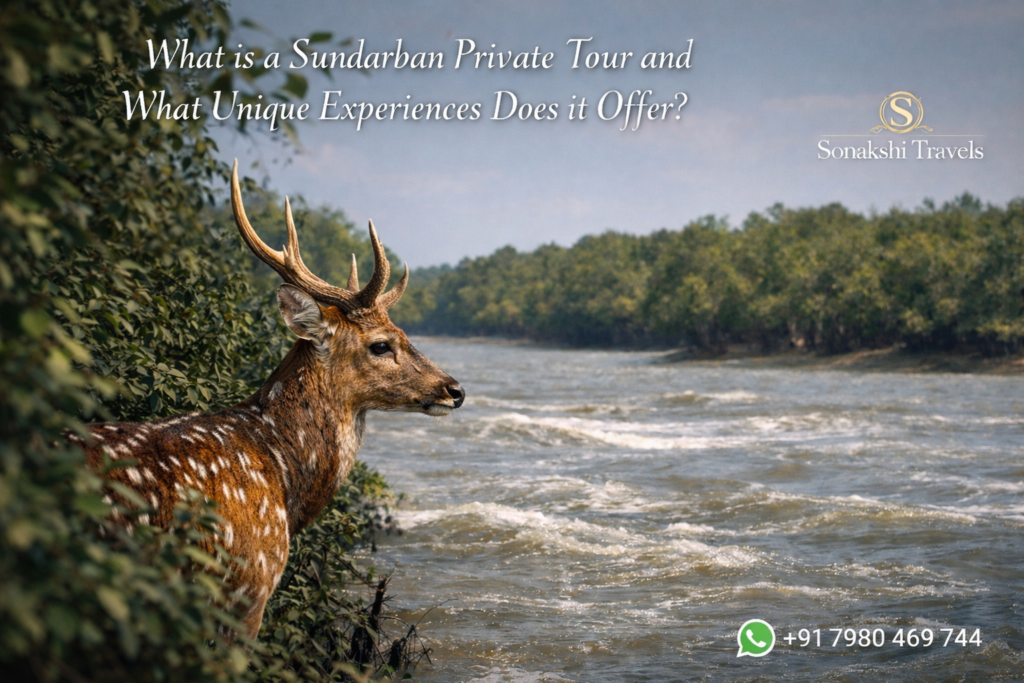
A carefully structured Sundarban Private Tour represents a distinct model of wilderness travel shaped by exclusivity, interpretive depth, and operational precision. Unlike conventional group excursions, this format is defined not merely by destination but by how the experience is organized and delivered. Dedicated boats, individually planned navigation schedules, focused naturalist engagement, and privately reserved accommodation together create a travel environment centered entirely around one group’s pace and interests.
Within the broader knowledge framework available at Sundarban travel, private exploration is understood as a structural refinement rather than a superficial upgrade. It transforms movement through the mangrove delta into a calibrated encounter shaped by ecological rhythm instead of crowd logistics. The emphasis shifts from covering checkpoints to sustaining attention.
The tidal ecosystem of the Sundarban operates through subtle acoustic patterns, shifting salinity, and seasonal wildlife corridors. A private format aligns more closely with this environmental tempo. Instead of adapting to synchronized boarding times and collective commentary, travelers engage the delta according to specific intellectual or experiential goals—wildlife behavior analysis, disciplined photography, cultural exchange, or contemplative immersion.
Defining the Structural Difference: Private vs. Shared Exploration
The primary distinction lies in autonomy. Shared safaris function through fixed timetables, standardized interpretation, and coordinated deck movement. In contrast, a privately curated experience allows interpretive flexibility. Navigation pauses can be extended in response to ecological indicators. Silence can be maintained deliberately. Observation windows can shift when wildlife behavior suggests potential movement.
This structural contrast becomes evident when compared with the broader framework of a conventional guided Sundarban Tour, where collective scheduling inevitably shapes the rhythm of exploration. While such formats remain effective for introductory visits, they cannot offer the same depth of uninterrupted engagement.
From an ecological standpoint, reduced passenger density lowers acoustic disturbance. Mangrove species—including estuarine crocodiles, spotted deer, fishing cats, and numerous avian populations—respond measurably to vessel clustering. Fewer human variables improve observational clarity and minimize stress on habitat corridors. Thus, exclusivity functions not only as comfort but as environmental alignment.
Personalized Itinerary as Experiential Architecture
Interest-Centric Navigation
In a privately curated setting, itinerary design becomes adaptive rather than prescriptive. Wildlife photographers may request extended anchoring near exposed mudbanks to monitor raptor descent patterns. Ornithologists may prioritize narrow creek passages during feeding cycles. Cultural researchers may allocate uninterrupted time for structured village dialogue without compressing forest hours.
Such intentional alignment between ecological timing and personal focus rarely emerges in shared movement patterns. Personalization here operates as experiential architecture, shaping depth and continuity rather than luxury alone.
Flexible Duration of Observation
Meaningful wildlife encounters often depend on patience. Alarm calls from deer, subtle shifts in bird flocks, or impressions in wet sediment demand interpretive waiting. In a private setting, the vessel may remain stationary without schedule pressure. This capacity to wait transforms uncertain possibility into engaged observation.
Comfort Without Ecological Disconnection
A refined private Sundarban tour integrates physical ease with environmental immersion. Premium eco-resorts maintain architectural sensitivity to the delta landscape while providing climate-controlled interiors, hygienic dining standards, and private space for recovery after extended hours on water.
Luxury in this context does not imply detachment from wilderness. Rather, it sustains cognitive alertness. Adequate rest preserves perceptual clarity. Balanced meals maintain stamina during prolonged observation. Privacy within accommodation fosters psychological restoration, preparing the traveler for renewed engagement.
When contrasted with standard Private travel programs in the Sundarban, the distinction lies in attention management. The environment remains constant; the level of individual comfort and quietude alters how deeply it is perceived.
Exclusive Wildlife Encounters Through Reduced Disturbance
Wildlife within tidal mangrove systems adapts continuously to patterns of human presence. High-traffic channels often produce predictable avoidance behavior. A private vessel navigating authorized but less congested stretches reduces acoustic overlap and visual intrusion. This enhances the probability of witnessing species during natural activity rather than reactive withdrawal.
Royal Bengal Tiger Behavioral Context
The Royal Bengal Tiger in this delta occupies fluid territories shaped by tidal cycles. Sightings remain rare, yet interpretive indicators—fresh pugmarks on exposed banks, disturbed foliage, prey alarm calls—gain meaning when time is not compressed. Dedicated guide attention allows detailed ecological explanation rather than abbreviated commentary.
Crocodile and Dolphin Observation
Estuarine crocodiles often bask during defined thermal windows, while Irrawaddy and Gangetic dolphins surface along specific tidal channels. Silent drift navigation supports the attentiveness required for these encounters. Without competing conversation or crowd movement, the observational field becomes measured and focused.
Exclusivity does not manufacture sightings; it refines readiness and reduces interference.
Interpretive Depth Through Dedicated Naturalists
One of the most significant advantages of a private format is uninterrupted interpretive engagement. In shared settings, commentary must accommodate varied knowledge levels within limited time. Private discussions can expand into ecological mechanics—salinity gradients, mangrove pneumatophore respiration, sediment dynamics, and predator-prey equilibrium.
For academically inclined travelers, this continuity transforms the journey into a field-based learning environment. Observations can be revisited, ecological hypotheses discussed, and behavioral patterns analyzed in context.
Psychological Dimensions of Exclusivity
Research in environmental psychology suggests that reduced social density enhances perceptual awareness. In a private safari environment, silence becomes intentional. The absence of unrelated conversation heightens sensitivity to water displacement, distant wingbeats, and subtle vegetation movement.
Travelers often report a transition from observation to presence. The delta is no longer viewed as spectacle but experienced as atmosphere. This shift is facilitated by controlled human variables.
Cultural Interface Under Controlled Engagement
Communities in the Sundarban sustain livelihoods through fishing, honey collection, and subsistence agriculture. Within a private framework, interactions unfold without crowd pressure. Conversations can extend beyond transactional exchanges into discussions of tide interpretation, storm resilience, and forest ethics.
Because scheduling remains flexible, cultural engagement integrates organically into the experience rather than functioning as a brief interruption.
Photography as a Specialized Discipline
For visual documentarians, private navigation provides operational advantages. Tripods may be positioned without obstruction. Long lenses can remain stabilized across extended intervals. Vessel orientation may be adjusted deliberately in relation to light direction.
This logistical freedom transforms photography from opportunistic capture into disciplined field practice. Time can be granted for repeat framing if wildlife reappears, and deck movement remains controlled.
Night Ecology and Sensory Expansion
In select controlled environments, nocturnal observation reveals another dimension of the mangrove system. Amphibian calls, distant mammalian movement, and insect resonance create a layered acoustic field. In a private context, artificial illumination is regulated carefully to avoid disturbance while supporting subtle awareness.
Without shared deck movement, even minor sound gains significance. Darkness becomes interpretive rather than disorienting.
Operational Seamlessness and Coordinated Management
Private travel centralizes responsibility. Permits, meal coordination, navigation protocols, and communication lines remain managed by a single operational team accountable to one group. This reduces logistical fragmentation and enhances clarity in safety procedures.
For smaller groups considering immersive formats such as the 2 Nights 3 Days Sundarban exploration, such coherence allows extended engagement without administrative distraction.
Family and Small Group Dynamics
Families and close companions often seek shared memory formation within an intimate environment. A private structure allows conversations, learning moments, and reflection to remain personal. Intergenerational adjustments in pace can be made naturally, without negotiating external expectations.
Children may require ecological interpretation in simplified language; elderly members may need slower transitions between observation points. Privacy allows these adaptations seamlessly.
Immersion Without Interruption
Ultimately, a Sundarban private journey is defined by continuity. Without external scheduling pressures or shared acoustics, the experiential arc remains unbroken. Observation flows into reflection; reflection develops into informed dialogue. The mangrove landscape is encountered as a cohesive ecological system rather than a sequence of timed stops.
Such exclusivity does not isolate travelers from nature; it aligns them more precisely with its cadence. Through calibrated structure, ecological attentiveness, interpretive depth, and psychological quietude, the private model reshapes the manner in which wilderness is understood.
For those who seek not merely to visit but to comprehend, this refined format offers disciplined immersion. Through privacy, the tidal forest reveals itself without interruption.