Sundarban private tour through whispering rivers – Follow currents into hidden life
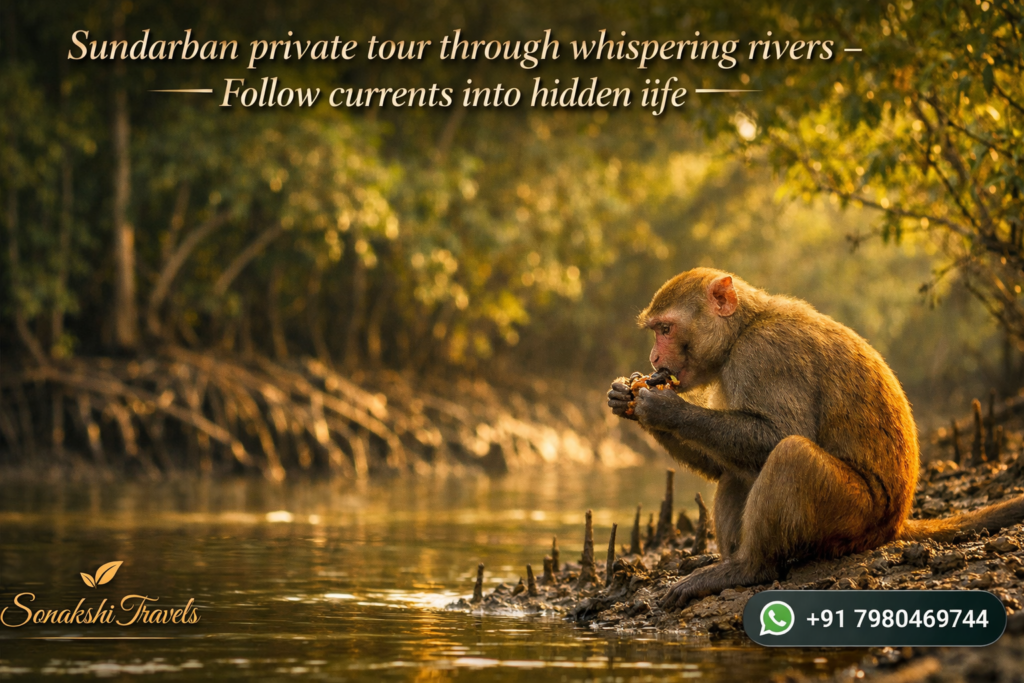
There are some landscapes that speak at once. They rise before the eye in one clear shape, and the traveler quickly understands what kind of place it is. The Sundarban is not like that. It does not reveal itself in a single scene. It opens slowly through water, tide, silence, and movement. That is why a Sundarban private tour feels so different from ordinary travel. It is not only a route through a forest. It is a passage through whispering rivers, shifting light, and hidden life that cannot be seen from crowded decks or rushed plans.
In this tidal world, the river is not only a path. It is the true guide. It bends around islands, enters narrow creeks, widens into open channels, and then narrows again beside roots and mudbanks. Every turn changes the mood. Every current carries small signs of life. A bird lifts suddenly from the reeds. A crocodile rests in silence near the edge of the water. Deer move like soft shadows behind mangrove cover. Even the wind seems to travel differently here. This is why many thoughtful travelers now prefer a private luxury package instead of a common group trip. Privacy gives time, and time allows the forest to be understood.
Why the whispering rivers matter more than the road
The Sundarban is shaped by water. Its identity is not fixed by streets, buildings, or mountain lines. It is shaped every day by tides, muddy banks, mangrove roots, and flowing channels. Because of this, the journey itself becomes the main experience. On a private boat tour, the traveler does not simply move from one tourist point to another. The traveler learns to notice the language of the river.
That language is quiet but very rich. The color of the water changes with the sky. The speed of the boat changes with the tide. The sound of the engine lowers as the vessel enters calmer creeks. Nearby, mudskippers, crabs, kingfishers, and egrets begin to appear in places where noise would normally drive them away. In a large shared group, such moments are often missed. In a more personal setting, they become the heart of the journey.
A whispering river in the Sundarban does not mean complete silence. It means a softer world. One hears the splash of water against the boat, the distant call of birds, the rustle of leaves, and the quiet talk of wind through mangrove branches. These sounds form the true atmosphere of the delta. They create a travel experience that feels observant rather than noisy, intimate rather than public, and deeply alive rather than artificially exciting.
A private tour changes the way the forest is felt
The difference between a shared trip and a Sundarban private tour is not only about comfort. It is also about perception. A private journey changes the rhythm of travel. When fewer people are on board, there is more room for stillness, more chance to pause, more freedom to watch one place longer, and more ease in responding to the natural flow of the day.
That matters in a landscape like the Sundarban because the forest does not perform on command. Wildlife appears in fragments. Light changes without warning. One creek may feel open and bright, while another feels mysterious and shaded. The private setting allows travelers to remain mentally present. They are not pushed by crowd movement or distracted by constant chatter. They are able to follow the current, both literally and inwardly.
This is where the idea behind a Sundarban private luxury package becomes meaningful. Luxury here is not only soft bedding, better service, or cleaner arrangements, though these do matter. Real luxury in the Sundarban is the freedom to experience the delta without haste. It is the privilege of quiet space, patient watching, and a slower encounter with nature.
Following currents into hidden life
The title of this journey is deeply true because hidden life is everywhere in the Sundarban. It does not always stand in the open. It remains folded into reeds, creeks, watchful banks, and half-seen movement. The traveler who wants to discover it must accept the rules of the place. One must observe carefully, remain patient, and understand that the river often reveals more than the eye expects at first.
In the early morning, a creek may seem empty. Yet with time, details begin to gather. A line of fresh marks on wet mud suggests recent movement. A bird circles the same stretch of bank again and again. A floating branch is not a branch at all, but a reptile holding still near the edge of the water. A patch of stillness in the forest suddenly breaks, and a deer appears for one brief moment before disappearing again. This is the hidden life that makes the delta unforgettable.
Because the ecosystem is tidal and layered, life in the Sundarban is always connected to movement. Fish rise and fall with the water. Crabs work along exposed mud during low tide. Birds follow feeding patterns. Predators and prey read the same landscape in very different ways. On a well-planned river safari, travelers begin to understand this relationship between current and life. The river is not separate from the forest. It is the moving force that feeds, shapes, and reveals it.
The hidden richness of the mangrove edge
One of the most overlooked parts of the Sundarban is the muddy edge where land meets water. Many first-time visitors look toward the deeper forest and wait for something dramatic. But much of the delta’s real beauty lives at the margin. Mangrove roots hold the soil in strange forms. Small creatures move quickly between mud and water. Birds stand in alert stillness, waiting for food. Sunlight catches wet banks in a way that makes the entire shoreline feel alive.
This is why thoughtful travelers often remember the edge more than the center. The mangrove edge shows how delicate and active the ecosystem truly is. It also shows why the forest must be approached with care. Every root, channel, and bank is part of a living structure. A private journey encourages this kind of close and respectful attention.
When shadows move softly, the forest reveals more
The Sundarban is a place where sharp movement is rare, but soft movement is constant. The light shifts. Tides rise. Leaves tremble. Shadows slide across the water. These subtle changes matter because they are often the first sign that something is happening nearby. In that sense, the forest does reveal itself slowly, and those who rush through it often leave with only a partial understanding.
On a calm afternoon, one may see the surface of the river turn from silver to green to gold within a short stretch of time. The same bank that looked empty earlier may now hold birds, tracks, or a sudden flash of animal movement. The traveler learns that observation in the Sundarban must be patient and flexible. The hidden life is not absent. It is simply careful.
This quality of slow revelation gives the journey a rare emotional depth. The traveler begins to feel less like a consumer of sights and more like a guest in a living world. That change is important. It creates humility. It also creates stronger memory. Places that reveal themselves slowly often stay longer in the mind because they require the traveler’s full presence.
The breathing forest and the rhythm of tide
The Sundarban is often described as a forest, but that word alone is too simple. It is better understood as a breathing forest, because everything in it seems to expand, contract, rise, fall, and respond. The roots breathe. The mud changes with water level. The channels pulse with tidal motion. The air itself seems heavier, softer, and fuller than in ordinary places.
This living rhythm affects the mood of the journey. A traveler on a Sundarban tour through such a landscape begins to notice that time behaves differently here. The clock still moves, but the experience is shaped more by tide, light, and direction than by fixed schedule. A good private journey accepts this truth rather than fighting it. It follows the natural rhythm of the delta and allows the traveler to enter that rhythm.
In such a setting, even stillness feels active. A boat resting beside a quiet bank is not outside the life of the forest. It is already within it. The water moves beneath the hull. Insects pass over the surface. Birds shift in distant branches. Air carries salt, mud, and green scent together. The entire environment works like one connected body. That is why a river journey here feels deeper than a simple boat ride. It feels like travel inside an ecosystem that never fully stops breathing.
Privacy allows deeper attention to beauty and risk
The beauty of the Sundarban is real, but it is never empty beauty. It carries tension. The forest is calm, yet alert. It is open in appearance, yet secretive in character. This balance between beauty and risk gives the landscape much of its power. On a private wildlife experience, this complexity becomes easier to sense because the traveler is not shielded by crowd energy or distracted by public noise.
To move through the delta is to understand that nature here is both graceful and strong. The still water may hide great depth. The quiet bank may carry signs of danger. The untouched beauty of the mangrove world depends on natural law, not human control. A careful private tour does not turn this truth into fear. Instead, it turns it into respect.
That respect often becomes one of the most valuable parts of the journey. The traveler leaves with more than photographs. One leaves with a clearer understanding of what a tidal forest really is: not a theme, not a performance, but a living place where balance matters. This is one reason why people who choose a Sundarban private tour often describe it as more personal, more meaningful, and more lasting than expected.
The emotional power of moving quietly
There is also a human reason why this kind of journey stays in memory. Modern life is full of speed, sound, and interruption. Many people travel hoping not only to see something new but also to recover a more attentive state of mind. The Sundarban answers that need in a very unusual way. It does not entertain the traveler through constant action. It restores attention through slow movement and natural depth.
As the boat passes through whispering channels, the mind begins to settle. People look longer. They listen better. They begin to notice texture, distance, and silence. This is not empty calm. It is active awareness. A private journey supports this state because it protects the traveler from unnecessary crowd pressure and allows a more inward, reflective connection with the landscape.
Such moments may seem small while they are happening. A long bend in the river. A kingfisher on a low branch. A fading golden light on water. But these moments gather power because they are experienced without disturbance. They form a complete feeling of place. This is the real strength of a river-led journey through the Sundarban.
Why this title captures the true character of the delta
The phrase “through whispering rivers” is not decorative. It reflects the actual character of the Sundarban. The rivers do seem to whisper because they carry signs rather than announcements. They reveal clues rather than complete answers. They ask the traveler to move with humility, patience, and close attention.
The phrase “follow currents into hidden life” is equally accurate. In the Sundarban, one does not find hidden life by forcing experience. One finds it by following the natural pathways of the ecosystem. The current leads toward creeks, mudbanks, birdlines, silent stretches, and brief openings where the forest allows itself to be seen. A good eco-sensitive private tour is built around this exact understanding.
That is why the journey remains so memorable. It is not only scenic. It is interpretive. It teaches the traveler how to read a tidal landscape. It shows that hidden life is not rare because the forest is empty, but because the forest is subtle. Once that truth is understood, the Sundarban becomes far richer, more intelligent, and more moving than a simple sightseeing destination.
A journey that stays with the traveler
At the end of such a journey, what remains is not only the memory of water, wildlife, and mangroves. What remains is a different way of seeing. The traveler understands that real depth often arrives quietly. The most meaningful landscapes are not always the loudest. Some places ask to be entered slowly, and the Sundarban is one of them.
A Sundarban private tour through whispering rivers offers exactly that rare chance. It invites the traveler to move beyond surface beauty and into the layered truth of a tidal forest. It offers privacy not as display, but as a condition for deeper seeing. It allows the currents to lead, the shadows to move softly, and the hidden life of the delta to come forward in its own time.
For those who want more than a rushed outing, more than a crowded boat, and more than a checklist of views, this kind of journey carries unusual value. It shows that the Sundarban is not fully known by speed. It is known by attention. And when the rivers begin to whisper, the traveler who listens carefully may discover that the hidden life of the forest is also revealing something quieter within the self.