Why a Thoughtfully Designed Sundarban Private Tour Is About Intimacy, Access, Conservation, and the Meaning of Travel in a Living Mangrove World
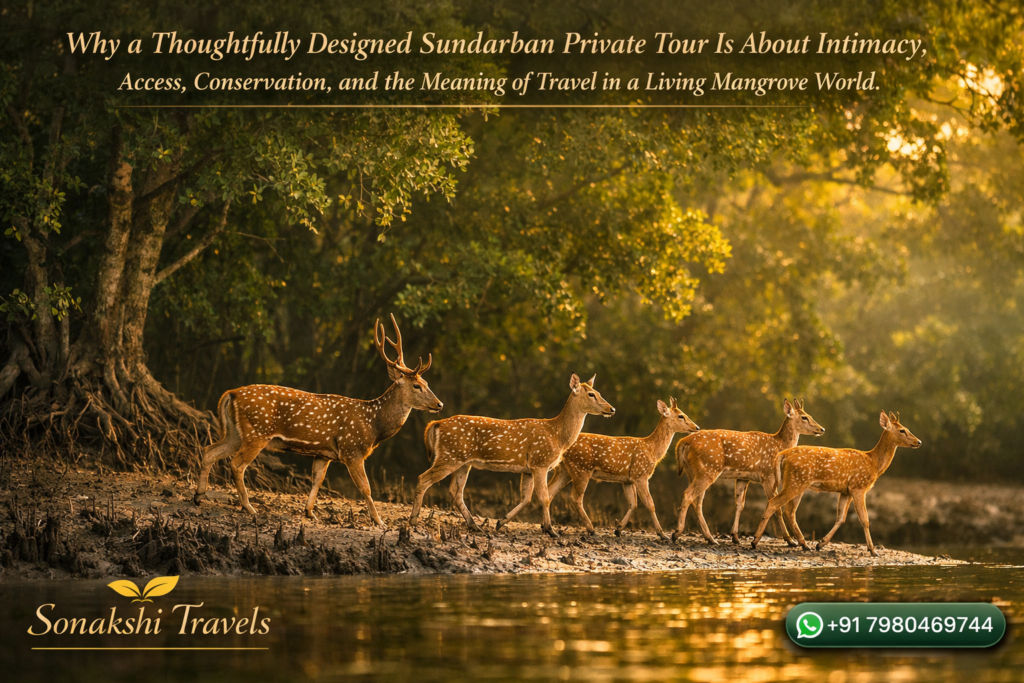
There are destinations that reward speed, abundance, and visible spectacle. The Sundarban is not one of them. This tidal forest, shaped by shifting water, salt-tolerant vegetation, animal movement, and fragile ecological balance, asks something different of the traveler. It asks for patience. It asks for silence. Above all, it asks for a form of travel that is sensitive to place. For that reason, the value of a Sundarban private tour cannot be measured only by exclusivity or comfort. Its deeper significance lies in how well it allows a visitor to enter the delta with respect, awareness, and emotional presence.
When people imagine private travel, they often think first of convenience. In the Sundarban, convenience matters, but it is not the full story. Privacy creates a more attentive rhythm. It allows conversations to slow down, landscapes to be observed more carefully, and the river journey to unfold without the pressure of a crowded group schedule. This transforms the experience from simple sightseeing into a more reflective form of travel. The forest is no longer a backdrop. It becomes a living system that one gradually learns to read.
That is why the most meaningful private journeys into the delta often combine several dimensions at once: emotional connection, logistical clarity, ecological sensitivity, and carefully chosen inclusions. A journey may be intimate enough for couples, structured enough for first-time visitors, and responsible enough to honor the conservation realities of the region. In that sense, the best private itinerary is not simply luxurious. It is intelligent. It understands that in a place as layered as the Sundarban, comfort must work together with knowledge, and access must work together with restraint.
A traveler seeking emotional stillness may be drawn to the atmosphere suggested by Sundarban private tour when the forest listens, while another may be looking for a more personal shared escape through the quiet intimacy reflected in a Sundarban honeymoon tour romantic getaway. Yet both desires lead toward the same larger truth: the delta is best experienced when travel is designed around attention, meaning, and sensitivity rather than noise and haste.
The True Meaning of Privacy in a Mangrove Landscape
Privacy in the Sundarban does not mean isolation for its own sake. It means freedom from unnecessary disturbance. In a conventional travel format, large groups often create a rhythm that belongs more to logistics than to the landscape. Movement becomes faster, pauses become shorter, and observation becomes collective rather than personal. A private arrangement changes that relationship. It gives travelers the ability to dwell more fully in the environment, to choose when to speak and when not to, and to respond to the atmosphere of the river rather than the momentum of a crowd.
This matters because the Sundarban is a place of subtlety. Much of its beauty is not theatrical. It appears in glistening mudbanks beneath mangrove roots, in the changing texture of light over tidal creeks, in the distant call of birds, and in the quiet tension of water channels that seem empty but are intensely alive. Such details are often lost when travel is reduced to a checklist. A Sundarban luxury private tour becomes meaningful not because it isolates the traveler from the forest, but because it removes distractions that prevent the forest from being felt properly.
For couples, this quiet atmosphere takes on an even deeper value. Romance in the Sundarban is not built around staged entertainment or artificial glamour. It emerges from shared stillness. To sit together on a boat deck in the early morning, with mist lifting from the water and the mangroves forming a dark green horizon, is to experience intimacy in a form that urban life rarely permits. The private structure makes space for this kind of emotional experience. It offers room for conversation, reflection, and shared attention. That is why a thoughtfully designed Sundarban honeymoon tour can feel far more memorable than a generic romantic package elsewhere. The setting itself invites sincerity.
Why Ecological Awareness Must Shape the Journey
The Sundarban is not only a travel destination. It is also one of the most ecologically significant mangrove regions in the world. Any serious discussion of tourism here must therefore include conservation. A responsible private journey should not present nature as a passive visual experience created for visitor consumption. Instead, it should help travelers understand that they are entering a living habitat whose long-term survival depends on care, policy, local stewardship, and disciplined visitor behavior.
In that regard, the perspective suggested by local conservation efforts that protect the mangrove forests of the Sundarban points toward a crucial truth. The beauty that visitors admire is inseparable from ongoing efforts to preserve it. Mangrove systems protect coastlines, support biodiversity, and sustain a complex relationship between land, water, and human livelihood. Travel that ignores this reality remains shallow. Travel that recognizes it becomes more meaningful.
A private tour can support this awareness in several ways. First, it can create a slower pace that allows guides to interpret the environment rather than simply move through it. Second, it can encourage more respectful behavior, since smaller groups are easier to manage and better able to follow ecological guidelines. Third, it can help travelers understand that the absence of excess is not a limitation but a necessity. Noise control, route discipline, regulated entry, and respect for protected zones are not inconveniences. They are part of the ethics of being in the delta.
This is where the concept of Sundarban luxury tour deserves to be understood carefully. In an ecologically delicate landscape, luxury should never mean domination over place. It should mean better interpretation, better planning, better safety, and more comfortable conditions for engaging with nature responsibly. A premium experience is valuable when it deepens respect rather than encouraging entitlement. The highest form of travel in the Sundarban is therefore not indulgent in the usual sense. It is disciplined, observant, and aware that the forest is older and more important than the traveler passing through it.
Permits, Access, and the Importance of Structured Entry
One reason the Sundarban feels so distinctive is that entry into its more sensitive spaces is not casual. The delta operates through layers of regulation, route planning, and monitored access. For travelers, this can sometimes appear complicated, but that complexity serves an essential purpose. Protected landscapes require structure. Without it, ecological pressure would quickly erode the very qualities visitors come to experience.
That is why practical questions such as whether special permits are needed for a Sundarban private tour are more than administrative concerns. They reveal something fundamental about how the destination should be approached. A well-managed private package does not treat permits, permissions, and route formalities as minor background details. It integrates them into the design of the journey. That gives the traveler confidence while also reinforcing the principle that entry into a protected mangrove ecosystem must be ordered and legitimate.
From an experiential perspective, this structure also improves the quality of travel. When permissions, transport coordination, and access rules are properly handled, the visitor is free to focus on the landscape itself. Anxiety is reduced. Expectations become clearer. The journey feels guided rather than improvised. In a destination shaped by tides, regulated zones, and environmental sensitivity, such clarity is not merely convenient. It is part of the professionalism that defines a good Sundarban private tour package.
Moreover, permits and managed access reinforce an important emotional understanding: the Sundarban is not open in an unlimited way. It reveals itself through boundaries. That is part of its dignity. Travelers do not conquer the forest; they are admitted into it under conditions designed to protect both people and place. In a world where many destinations are overexposed and overconsumed, this sense of measured access gives the Sundarban a rare seriousness. It reminds the traveler that privilege here is inseparable from responsibility.
What a Meaningful Private Tour Should Actually Include
One of the most common misunderstandings in travel planning is the assumption that inclusions are simply a list of services. In reality, the best inclusions shape the entire emotional and practical quality of the journey. The question raised by what is included in a Sundarban private tour should therefore be interpreted in a broader way. It is not only about what the traveler receives. It is about how the experience is designed to function as a whole.
A meaningful private itinerary should begin with smooth transitions. In a destination where the journey involves road movement, river transfer, and protected-area access, coordination is part of comfort. Beyond transport, the quality of the boat matters greatly. Since the river is not merely a route but the primary medium through which the Sundarban is experienced, the vessel becomes a central element of the tour. Space, safety, visibility, cleanliness, and the ability to observe the landscape without crowding all influence how the forest is encountered.
Accommodation, too, should be understood with care. In this region, the purpose of staying well is not to create separation from the environment but to provide rest, privacy, and recovery between phases of exploration. A good room, balanced meals, and a calm atmosphere help the traveler remain alert and receptive. Food is particularly important because it shapes the rhythm of the day. Well-timed, well-prepared meals are not a superficial add-on in the delta. They are part of the continuity of the experience.
Interpretation is another essential inclusion, even when it is not always listed as dramatically as transport or lodging. A knowledgeable guide changes everything. The delta can look visually beautiful to anyone, but its deeper meaning becomes visible only when someone helps explain its ecological patterns, seasonal moods, birdlife, river behavior, and human stories. The finest Sundarban private tour packages are therefore not those that merely move the traveler through scenic points, but those that cultivate understanding.
Safety arrangements, permit support, attentive hosting, and a rhythm that respects the traveler’s purpose should also be considered core inclusions. For a couple, that may mean extra privacy and a gentler pace. For a family, it may mean clearer structure and comfort. For a serious nature traveler, it may mean more interpretive value and time on the water. In every case, inclusions should not be random. They should express a coherent philosophy of travel.
Romance, Solitude, and the Emotional Texture of the Delta
There are few places where romance can be experienced without performance. The Sundarban is one of them. Its emotional power comes from its restraint. The river does not overwhelm the traveler with spectacle at every moment. Instead, it creates intervals of quiet expectancy. This makes the experience unusually well suited to couples who seek something more enduring than a decorative holiday. Here, intimacy grows out of shared observation and mutual stillness.
A Sundarban honeymoon tour package is especially compelling when understood in that spirit. The destination offers privacy, but it also offers a kind of emotional seriousness. To travel through tidal creeks, to watch the changing light on the water, to hear the forest settle into evening, is to enter a landscape that slows the mind and deepens companionship. The private format allows this mood to remain intact. The couple does not have to negotiate the energy of strangers. The journey becomes inward as well as outward.
Yet this emotional richness is not limited to honeymooners. Any traveler can feel the effect of the delta’s silence. Solitude on a private boat, a quiet meal after a long day on the water, or an early dawn departure through pale river light can create the kind of memory that stays not because it was loud, but because it was deeply felt. This is why the finest Sundarban luxury tour package is often the one that knows how to protect atmosphere. It understands that emotional quality is part of destination quality.
In practical terms, this means avoiding overpacked itineraries and allowing the journey to breathe. Not every hour needs to be filled. Not every silence needs explanation. In the Sundarban, atmosphere is not empty time. It is one of the main contents of the experience.
Why the Best Private Journey Feels Both Personal and Responsible
The strongest travel experiences are rarely built on a single idea. They succeed because several values are aligned at once. In the Sundarban, a well-conceived private journey brings together emotional depth, ecological respect, legal clarity, and meaningful inclusions. Remove any one of these, and the experience becomes thinner. Keep them together, and the journey begins to feel coherent.
This coherence is what separates a generic trip from an intelligent one. A visitor may initially search for a Sundarban private tour because of privacy, convenience, or comfort. By the end of the journey, however, the deeper reward is often something else: a more serious understanding of the delta and a more lasting memory of how it feels to move through a living mangrove world with humility.
That is ultimately why private travel in the Sundarban matters. It is not simply about getting better service or a quieter boat. It is about creating the right conditions for the destination to be experienced truthfully. The forest cannot be forced into spectacle. It must be approached through design that respects its silence, through hospitality that supports observation, and through structure that protects both visitor and habitat.
When a journey achieves that balance, it becomes more than tourism. It becomes a rare form of travel in which the traveler is not merely entertained, but changed. The rivers are remembered not only for their beauty, but for their patience. The mangroves are remembered not only as scenery, but as guardians of a fragile ecological world. And the private itinerary is remembered not only as a premium arrangement, but as the framework that made such understanding possible.
In that sense, the true promise of a Sundarban private tour is not exclusivity alone. It is the chance to experience one of the world’s most remarkable landscapes in a way that is intimate, well-prepared, conservation-aware, and emotionally honest. That is what makes the journey memorable. That is what makes it responsible. And that is what gives it lasting value long after the boat has left the river behind.