Why a Well-Curated Sundarban Private Tour Defines Modern Luxury Travel Through Privacy, Family Comfort, and Immersion in a Living Mangrove World
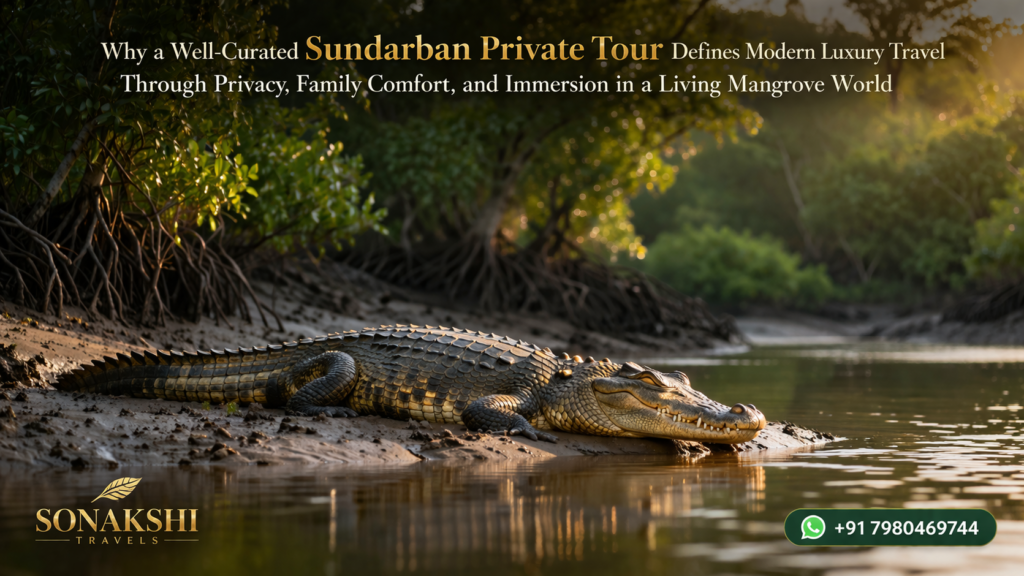
There are destinations that can be enjoyed through convenience alone, and there are destinations that demand a more thoughtful form of travel. The Sundarban belongs firmly to the second category. This immense tidal forest, shaped by shifting rivers, saline air, mudbanks, mangrove roots, and the hidden movement of wildlife, cannot be understood through hurried sightseeing or standardized tourism. It requires patience, interpretation, and above all, the right structure of experience. That is why the conversation around a meaningful Sundarban tour has changed. Travelers are no longer asking only where to go. They are asking how to go, with whom to go, and under what conditions the place can be encountered with seriousness, comfort, and respect.
In this changing landscape of travel expectations, the rise of the Sundarban private tour is not an accident. It reflects a deeper desire for quieter movement, more personal attention, stronger safety arrangements, family-friendly design, and a refined version of nature travel that does not depend on spectacle. Luxury in the delta is not defined by excess. It is defined by calm logistics, better pacing, attentive hospitality, expert local guidance, and the freedom to experience the forest without the pressure of crowds. For travelers seeking a more elevated understanding of the region, the true value of the journey lies in the quality of access, the depth of interpretation, and the emotional tone created by privacy.
The modern traveler often wants two things at once: authentic wilderness and reliable comfort. In many places, those goals appear to conflict with each other. In the Sundarban, however, they can be brought into harmony when the journey is designed properly. A carefully structured Sundarban luxury tour allows the traveler to move through a demanding environment with grace, while a private format allows that experience to remain intimate and unhurried. Together, these two ideas create a new standard of travel in the delta: one where ecological sensitivity, family suitability, and high-quality service come together as part of the same experience.
The Real Meaning of Luxury in the Sundarban
To understand why premium and private travel has become so important in the delta, one must first redefine the meaning of luxury. In urban hospitality, luxury is often associated with visual opulence, dramatic interiors, or the abundance of material amenities. In the Sundarban, that definition becomes inadequate. Here, the landscape itself is powerful, unpredictable, and deeply atmospheric. The true challenge is not to decorate the journey, but to make it livable, comfortable, and meaningful without disrupting the essence of the place.
That is why the most compelling form of Sundarban luxury private tour is built around subtler values. It may mean a quieter transfer process, a cleaner and better-maintained boat, more space to sit and observe the waterways, thoughtfully prepared meals, courteous staff, and a schedule that respects both the environment and the energy of the guest. It may also mean the presence of knowledgeable local interpretation that turns silence into understanding. In a landscape where so much remains hidden, information itself becomes part of luxury. Knowing why the tide behaves in a certain way, why mangrove roots rise from the soil, how local livelihoods relate to the forest, or why wildlife sightings depend on patience rather than certainty transforms the experience from sightseeing into immersion.
This is also why many travelers searching for premium experiences naturally look for operators with a reputation for quality and trust. The question implied in top-rated luxury tours in Sundarban is not simply about branding. It reflects an important truth: in a sensitive destination, the quality of the organizing agency shapes everything. The agency determines how carefully the itinerary is paced, how professionally transfers are managed, how responsibly the forest is approached, and how comfortable the guest feels throughout the journey. In other words, the operator does not merely deliver a package. It curates the traveler’s entire relationship with the place.
Why Privacy Changes the Entire Character of the Journey
A private journey through the Sundarban is not only a matter of exclusivity. It is a structural change in the way the destination is perceived. Shared group travel can certainly introduce visitors to the region, but it often imposes a collective rhythm. Meals follow a common schedule, conversations compete with the atmosphere, movement is shaped by the needs of many, and silence becomes difficult to protect. In contrast, a private Sundarban tour package allows the natural tone of the landscape to emerge more clearly.
Privacy matters in the delta because this is a destination of listening and noticing. One hears distant bird calls, the lap of water against the boat, the changing mood of the wind, and the subtle tension that belongs to a living forest. One observes tracks, mud textures, changing light, and the way the mangrove edge appears different from one creek to another. These details are easily missed when the travel format is noisy or hurried. A private arrangement makes room for stillness, and in the Sundarban, stillness is not empty. It is full of information.
The emotional effect of privacy is equally important. Travelers who choose an intimate river journey are often seeking more than a checklist of attractions. They may want reflection, family bonding, shared wonder, or the rare pleasure of feeling temporarily removed from urban pressure. A private format supports these needs naturally. It gives couples greater calm, families more flexibility, photographers better concentration, and nature lovers the unbroken attention that this ecosystem deserves. That deeper emotional dimension is reflected in more evocative ideas of travel, such as those suggested by a Sundarban private tour where mangroves breathe, where the emphasis is not on speed but on entering the living rhythm of the forest itself.
Private travel also allows the journey to become more responsive. Guests may spend longer in the moments that matter, whether that means watching the shifting light over a river bend, taking time over a meal, or simply remaining quiet in a zone of exceptional beauty. This flexibility is not a superficial upgrade. It is central to the quality of the experience. In a destination where the environment is always changing, rigid tourism often misses the point. Responsive travel, by contrast, feels aligned with the logic of the delta.
Family-Friendly Does Not Mean Simplified
One of the most misunderstood questions in travel planning is whether wilderness destinations can genuinely welcome families. In the case of the Sundarban, the answer depends almost entirely on how the journey is designed. A poorly organized trip can feel tiring, uncertain, or overly exposed. A carefully planned Sundarban private family tour, however, can be remarkably suitable for multigenerational travel because privacy allows comfort and control to be integrated into the itinerary.
Family-friendly travel in the delta does not mean diluting the landscape or turning it into entertainment. It means translating a complex environment into an accessible experience. That includes smoother logistics, manageable travel times, comfortable rest periods, hygienic food arrangements, personal attention to age-specific needs, and a pace that allows children, parents, and older travelers to remain engaged without becoming exhausted. The forest itself remains wild, but the human framework around the journey becomes more thoughtful.
This is why the concern behind is a Sundarban private tour family friendly is so important. Families are not merely asking whether children can be brought along. They are asking whether the experience can be made safe, meaningful, and comfortable for everyone without sacrificing authenticity. A good private itinerary answers that question through design. It offers the reassurance of dedicated support while preserving the feeling of real discovery. Children can learn to observe nature rather than consume it. Parents can relax because the structure feels dependable. Older members can enjoy the setting without being pushed into discomfort. The result is not a compromised wilderness trip, but a more inclusive one.
There is also a cultural and emotional benefit to family travel in the Sundarban. Shared experiences in a place like this often become more memorable than conventional holidays because they involve attention, uncertainty, and awe. A child seeing endless mangrove channels for the first time, a parent noticing the silence before sunrise on the river, or a family sharing freshly prepared local food after hours of observation on the water can create a form of memory that feels richer than urban recreation. In this sense, family-friendly design is not only about convenience. It is about making deep experiences accessible across generations.
The Best Tour Package Is Defined by Design, Not by Excess
When travelers search for the best Sundarban luxury tour package, they often begin with a familiar instinct: to compare inclusions. Yet in the delta, a long list of inclusions does not necessarily produce a better journey. The more meaningful question is whether the package has been intelligently designed. A good package respects the geography of the region, understands traveler psychology, and balances movement with recovery. It knows that hospitality matters, but so does timing. It knows that comfort matters, but so does interpretation. It knows that food matters, but so does the emotional rhythm of the day.
The intention behind the best Sundarban luxury tour packages points toward this more serious understanding of quality. The best package is rarely the loudest one. It is the one that creates coherence. Transfers connect smoothly. Rest and exploration are balanced. The guest is neither rushed nor left uncertain. Meals feel timely and appropriate. The boat experience is calm rather than chaotic. The private environment allows the forest to remain the central presence rather than the background to an overmanaged itinerary.
This principle is especially important in destinations that depend on mood and atmosphere. The Sundarban does not reveal itself all at once. It arrives slowly through textures, pauses, and accumulated impressions. A package that is too crowded with movement can flatten the experience. A package that is too loose can produce fatigue or confusion. The best itineraries understand proportion. They make room for stillness, conversation, observation, and comfort while maintaining a sense of progression. That balance is what elevates a package from functional to memorable.
For travelers seeking premium travel, another decisive factor is how seamlessly the journey connects luxury with restraint. A sophisticated Sundarban luxury tour does not attempt to overpower the landscape. It supports the traveler within it. The best package therefore feels confident rather than flashy. It allows the delta to remain wild while ensuring that the guest moves through it with assurance and ease.
Why the Sundarban Appeals to Travelers Seeking Inner Wildness
Not all travel decisions are practical. Many are emotional, even when the traveler does not say so directly. Some people choose the Sundarban because they want to step away from overstimulation. Others are drawn by the idea of the mangrove world itself: ancient, amphibious, resistant to easy understanding. For such travelers, the private luxury format is not only a service category. It becomes a way of protecting the intensity of the encounter.
The deeper appeal of this destination lies in its ability to awaken a kind of inward alertness. The delta asks the traveler to pay attention in a different way. One cannot dominate the landscape. One must enter it with humility. This is why the emotional tone suggested by a Sundarban private tour for souls craving wild feels so resonant. The Sundarban speaks to those who do not merely want a break, but a recalibration. They want to feel distance from the artificial speed of modern life. They want nature that remains partly unknowable. They want the dignity of silence.
A private luxury framework makes such emotional travel possible because it reduces distractions. The guest is not forced into a social format that interrupts contemplation. The schedule can breathe. The relationship with the water, the forest edge, and the sky remains personal. In a world where many journeys are measured by volume and visibility, the Sundarban offers something rarer: depth. But depth can only be accessed when the trip is designed to preserve it.
This is the hidden reason why private and luxury travel have become increasingly meaningful in the region. They are not only commercial categories. They are interpretive tools. They determine whether the traveler experiences the forest as a surface attraction or as a living world with emotional, ecological, and sensory complexity.
The Future of High-Value Travel in the Delta
The future of travel in the Sundarban will belong to those who understand that value is not created by crowd volume, louder promotion, or standardized mass movement. It will belong to experiences that are careful, informed, and emotionally intelligent. As traveler expectations evolve, the most respected journeys will be those that combine ecological seriousness with personal comfort. They will offer privacy without isolation, family suitability without dilution, and luxury without artificial excess.
A truly successful Sundarban private tour therefore stands at the meeting point of several modern travel desires. It answers the wish for exclusivity, but also the desire for stillness. It provides comfort, but also preserves the rough dignity of the delta. It welcomes families, but does not trivialize the wilderness. It feels premium, yet remains rooted in the ecology and culture of the place. This combination is not easy to achieve, which is exactly why it matters.
In the end, the most meaningful journey into the Sundarban is one that understands the landscape on its own terms. It does not force the forest into a conventional holiday template. It builds a travel experience around the tidal logic, emotional atmosphere, and fragile magnificence of the mangrove world. When privacy, comfort, interpretation, and care come together, the result is more than a package. It becomes a rare form of travel: one that leaves the visitor not only impressed, but changed.