Designing a Meaningful Sundarban Journey Through Planning, Quiet Luxury, Cultural Depth, and the Living Mystery of the Delta
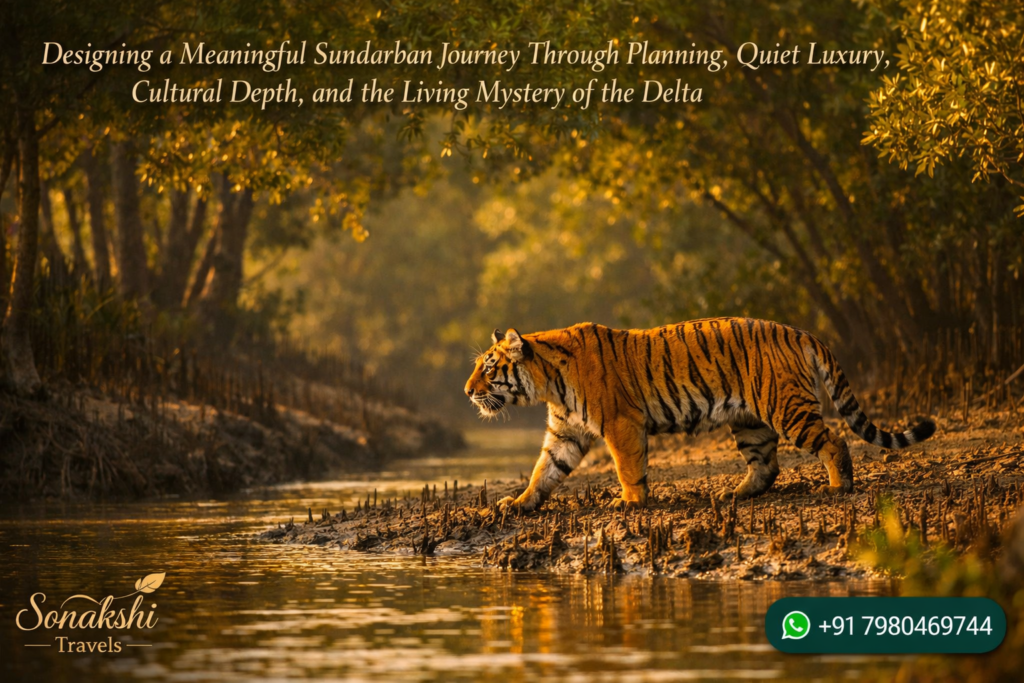
The Sundarban has always resisted shallow description. It is often introduced through familiar labels such as forest, river destination, wildlife zone, or weekend escape, yet none of those phrases fully capture its nature. This remarkable delta is not merely a place to visit. It is a region to enter with patience, preparation, and a willingness to understand how water, silence, ecology, and human culture exist together. A truly memorable Sundarban tour package is therefore not defined only by transport, accommodation, or sightseeing points. Its deeper value lies in how carefully the journey is designed, how respectfully it approaches the landscape, and how meaningfully it connects travelers with both wilderness and local life.
When people imagine the Sundarban for the first time, they often focus on the obvious symbols: mangrove creeks, watchtowers, boats, birds, and the possibility of encountering elusive wildlife. Yet the true power of the region emerges only when these visible elements are placed within a larger frame. A well-planned journey in the delta combines practical intelligence, ecological sensitivity, emotional openness, and cultural curiosity. It allows one to move from simple tourism into a far richer form of travel, where the experience becomes not only scenic but reflective. That is why the idea of a successful Sundarban private tour or a carefully designed family escape must be understood as something more than an itinerary. It is an interpretation of place.
In this sense, the modern traveler is no longer looking only for movement. The traveler is also searching for atmosphere, comfort, authenticity, and a sense of connection. The Sundarban responds beautifully to that desire when the journey is planned with care. Whether one is drawn by the serenity of private cruising, the layered appeal of cultural celebration, or the contemplative mood of drifting through tidal silence, the delta offers a travel experience that is both intimate and expansive. To appreciate that fully, one must begin with the question of design.
Why Planning Matters More in the Sundarban Than in Ordinary Destinations
Many destinations forgive poor planning. The Sundarban rarely does. This is a living tidal environment where timing, route design, seasonal understanding, and comfort arrangements shape the quality of every hour. A careless schedule can reduce the experience to exhaustion and fragmented sightseeing. A thoughtful plan, by contrast, creates rhythm. It gives space for observation, ensures smoother transitions, and allows travelers to experience the delta without unnecessary stress.
This is why the philosophy behind planning a Sundarban tour package effectively is so important. The question is not simply how to reach the destination, but how to prepare for its character. The Sundarban is governed by tides, river routes, weather moods, and the pace of boat-based exploration. Planning must therefore include departure timing, meal coordination, rest intervals, and the balance between transit and experience. A rushed traveler may see the river. A prepared traveler begins to understand it.
Effective planning also matters because the Sundarban contains multiple layers of expectation. Some visitors are seeking wildlife. Others are searching for peace. Some want a family-friendly holiday with comfort and security, while others want a slower and more introspective retreat. The best Sundarban tour is one that aligns these expectations with the nature of the place rather than forcing the place to behave like a generic tourist circuit. This is where expert curation becomes indispensable. A meaningful itinerary is not crowded. It is balanced. It does not confuse activity with value. Instead, it allows the delta to unfold.
Good planning also protects the emotional integrity of the journey. The Sundarban is not a destination of instant spectacle. It rewards those who are willing to wait, observe changing light, notice mudflats, hear bird calls, and accept that mystery is part of the experience. When the structure of the tour supports that state of mind, the traveler becomes more receptive. The result is a journey that feels deeper, calmer, and more memorable than one driven only by checklists.
The Rise of Private and Luxury Travel in a Landscape That Demands Intimacy
As travel preferences evolve, many people are increasingly drawn toward privacy, personalization, and comfort. In the Sundarban, this shift is not merely fashionable. It is profoundly logical. The delta is best experienced in a way that reduces noise, preserves flexibility, and allows travelers to engage with the environment at a human pace. A crowded, generic format can flatten the emotional richness of the region. A more personalized format can reveal its subtle grandeur.
This is where the idea explored in Sundarban private and luxury tour becomes especially relevant. Luxury in the Sundarban should not be misunderstood as excess. It is better understood as intelligent comfort. It means smoother logistics, more private space, quieter observation, better service quality, and the freedom to travel without the fatigue that often comes from overly standardized group arrangements. In a tidal wilderness, this kind of comfort does not weaken the experience. It strengthens it.
A well-crafted Sundarban luxury tour allows travelers to experience the delta with dignity and attentiveness. Instead of rushing through a predefined pattern, one can enjoy the stillness of early river light, the calm of a well-managed boat deck, and the privacy needed for family conversation or personal reflection. For honeymooners, senior travelers, families with children, or guests seeking peace rather than crowds, this approach transforms the journey from a basic excursion into an immersive encounter.
Privacy also changes perception. In quieter settings, the traveler notices more. The sound of water touching the hull, the movement of birds across an open sky, the texture of mangrove shadows, and the silence between one bend of the river and the next all become more vivid. The delta is a landscape of nuances, and nuance is easiest to feel when one is not overwhelmed by noise. That is why the premium dimension of Sundarban travel should be viewed not only in operational terms but also in experiential ones. The more thoughtfully the journey is designed, the more fully the place can be felt.
The Sundarban as a Hidden Landscape of Wonder Rather Than a Conventional Tourist Product
One of the most compelling dimensions of the Sundarban is that it still retains a sense of partial concealment. Even when it is well-known, it does not feel fully exhausted by tourism. It remains, in many ways, a place that resists complete exposure. This quality gives it unusual power in an age when many destinations are over-photographed, over-explained, and over-consumed. The Sundarban still permits surprise. It still holds back part of itself.
That spirit is beautifully aligned with the vision implied by Sundarban tour package as Bengal’s best kept natural secret. The phrase is not important merely as a promotional idea. It points toward a real experiential truth. The delta offers a kind of discovery that is increasingly rare. One does not arrive here to be entertained in a simplistic way. One arrives to enter a living environment that contains uncertainty, beauty, risk, memory, and ecological depth.
This is why the finest Sundarban tour package is one that respects the complexity of the destination. It should present the landscape not as a product stripped of meaning, but as a living system. Rivers are not just routes. They are the structure of life here. Mangroves are not just scenic vegetation. They are protective, adaptive, and ecologically essential. Villages are not merely background to the forest. They reveal how communities have learned to coexist with fragile and demanding conditions. When these elements are understood together, the traveler begins to see the Sundarban not as a spectacle but as a world.
This sense of hidden depth also explains why the region leaves such a lasting emotional impression. Even after returning home, many travelers remember not a single dramatic event but an accumulation of quieter moments: a changing sky over open water, a village glimpse from the riverbank, the feeling of distance from urban time, or the extraordinary calm that emerges when human noise recedes. Such impressions stay because they are not manufactured. They arise from the character of the place itself.
Beyond Mangroves: Reflection, Interior Travel, and the Emotional Meaning of the Delta
The Sundarban is often approached through external expectations, yet one of its most powerful qualities is what it does internally. It changes the mental tempo of the traveler. It alters perception. It creates room for reflection. In this way, a journey through the delta becomes not only geographical but emotional. The landscape invites contemplation because it is made of open distances, suspended movement, and a kind of silence that modern life rarely allows.
This deeper dimension resonates strongly with the reflective spirit suggested by a wanderer’s reflections in Sundarbans beyond the mangroves. The important phrase here is not simply “beyond the mangroves,” but the recognition that the region cannot be reduced to its most visible symbol. The mangrove forest is central, certainly, but the true journey extends beyond scenery into mood, meaning, and memory. Travelers often leave the Sundarban feeling that they have experienced not only a place but a different way of being present.
This reflective quality is especially significant for contemporary travelers who feel overburdened by speed, digital noise, and urban saturation. The delta offers another rhythm. On the river, the mind adjusts to motion without hurry. Attention becomes less fragmented. Even the uncertainty of what may or may not be seen contributes to a more mindful form of travel. The traveler is no longer consuming guaranteed highlights. Instead, one is participating in a subtle experience shaped by weather, timing, and chance.
Such journeys often produce a form of humility. The Sundarban does not revolve around the visitor. It exists on its own terms. That realization can be unexpectedly moving. It reminds us that travel is not always about conquest, visibility, or completion. Sometimes it is about entering a place carefully enough that one begins to listen. In that sense, a well-designed Sundarban private tour package can become a rare modern experience: comfortable yet humbling, curated yet open-ended, serene yet deeply alive.
Cultural Celebration and Seasonal Identity in the Life of the Sundarban
Although the Sundarban is often defined through wilderness, its cultural dimension is equally important. The region is not an empty natural stage. It is a lived landscape shaped by food traditions, seasonal rhythms, river-dependent livelihoods, and local forms of celebration. To travel well here is to recognize that ecological beauty and human culture are not separate stories. They form a shared world.
This is why a theme such as cultural highlights of Sundarban Hilsa Festival 2026 adds an essential layer to understanding the destination. Seasonal celebrations reveal how deeply identity in the delta is tied to water, cuisine, and collective memory. A festival centered on hilsa is not just about food. It reflects the relationship between river culture, hospitality, local pride, and the sensory richness of Bengal. For travelers, this opens a new dimension of engagement. The Sundarban can be encountered not only through watchtowers and boat rides, but also through taste, tradition, and community atmosphere.
Including cultural context within a Sundarban holiday package enriches the journey in powerful ways. It prevents the destination from being flattened into wildlife expectation alone. Instead, travelers begin to see how the region lives across seasons, how local people interpret celebration, and how culinary heritage deepens a sense of place. Food in particular becomes a meaningful medium. It allows the traveler to move from observation into participation. A meal rooted in local tradition can reveal as much about the delta as a scenic cruise.
Seasonal travel also helps define mood. Different periods of the year create different kinds of Sundarban experiences. Some months emphasize clear skies and wildlife visibility. Others bring monsoon atmosphere, lush intensity, and dramatic changes in light. Festival-linked travel periods add still another layer, combining natural beauty with cultural warmth. A truly thoughtful itinerary understands this and aligns the traveler’s purpose with the season’s character.
How the Best Sundarban Journey Brings All These Elements Together
The most meaningful journeys in the Sundarban are those that refuse false choices. They do not force travelers to choose between comfort and authenticity, between planning and spontaneity, or between nature and culture. Instead, they bring these elements together in a coherent way. The result is a travel experience that feels both grounded and elevated.
A refined Sundarban journey begins with intelligent planning. It continues through thoughtful logistics and, where needed, the privacy and ease of premium arrangements. It unfolds through river movement, ecological observation, and the emotional clarity that silence provides. Then it deepens further through cultural understanding, seasonal awareness, and the recognition that the delta is not only a forest but a complete living region. When all of this is held together properly, the traveler does not feel they have merely taken a trip. They feel they have encountered a landscape with depth.
This synthesis is what should define the future of high-quality Sundarban travel. The delta deserves a form of tourism that is respectful, literate, and carefully designed. It should not be reduced to crowd-driven formulas or superficial promises. The finest journeys here are those that understand the power of restraint. They know that luxury may mean peace. They know that planning creates freedom. They know that culture gives context to wilderness. They know that mystery is not a weakness in a destination but one of its greatest strengths.
For the serious traveler, this is perhaps the most important conclusion of all. The Sundarban is not simply a place where one sees something. It is a place where one learns how to travel differently. It teaches patience, invites reflection, rewards sensitivity, and offers rare moments of genuine stillness. A carefully designed journey through this extraordinary delta can therefore become far more than a holiday. It can become an experience of attention, atmosphere, and quiet discovery that remains alive long after the river has disappeared from view.